The heaviest spaniel carries a spaniel's list, plus weight
The Clumber Spaniel is the largest of the spaniels, a heavy-boned, low, long dog bred for quiet work in dense cover. Its health list reflects that build: hip dysplasia is a leading concern, eyelid conditions such as entropion, where the lid rolls inward, and ectropion, where it droops outward, are seen in the breed, and the long, heavily feathered ears make ear problems common. Clumbers are also linked with an inherited enzyme condition, PDP1 deficiency, and with exercise-induced collapse in some lines, and they gain weight readily, which worsens every joint and breathing strain a heavy dog already carries.
A Clumber's famously placid manner can hide discomfort. This is a breed that may simply become slower and quieter rather than obviously lame or sore, so changes in willingness — to climb, to play, to greet — deserve as much attention as an actual limp.
Hips under a lot of dog
Hip dysplasia in a Clumber may show as stiffness rising from that characteristic rolling rest, reluctance on stairs, or a dog who lags on the second half of a walk he started keenly. Keep a young Clumber lean and build exercise gradually; this breed matures into a heavy adult, and carrying extra weight through its growth and middle years multiplies the load on already vulnerable hips.
Feel over the hips and thighs as part of grooming, and note any loss of muscle behind or sensitivity when a hip is gently moved. Muscle wasting on one side often tells a story before a gait change does, and it is exactly the sort of detail a vet can act on when it is dated and described rather than mentioned vaguely months later.
Eyelids that roll the wrong way
A Clumber's heavy head and loose skin set up eyelid problems. Entropion turns lashes and hair against the surface of the eye, causing watering, squinting, pawing and a dog who keeps one eye partly closed in bright light. Ectropion leaves the lower lid drooping away, exposing tissue that reddens and collects discharge. Either way, a Clumber eye that waters persistently, looks red along the lid, or produces recurring gunk should be examined rather than wiped and forgotten, because ongoing irritation can damage the cornea over time.
Check both eyes in good light during the weekly groom, comparing sides. Asymmetry — one eye wetter, redder or more closed than the other — is often the earliest useful clue in a breed where both eyes tend to look heavy and droopy at rest.
Ears, heat and a low-slung working dog
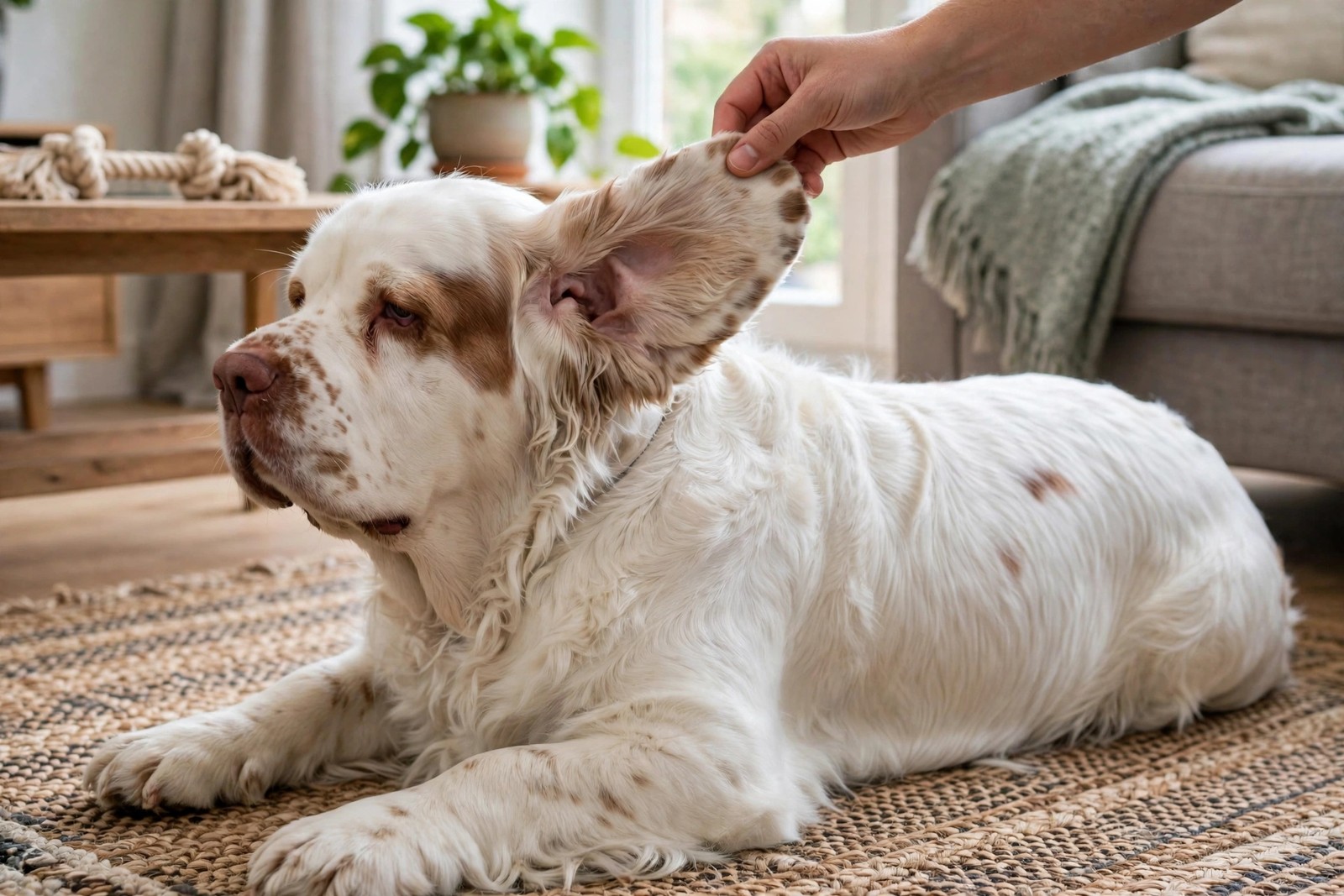
Those long, low-hanging ears restrict airflow, and a Clumber working through wet cover brings moisture and debris home in them. Lift each ear flap weekly, look for redness and dark wax, and learn the normal smell of your dog's ears so a sour change stands out. Head shaking, scratching at one ear, or yelping when an ear is touched means a vet visit, since spaniel ear infections sit deep and rarely clear on home cleaning alone once established.
Clumbers also feel heat more than their calm manner suggests: a heavy body, a thick coat and a low build close to hot ground mean summer exercise belongs in the cooler hours, with shade and water planned. A dog linked in some lines with exercise-related collapse or enzyme deficiency who wobbles, lags suddenly or seems distressed during work should stop, cool down and have the episode recorded and discussed with a vet.
KinsLe's Pet Passport brings a Clumber's hip findings, eye and ear treatment notes and weight record together in one portable packet, giving each vet the heavy spaniel's whole story instead of fragments.