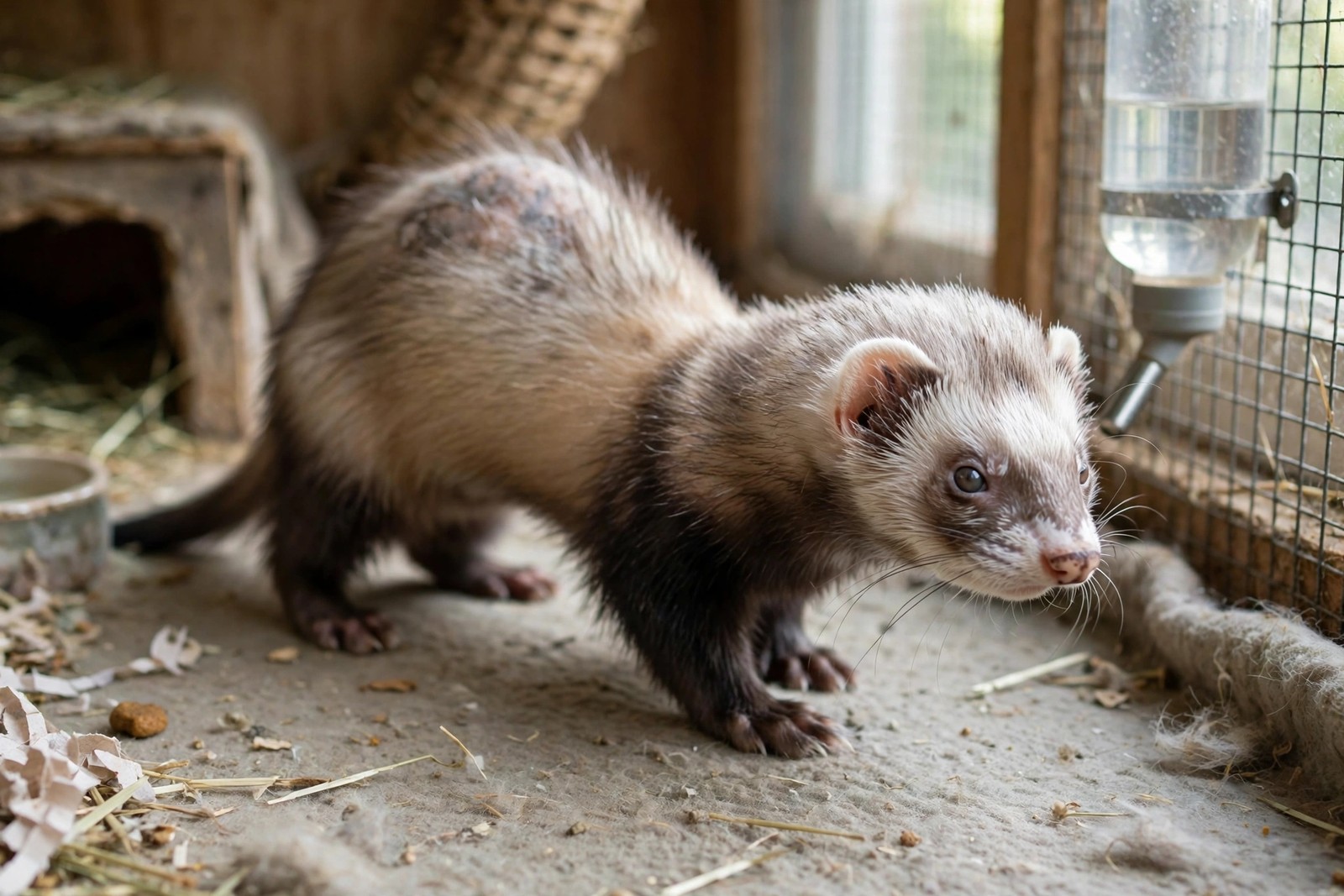
Ferrets age quickly compared with cats and dogs, and the senior years bring a recognisable set of veterinary conversations. Three conditions anchor that set: a pancreatic growth that distorts blood sugar, a disease of the adrenal glands that distorts hormones, and lymphoma arising in lymph tissue. All three are described here by the signs an owner can observe and report. What each condition needs by way of management is the veterinarian's call, made after examination and testing, and regular senior checks are where screening for all three is discussed.
Insulinoma and Low Blood Sugar Episodes
Insulinoma means small tumours on the pancreas release too much insulin, and insulin pushes blood sugar down. The episodes that follow are the owner's evidence: a ferret that stares blankly and seems absent, drools or paws at the mouth, becomes weak in the hind legs, or turns unusually sleepy and flat. Severe episodes can progress to trembling, collapse or seizures, which need urgent veterinary attention. Note the time of each episode, how long it lasted, when the ferret last ate, and how recovery looked, and film an episode if doing so is safe. Because several problems can look similar in a small animal, the veterinarian's blood testing during or near an episode is what gives the pattern meaning. Ask how the clinic wants episodes reported and whether blood sugar checks belong in routine senior visits.
Adrenal Disease and Lymphoma
Adrenal disease involves the small glands sitting just above each kidney, producing hormones in excess. Its visible signature is hair loss that spreads symmetrically, often starting at the tail and moving forward, alongside itching in some ferrets and, observably, swelling of the vulva in a female who has been spayed, or renewed sexual behaviour in a neutered male. Report the pattern and pace of hair loss with photographs, since gradual change is easy to underestimate from memory. Lymphoma develops in lymphocytes and lymph tissue, and presents less theatrically: lumps that can be felt under the skin or around the jaw and shoulders, deepening lethargy, weight loss, reduced appetite, or enlarged glands noticed during handling. Any new lump on an ageing ferret deserves examination rather than monitoring at home, and weight tracked weekly makes slow loss visible early.
Handling Checks Between Appointments
Weekly handling sessions are the owner's screening tool for all three conditions, and they work when they stay gentle and brief. Weigh the ferret in the same container on the same scales and write the figure down immediately. While supporting the body fully, run your fingers slowly along the jaw, neck, shoulders, armpits and belly feeling for lumps or enlarged glands, then look over the coat from tail to shoulders for thinning patches, itching damage or parasites, photographing the coat monthly in the same light so slow hair loss becomes undeniable. Watch the ferret move across the floor afterward: hind-leg strength, steadiness and interest in exploring are all reportable observations. Finish by noting appetite at the next meal and any blank-staring spells or drooling since the previous session, dated as they happened rather than reconstructed at the weekend.
Senior Screening as a Standing Conversation
Bring the three topics together at each senior appointment: episodes since the last visit, hair coat change, lumps found, weight trend and appetite. Ask which blood work the veterinarian recommends at this life stage, how often senior checks should happen for your ferret, and which changes at home should trigger an earlier visit. Between appointments, handle the ferret gently each week, feeling for lumps, checking the coat's coverage and noting energy, because an animal this size can change quickly and early findings give the clinic options. Your Pet Passport in KinsLe holds episode logs, coat photograph dates and weight entries in one small file, which suits a species whose history needs to travel fast when a senior ferret changes.