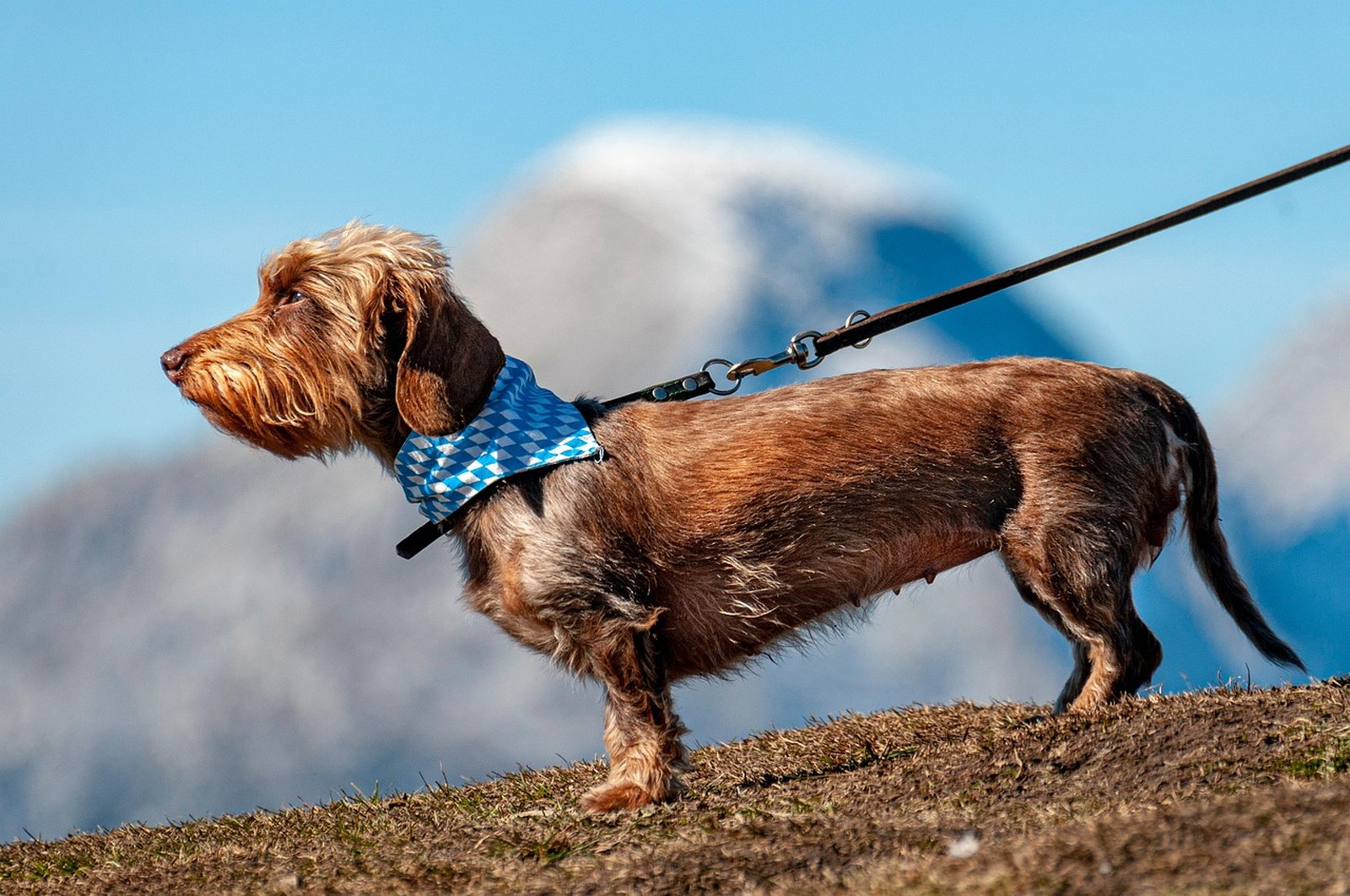
Everything about Dachshund health circles back to that famous silhouette. The long spine carries discs that harden early, so intervertebral disc disease reaches roughly one Dachshund in four across a lifetime, bulging or rupturing discs bringing pain and sometimes paralysis. Extra weight loads the same spine directly, while the miniature's crowded jaw invites dental disease and kneecaps can slip. Guarding this breed means guarding the back first, then everything else in turn.
Protecting the Long Back
Keep your Dachshund lean enough to feel ribs easily — every extra pound is load the discs carry. Reduce repeated jumping on and off furniture and full flights of stairs: ramps to sofas and beds, and carrying the dog correctly (chest and rear supported level, never dangling by the front) are breed essentials, not fussiness. Know the IVDD warning sequence: reluctance to jump or climb, yelping when picked up, a hunched back, wobbly back legs, or dragging toes. Back pain in a Dachshund is a same-day vet call and strict crate rest until seen — early treatment, whether rest-based or surgical referral, is what preserves walking. Dental disease creeps in quietly: bad breath and tartar in a Dachshund deserve the same prompt attention as in any breed.
Working With Your Vet
Back trouble in a Dachshund rewards owners who arrive with a clear sequence: when jumping or climbing first became reluctant, whether yelping happens when the dog is lifted, and how the back legs are moving today compared with last week. Keep the dog still and carried on the way in, and let your veterinarian grade the problem before anyone discusses rest or referral — the same-day examination is what protects walking. Teeth deserve a line in the same conversation, since dental pain hides quietly.
Any Dachshund with back pain, wobbliness, or dragging back feet needs a vet the same day, kept still and carried until seen.
A Dachshund's notes should read like a back diary: weekly weight, any yelp or hesitation with its date, and how each episode settled. Add dental checks and cleaning dates alongside, plus a line whenever ramps, lifting habits or exercise change at home. Brought to appointments, that record shows your vet whether small warnings are isolated or building into a pattern worth acting on early.
Log weigh-ins and back warnings in the Pet Passport on KinsLe, and your Dachshund's vet sees the spine's story across months instead of a single sore day.