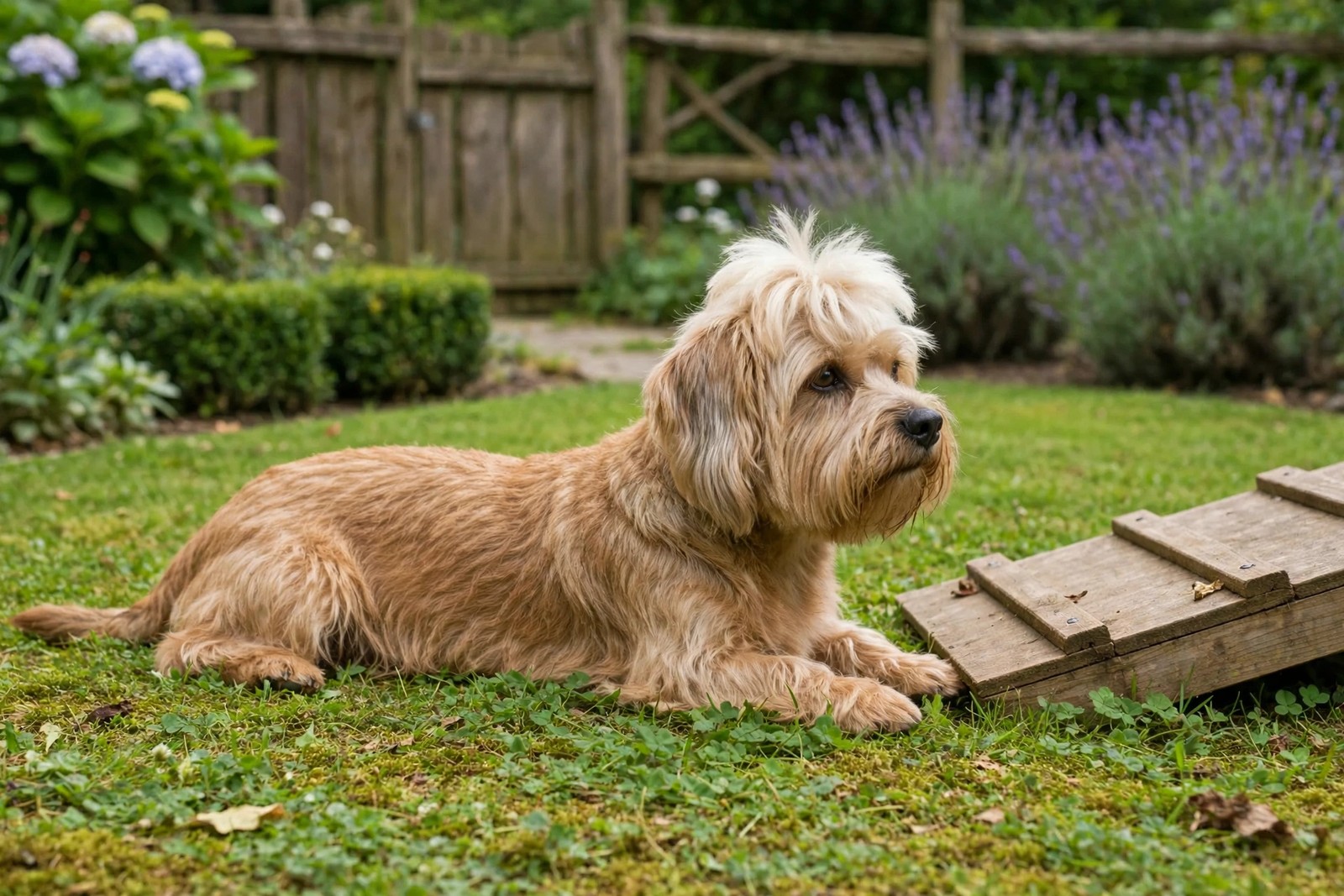
Long, low and large-headed: a build that shapes the list
The Dandie Dinmont Terrier is unmistakable — a long, low body, short legs and a large head topped with a silky topknot. That long, low construction puts intervertebral disc disease at the top of its health list, as it does for other elongated breeds. Dandies are also linked with glaucoma, a painful rise in pressure inside the eye, along with lens problems, a liver shunt concern in young dogs, and hormonal conditions such as hypothyroidism and Cushing's disease appearing more often as the breed ages. Weight gain is a persistent hazard in a low dog with a fondness for food, and it loads the spine with every step.
The Dandie is a determined, independent terrier who may not advertise pain readily. Owners who know the breed's few serious patterns — back, eyes, and a young dog who fails to thrive — are well placed to catch them while they are still small problems.
Protecting a spine that runs the length of the dog
Disc trouble in a Dandie can begin quietly: a dog who stops jumping onto a low stool, cries when lifted, walks stiffly with the back held tense, or goes off games he usually demands. Keep this breed off high jumps, provide a ramp or step for the places he uses daily, and lift him supporting chest and rear together so the long middle never sags unsupported.
Back-leg wobbliness, dragging toes, crying out, or any loss of bladder or bowel control alongside back pain is an emergency — a Dandie with those signs needs a vet the same day. Write down when you first noticed reluctance or stiffness, because a dated timeline helps a vet judge how fast a spinal problem is moving, which shapes how urgently it is handled.
Eyes where pressure is the emergency
Glaucoma is the eye condition Dandie owners should be able to describe. Pressure rises inside the eye, and the signs are pain rather than gradual dimming: a red eye, a cloudy or blue-looking surface, a pupil that looks different from the other side, an eye that seems to bulge, and a dog who rubs at it, keeps it half-closed or goes quiet and off his food. This is a same-day emergency, because vision in an eye under high pressure can be lost quickly.
Slower changes — bumping into furniture in dim light, hesitation at dusk — suggest a different kind of eye problem and still deserve a prompt appointment and a note of when you first saw them. Ask your vet whether regular eye examinations and pressure checks make sense for your individual Dandie, particularly if eye disease appears in his family lines.
A small puppy who does not thrive, and the ageing Dandie
A liver shunt is uncommon, but its signature in a young Dandie is a pup who grows slowly, stays small, and seems dull, wobbly or disoriented, sometimes noticeably after eating. Do not let those signs drift under labels like picky or slow to mature; record them and have the pup examined.
In middle-aged and older Dandies, keep an eye on the hormonal pattern instead: unexplained weight gain with thinning coat and low energy can point toward thyroid trouble, while increased thirst, a growing belly and thinning hair belong in a Cushing's conversation. None of these can be sorted at home, but the owner's dated notes on thirst, appetite, coat and energy are what turn a vague impression into a testable question at the vet.
KinsLe's Pet Passport keeps a Dandie Dinmont's eye pressure results, spinal notes, weight history and blood results together in one portable packet, so the long dog's records are as complete as they are long.