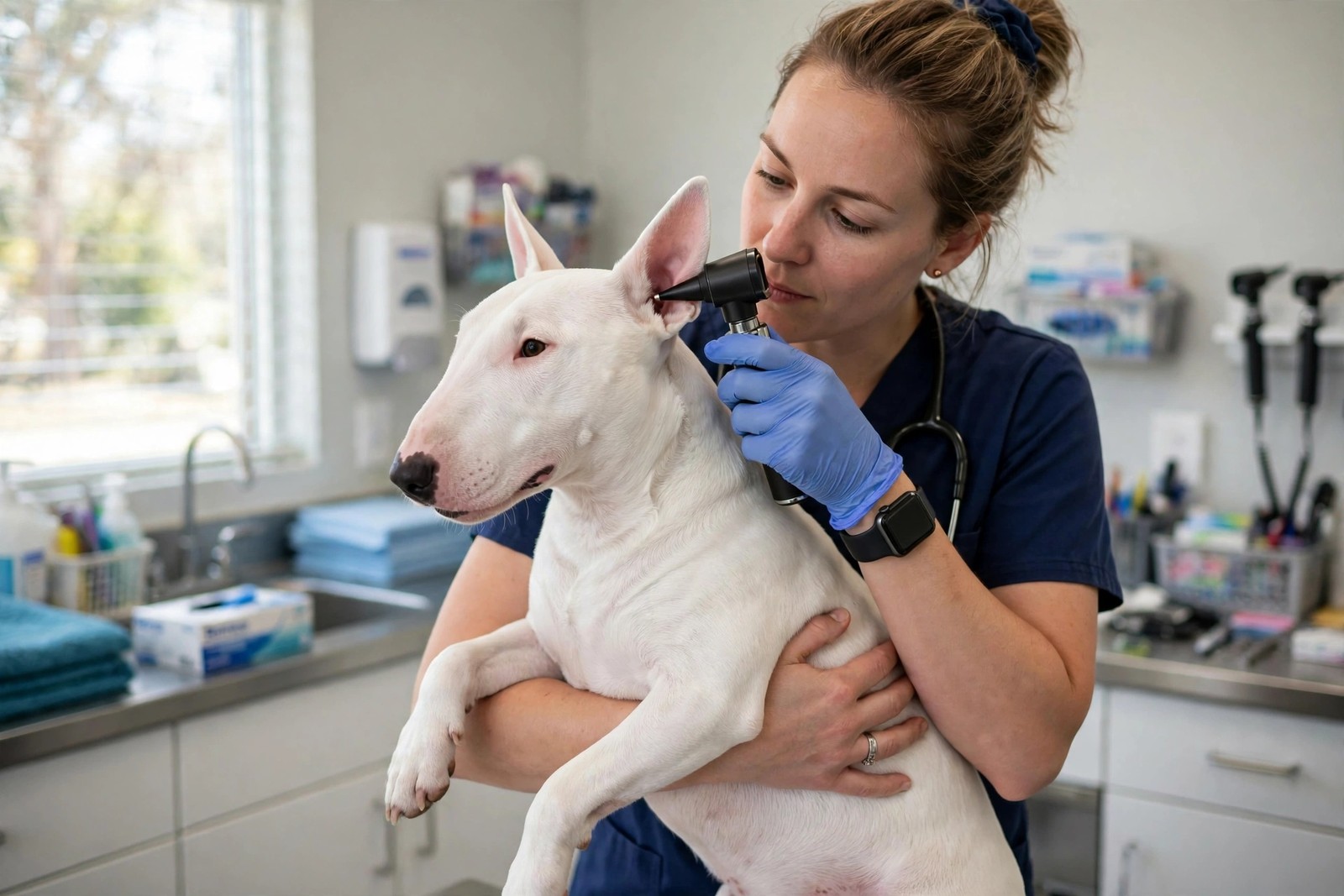
The Bull Terrier Profile in Miniature
A Miniature Bull Terrier is not simply a scaled-down novelty; it is a true Bull Terrier in a compact body, bred from the same stock and carrying the same inherited tendencies. Its risk list spans several systems at once — eyes, kidneys, heart, ears, and skin — which is why owners of this breed benefit from organised screening more than most. A well-bred, well-monitored Mini can live a robust, clownish life, but its owners need to know which changes count as urgent, because one of its signature problems does not wait politely.
The Eye Emergency This Breed Is Known For
Inside a healthy eye, fine fibres hold the lens centred behind the pupil. In Miniature Bull Terriers an inherited weakness lets those fibres break down, and the lens can loosen or slip completely out of place. A loosening lens may cause a wobbly iris or subtle vision change; a lens that dislocates into the front of the eye can trigger a painful pressure crisis that damages sight within hours. Warning signs include sudden squinting, tearing, redness, a bluish or cloudy look, pawing at the face, or one eye appearing different from the other. Treat any of those in this breed as a same-day emergency, not a monitor-at-home situation. A DNA test identifies dogs at risk before signs appear, and vets often recommend regular pressure and lens checks for dogs known to carry the risk.
Kidneys and Heart: The Quiet Checks
Kidney trouble in this breed can be inherited in more than one form, including kidneys that filter protein poorly and kidneys dotted with cysts that gradually lose function. Because early kidney disease rarely shows obvious signs, breeders and vets rely on urine and blood testing — a particular urine protein measurement is a standard screening tool for breeding dogs. Increased thirst, larger urine volumes, fading appetite, or weight loss in a Mini should prompt kidney values rather than reassurance. The heart concern centres on valves that narrow or leak, sometimes first heard as a murmur during a routine exam. A murmur is not a diagnosis by itself, but in this breed it earns a proper cardiac workup and follow-up intervals rather than being forgotten between visits.
Hearing and Skin
Deafness appears in the breed, most often in white-coated dogs, and it can affect one ear or both. A puppy who sleeps through household noise, fails to respond when called out of sight, or startles when touched awake may need a formal hearing test, which breeders of white puppies commonly arrange before placement. Deaf and partially deaf Minis live full lives with visual and vibration-based cues, but knowing early shapes training and safety around roads and recall. Skin allergies are the breed's everyday nuisance: itchy paws, recurring ear irritation, and seasonal flare-ups that deserve a vet-guided plan instead of endless home experiments.
What to Collect and Watch
For this breed, gather the lens-risk DNA result, kidney screening values, heart exam notes, and hearing test outcome if your dog is white, and keep them updated as checks repeat. Watch for eye pain above all, then drinking and urination changes, reduced stamina, and persistent itching. Any painful, red, or suddenly cloudy eye goes to a vet or emergency clinic immediately.
With results spread across eye specialists, breeders, and general clinics, KinsLe's Pet Passport brings a Miniature Bull Terrier's records together in one portable packet, so the next vet sees the kidney trend and lens risk at a glance.