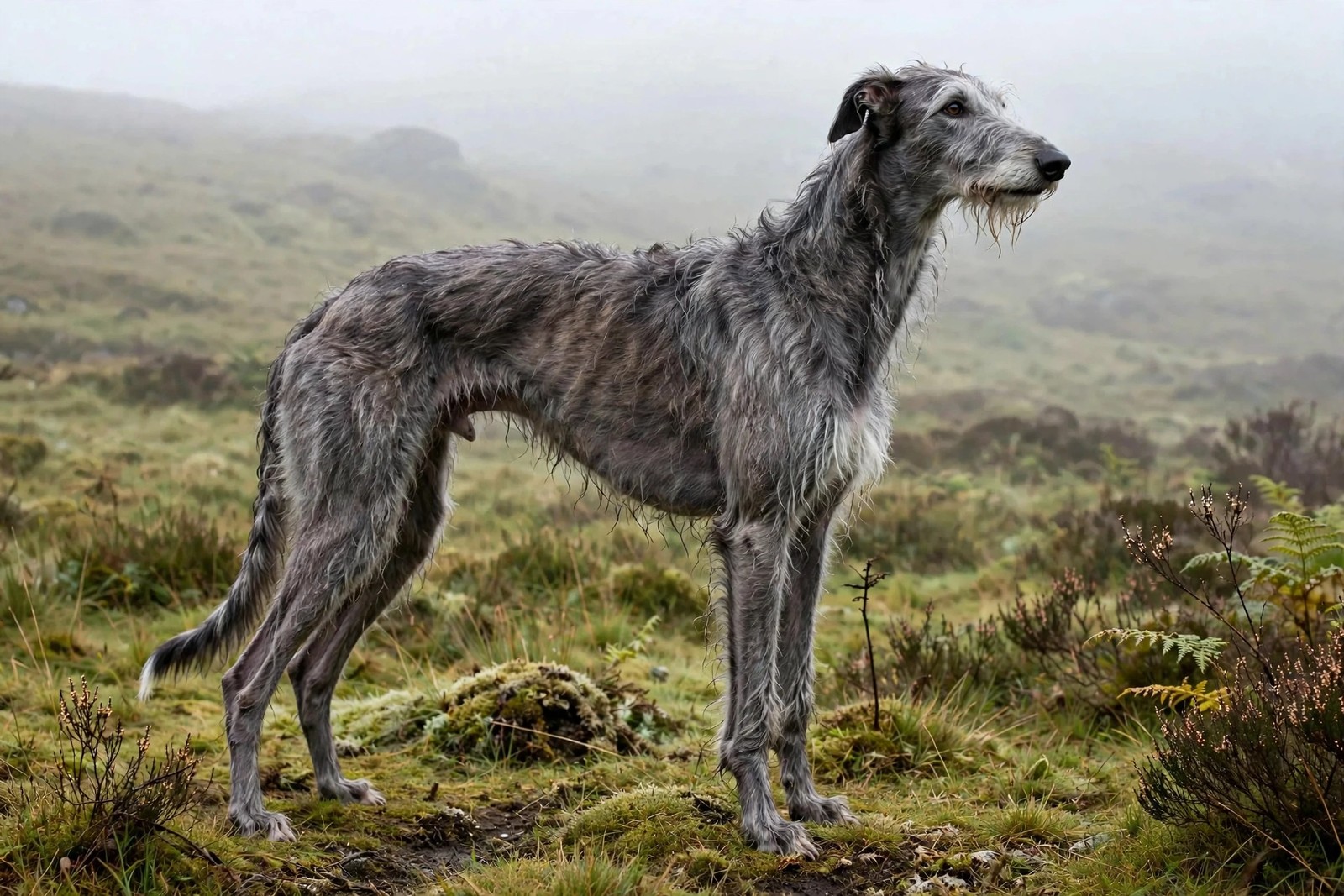
The Deerhound Pattern Is a Giant-Breed Pattern
Scottish Deerhounds carry the risks that follow a very tall, deep-chested, long-legged sighthound frame. The problems owners and breeders watch for most include gastric dilatation-volvulus, often called bloat, where the stomach fills with gas and can twist; dilated cardiomyopathy, a weakening and enlargement of the heart muscle; osteosarcoma, a bone cancer that tends to appear in the long bones of giant breeds; an inherited Factor VII clotting deficiency; hypothyroidism; and portosystemic shunt, a liver blood-flow problem that can show up in a growing puppy. None of these is guaranteed, and a well-bred Deerhound can live a sound life, but knowing the breed's list changes what you notice at home.
Bloat and the Heart Deserve the Fastest Response
Bloat is the emergency on this list. A Deerhound who has eaten, then becomes restless, paces, drools, looks at a tightening belly, or retches without producing vomit should be driven to emergency care immediately rather than watched overnight, because a twisted stomach cuts off its own blood supply. Feeding smaller meals, discouraging gulping and hard exercise around mealtimes, and discussing stomach risk honestly with your veterinarian are sensible precautions for a chest built like this. Cardiomyopathy is quieter: a dog who tires earlier on the same run, coughs at rest, breathes faster while sleeping, or seems faint after excitement needs a prompt heart workup, since early heart changes are found by listening and imaging long before they are obvious at home.
Legs, Growth, and the Quiet Conditions
A persistent limp in a giant, long-legged dog should never be dismissed as a strain for weeks on end. Osteosarcoma often begins as lameness or a firm swelling on a leg bone, and while most limps are not cancer, a Deerhound limp that does not settle with a few days of rest, or any new bony swelling, deserves X-rays and a veterinarian's hands on the leg. The Factor VII deficiency matters most around surgery or injury, because clotting can be slower than expected, so any known status belongs in the notes a surgeon sees before a procedure. A puppy with a liver shunt may grow poorly, seem dull or disoriented after meals, or lag behind littermates, and those vague signs are worth raising early rather than waiting for a growth spurt to fix them. Sluggishness, weight gain, and coat thinning in an adult can point in several directions, including thyroid trouble, and are a reason for bloodwork rather than guesswork.
Living Well With a Deerhound's List
Daily life is mostly about not normalising change. Keep this elegant dog lean, because extra weight loads long bones and a straining heart. Feed measured meals, build exercise gradually after rest rather than launching into sprints, and learn your own dog's normal sleeping breathing rate so a rise is obvious. Ask the breeder what heart, clotting, and liver screening sits behind a puppy, and keep every result rather than filing it in memory. Book a veterinarian promptly for a non-productive retch, collapse, a swelling on a leg, unexplained bleeding, or a puppy who fades after eating, and sooner for anything that is progressing. With records gathered in KinsLe's Pet Passport, a Deerhound's heart checks, blood results, and surgical notes travel as one packet to any clinic that needs the full picture.