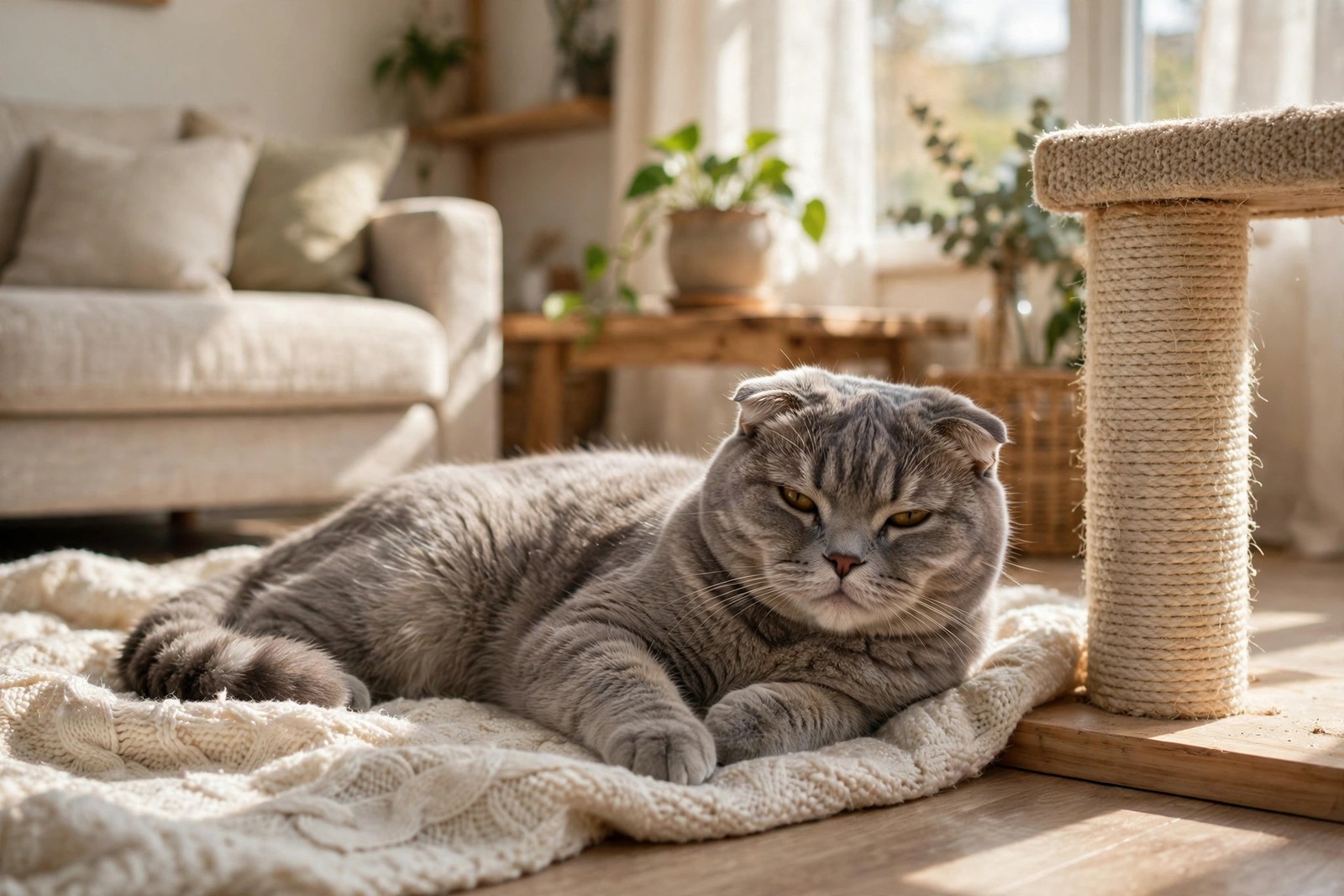
The folded ear is the visible sign of a body-wide cartilage condition, and that fact shapes everything else in Fold care. The same defect behind the fold thickens and stiffens joints elsewhere, leaves the tail thick and inflexible, and can bring painful arthritis early in life; individual cats are affected to very different degrees, yet every Fold carries the condition, which is why several countries and registries discourage or ban breeding them. Beyond the joints, the breed shares the Persian-family risks of polycystic kidney disease and can develop hypertrophic cardiomyopathy (heart disease), as many breeds do.
Protecting a Fold's Joints for Life
Watch honestly for the early arthritis picture, because Folds are stoic: reluctance to jump, climb, or play, a stiff or hopping gait, sitting with front paws held oddly, resentment of being picked up under the body, and a tail that feels thick and does not bend comfortably. These cats need homes adapted early — ramps and low perches instead of high jumps, soft bedding, lean weight without exception, and a vet-led pain plan rather than waiting for obvious suffering. Pain relief should never be improvised with human medicines, several of which are dangerous to cats. Kidney and heart screening follow the usual senior pattern, but joint checks belong in every Scottish Fold vet visit from young adulthood, and any breeder conversation should start with how they manage this condition in their lines.
Working With Your Vet
For a Fold, arrive with mobility evidence rather than impressions: which jumps she has stopped attempting, whether she resents being lifted, and how stiff she looks after sleep, each with the date you first noticed it. Short phone videos of her gait and of her climbing onto a low perch let the vet judge pain and progression directly, instead of relying on how she happens to move in an unfamiliar room.
A Fold who stops jumping, becomes reluctant to be handled, limps, or goes quiet should see a vet for a pain assessment — do not assume stiffness is just the breed.
Keep a Fold-specific diary: the highest surface she still chooses, how she sits, whether her tail still bends comfortably, her weight, and any day she goes quiet or skips play. Joint change in this breed creeps rather than announces itself, and a dated record is what separates ordinary ageing from pain that needs a plan. Look back over the diary after any change at home, since a new layout, a new pet or a new medicine can all alter how much a stiff cat attempts.
Because stiffness creeps up gradually, KinsLe's Pet Passport is where those dated mobility notes and clinic findings belong, building a record no single visit could show.