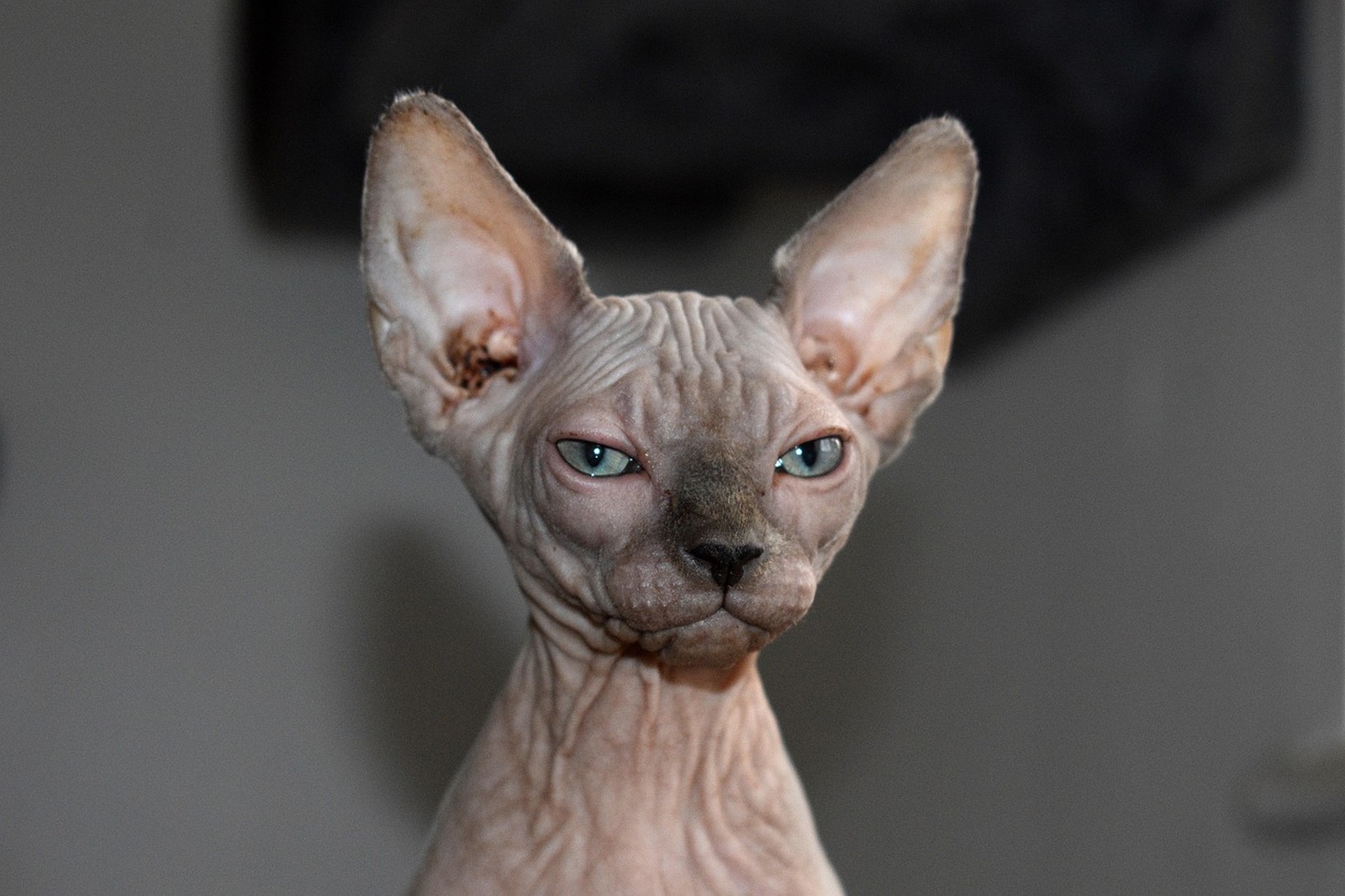
A Sphynx carries three health threads at once: a heart that needs regular scanning, muscles that can show an inherited weakness in kittenhood, and skin with no coat to spread its oils or block the sun. And the hairlessness itself is a health topic: skin produces oil that would normally spread along hair, so Sphynx skin gets greasy, is prone to yeast and bacterial skin issues and ear wax build-up, and sunburns and chills easily.
Skin, Warmth, and the Heart Scan
Plan on regular gentle bathing (usually weekly to fortnightly, as your vet advises for your cat's skin), ear cleaning, and bedding washed often, since the oils transfer there — and treat any skin rash, spots, or ear head-shaking as worth a vet look rather than more bathing, because yeast dermatitis mimics simple grubbiness. Weakness episodes in a kitten — head nodding down, trouble jumping, tiring while eating — fit the myopathy picture and should be assessed early. HCM can be silent, so ask breeders for scan records and keep up annual checks; breathing changes, fainting, or sudden hind-leg problems are emergencies in a Sphynx as in any cat. Indoors is not optional lifestyle advice for this breed — cold and sun are both genuine hazards to bare skin.
Working With Your Vet
With a Sphynx, separate the three threads before the appointment: heart, muscle and skin. Tell the vet the date of the last heart scan, describe any weakness episodes in a kitten exactly as they looked, and photograph skin flare-ups as they change, because grease, yeast and irritation can look alike in a consulting room days later. Dated notes on each thread let the veterinarian judge which one needs attention first.
Breathing changes, collapse, or sudden hind-leg weakness is an emergency; persistent skin or ear problems, or a weak, head-drooping kitten, should be seen promptly.
Log what bare skin makes visible: bath dates and how the skin looked before each one, ear-cleaning dates, any rash or spots with the day they appeared, plus scan dates and monthly weight. A Sphynx shows change on the surface earlier than a coated cat, and a dated sequence of skin notes is what helps a vet tell simple oiliness from yeast dermatitis. Check the log again after any new bedding, detergent or medicine, since all three can show up on unprotected skin.
Scan reports, bath dates and flare-ups belong in a single packet, and KinsLe keeps them in the Pet Passport for whichever clinic you visit next.