
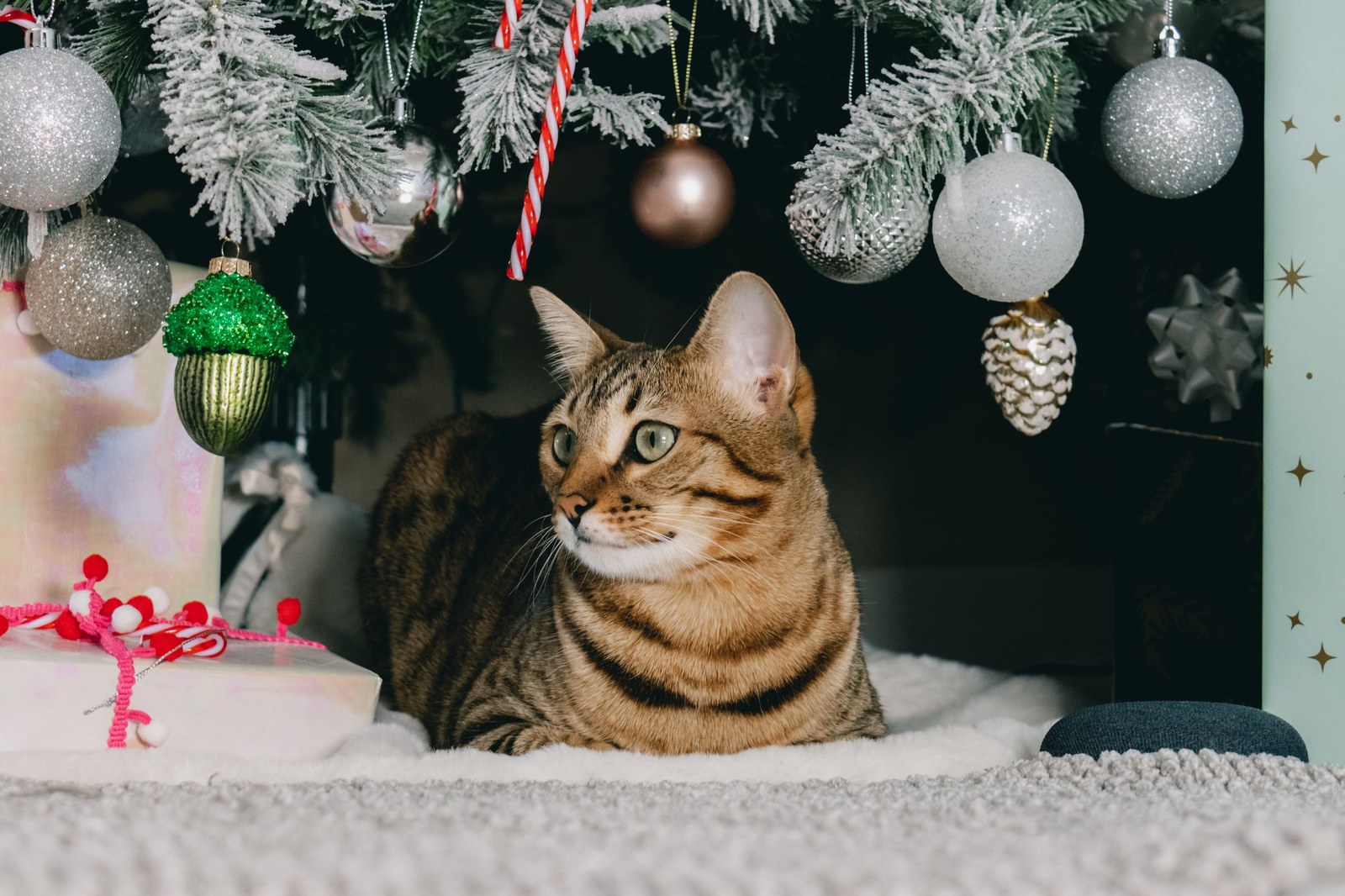
The most hazardous holiday decorations for cats are tinsel, ribbon and string, electrical light cords, glass ornaments, fake snow, and an unsecured Christmas tree itself. If your cat chews, bats, or climbs any of these, the risk ranges from choking and intestinal blockage to electrocution, cuts, and a toppled tree, so the safest approach is to remove the worst items entirely and cat-proof the rest before the season starts.
The Linear Hazards: Tinsel, Ribbon, and String
Cats are drawn to anything long, shiny, and moving, which is exactly why tinsel is so dangerous. A single strand swallowed can bunch up inside the intestines, and as the gut keeps trying to move it along, the string can saw through the intestinal wall. That condition, called a linear foreign body obstruction, is a surgical emergency.
Ribbon on gifts, curling ribbon, yarn from holiday crafts, and the string on ornaments carry the same risk. Keep wrapped presents with ribbon in a closed room until giving time, sweep up ribbon scraps immediately after unwrapping, and never use tinsel at all — there is no safe amount on a tree a cat can reach. If you see string hanging from your cat's mouth or rear, do not pull it. Pulling can cause more damage. Call your veterinarian or an emergency clinic right away.
Ornaments, Lights, and Fake Snow
Glass ornaments break into sharp shards when a curious paw knocks them from a branch. A cat stepping on or chewing the pieces can cut its mouth, paws, or digestive tract. Choose shatterproof ornaments for the lower two-thirds of the tree, and save fragile or heirloom pieces for the very top, out of jumping range, or for a display your cat cannot access.
String lights bring electrical and ingestion risks. Chewing a live cord can cause burns to the mouth and an electric shock. Battery packs, loose bulbs, and wire can also be swallowed. Run cords through protective covers, tape them down along the wall, unplug lights when no one is in the room, and inspect strands for fraying before you hang them.
Spray-on fake snow and flocking can irritate a cat's mouth and stomach if licked. Skip spray snow on any surface your cat can reach, and wipe up glitter that falls to the floor.
Making the Tree Itself Safer
Many cats see a tree as a new climbing post. Use a heavy, wide stand, anchor the tree to a wall or ceiling hook with clear fishing line, and consider placing it in a corner to limit tipping directions. Keep breakable items and food-based decorations — popcorn strings, candy canes, chocolate ornaments — off the tree entirely, because the smell invites climbing and chewing.
Block access when you are not supervising, close the door to the tree room overnight if you can, and give your cat an alternative: a cardboard box, a scratching post, or new toys nearby. A bored cat is far more likely to investigate the tree.
If Something Goes Wrong
Watch for vomiting, loss of appetite, drooling, pawing at the mouth, lethargy, hiding, or a sudden change in litter box habits after the decorations go up. Those signs warrant a prompt call to your veterinarian — do not wait to see if a swallowed item passes on its own, especially string-like objects. Keep your vet's number and the nearest emergency clinic's number on the fridge during the holidays, when regular hours change.
Sharing Cat-Safe Ideas With Your Circle of Love
Practical holiday safety is easier when you learn from other cat owners nearby. KinsLe's Circle of Love connects free Pet Lover and cat-owner members into a local support network — the same community that powers Lost Pet Alerts — where people share what actually worked in real homes, from tree barriers that held up to a determined Maine Coon to ornament swaps that survived kitten season. Your first pet profile is free, and swapping tips before you decorate can save an emergency trip later. Before you hang anything, Circle of Love on KinsLe is where fellow cat owners trade what actually kept their own trees standing and their cats unbothered.