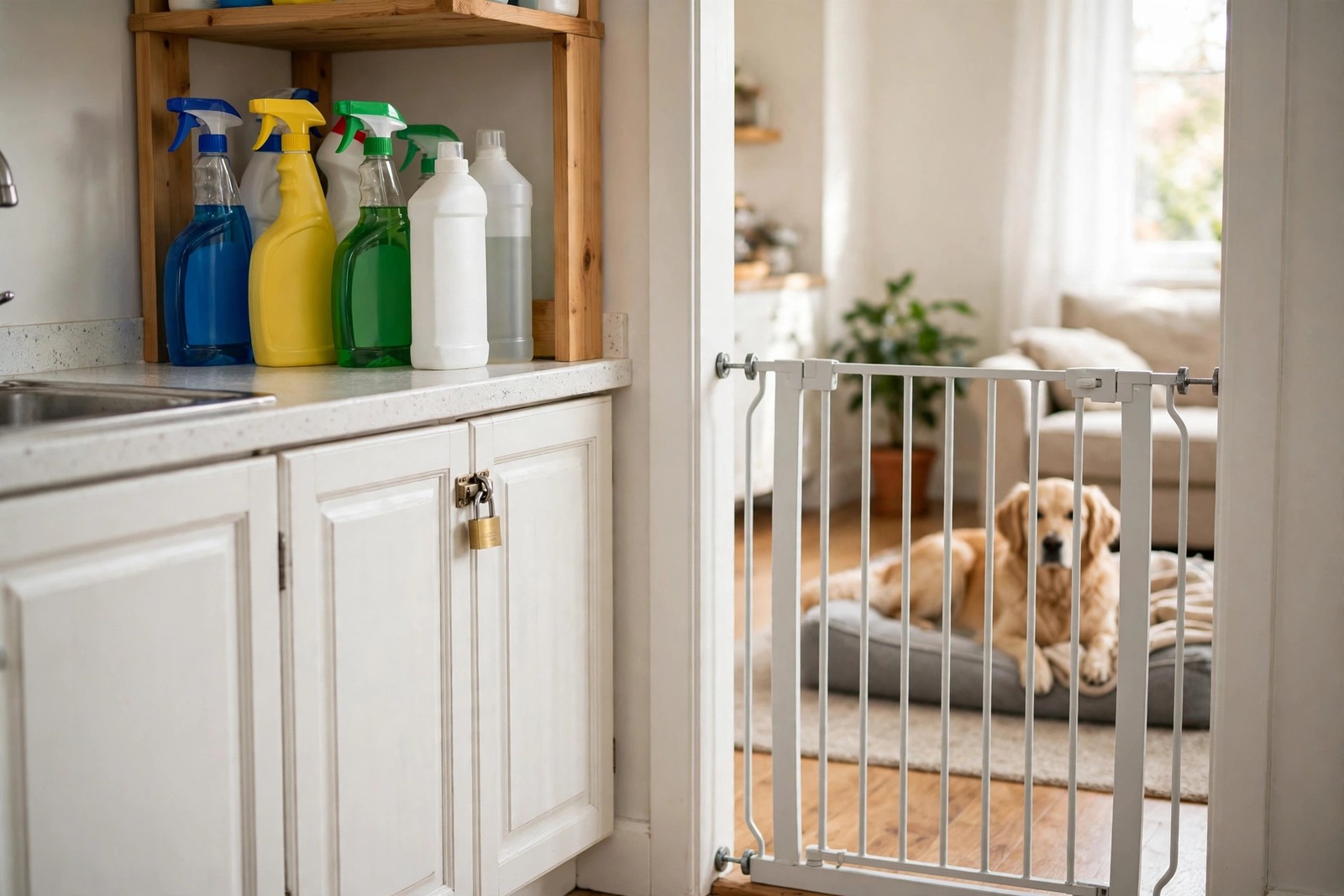
Most dog poisonings from cleaning products do not involve a dog drinking from a bottle. They happen when a dog walks across a freshly mopped floor and licks her paws, licks a still-wet bath or bowl rim, chews a laundry pod that looks and feels like a toy, or noses into a cupboard under the sink that was left ajar. Knowing which products carry the real danger lets you guard those moments properly.
The highest-risk cupboard
Bleach is the household staple to respect most: swallowed, it can burn the mouth, throat, and stomach, and even diluted residue irritates skin and paws. Concentrated disinfectants are next, including phenol-based cleaners — the type that turn cloudy in water — which are particularly harmful if licked from a coat or paws and can cause serious internal damage. Disinfectant sprays and wipes used on floors, crates, and food bowls leave a chemical film exactly where tongues go.
Caustic products are in a class of their own. Drain cleaners and oven cleaners are strongly corrosive: a lick or a paw stepped in a spill can cause deep burns to the mouth, eyes, and skin, and these are the products most likely to need emergency care from a small exposure. Toilet bowl cleaners, especially the concentrated acidic types and the tablets left dissolving in the bowl, make toilet water itself unsafe to drink. Ammonia-based cleaners irritate eyes and airways and become far more dangerous in one specific accident: never mix bleach with ammonia or with an acidic cleaner, because the reaction releases toxic gas that harms everyone in the room, dogs included.
Laundry pods and dishwasher tablets deserve their own mention. A pod's concentrated detergent is sealed in a film that bursts under a bite, squirting straight into the mouth and eyes, and pods stored in a low basket or an open box at dog height are an invitation. Treat them like medication: sealed container, high or locked cupboard.
How exposure usually happens
Think in routes, not bottles. Paws are the commonest route — a dog crosses a wet, freshly cleaned floor, then grooms — so keep her out of the room until floors are fully dry, and rinse cleaned floors, bowls, and crate trays with plain water where the product directions allow it. Buckets are the second route: a mop bucket or a sink of soaking items left unattended is drinking water with cleaner in it. Tip buckets away immediately after use. Spray drift is the third: spraying oven cleaner, mould remover, or air freshener at dog height puts droplets on coat, eyes, and bedding, so move the dog out before you spray, and ventilate before she comes back.
Storage and response rules that work
Store the dangerous list — bleach, disinfectants, drain and oven cleaners, pods and tablets, toilet cleaners — in one locked or high cupboard, never loose under the sink in a house with a dog who can open doors. Keep products in their original labelled containers, because the label is what a veterinarian or poison adviser will ask about first.
If you think she has licked, chewed, or walked through a product, move her away from it, stop her grooming the area if you safely can, and contact a veterinarian promptly, taking the packaging with you or photographing the label. Drooling, pawing at the mouth, vomiting, red or burned-looking skin, squinting, coughing, or sudden quietness after cleaning all justify an urgent call rather than waiting to see. Do not try to make her sick yourself; with corrosive products that causes further burns.
Agreeing which cupboard is the locked one and which products never come out while the dog is in the room, and recording that rule in KinsLe's Family Sharing, keeps the protection in place when partners, older children, or a cleaner are the ones doing the housework.