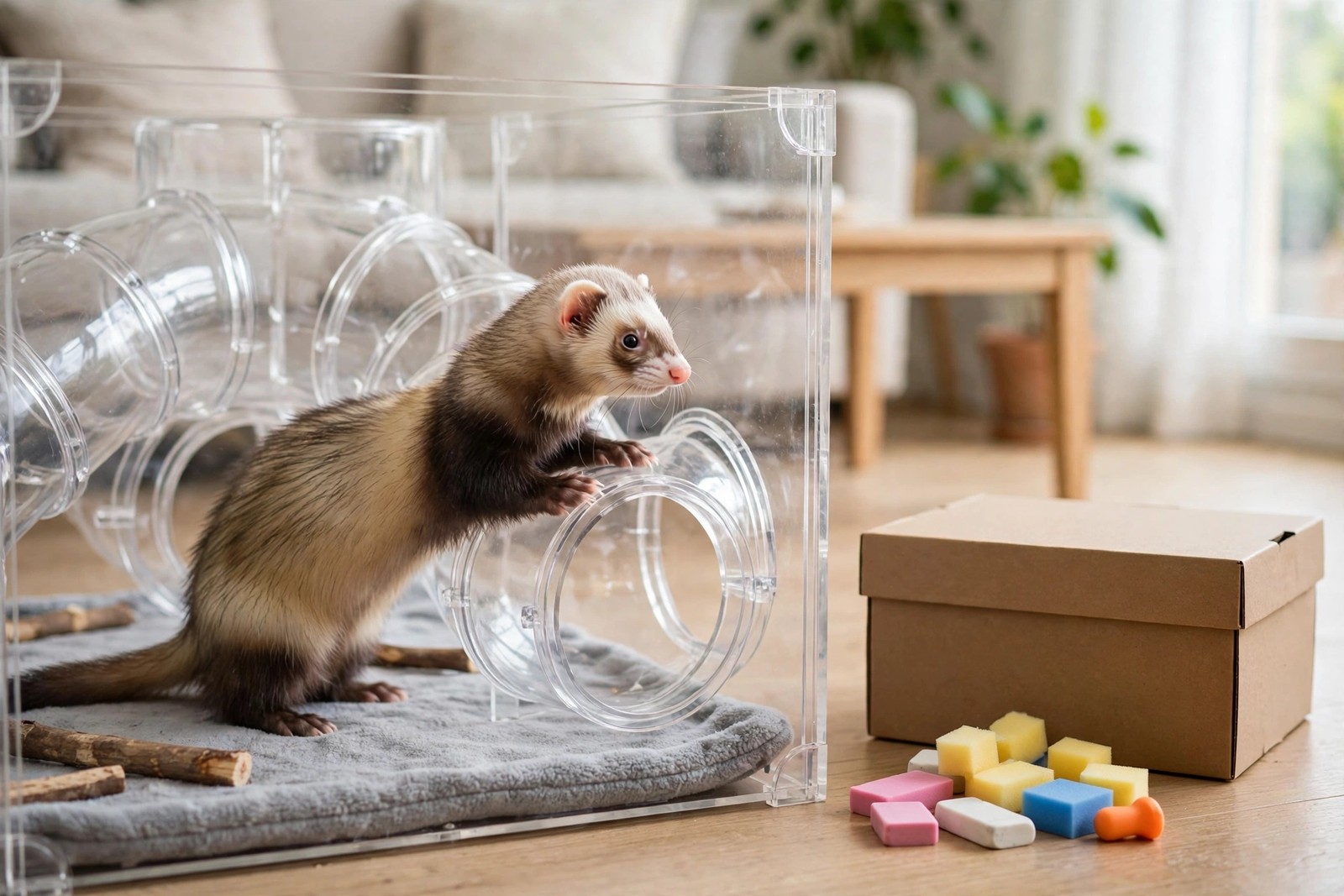
Ferrets do not swallow household objects by accident-prone clumsiness; they seek them out. A ferret investigates the world mouth-first, steals soft objects to stash, and chews rubbery textures with real dedication. Intestinal blockage from swallowed material is one of the commonest true emergencies in ferret practice, and it is almost entirely preventable once you know the list.
The High-Risk List
Work through your home looking for the textures ferrets prefer. Foam tops the list: sponge pieces, foam earplugs, packing foam, foam from inside cushions and pet beds, and the soft soles of insoles. Rubber follows closely — erasers are a classic, along with elastic bands, latex gloves, rubber toy parts, balloon fragments and the rubber feet off appliances or furniture. Soft plastics come next: plastic bags chewed into pieces, bottle tops gnawed small, cable insulation, and vinyl items. Fabric counts too: sock and underwear pieces, bedding fragments and fleece chewed during nesting are all found in ferret stomachs. Finally the small hard sweepings — buttons, coins, earring backs, and children's toy parts small enough to fit a ferret's mouth.
Pay special attention to the stash. Ferrets hide prizes under sofas, inside recliner mechanisms and behind appliances, so finding one eraser in a stash means searching the whole route between play area and hiding place, not just removing the one you saw.
Why It Becomes an Emergency Fast
A ferret's gut is narrow, and a foam fragment that went down easily can swell or lodge and stop everything behind it. Blockages do not pass given time in the way owners hope; a complete obstruction damages the gut wall and can kill within days. Learn this animal's warning signs rather than waiting for certainty: repeated vomiting or retching, drooling or pawing at the mouth, teeth-grinding, refusing favourite food, stools shrinking to nothing, a tender or tense belly, and a ferret that goes abruptly quiet and flat. Any cluster of those signs after access to chewable material means a vet the same day — say plainly that you suspect a swallowed foreign body, because that history changes how fast the vet moves.
Ferret-Proofing as a Daily System
Do a floor-level sweep before every free-roam session, at ferret height, in ferret order: under sofas, behind doors, along skirting, inside any room the ferret can reach through a gap you forgot existed. Ferrets fit through openings owners swear are too small, including under doors and into cupboard voids, so block those routes as part of the same sweep. Move the high-risk list into closed drawers and lidded boxes permanently — sponges live in a cupboard, not on the sink edge; shoes with foam insoles go behind a closed door; craft rubber, erasers and elastic bands never share a room with playtime.
Offer legal chewing and stashing instead: sturdy toys too large to break apart, supervised digging boxes, and tunnels that cannot be shredded. Rotate them so novelty stays in the safe pile.
In a shared household the sweep fails when everyone assumes someone else did it, so put the pre-play check on a named rota in KinsLe's Care Teams, timestamped when done, and the floor is verified clear before the ferret comes out — not remembered afterwards.