
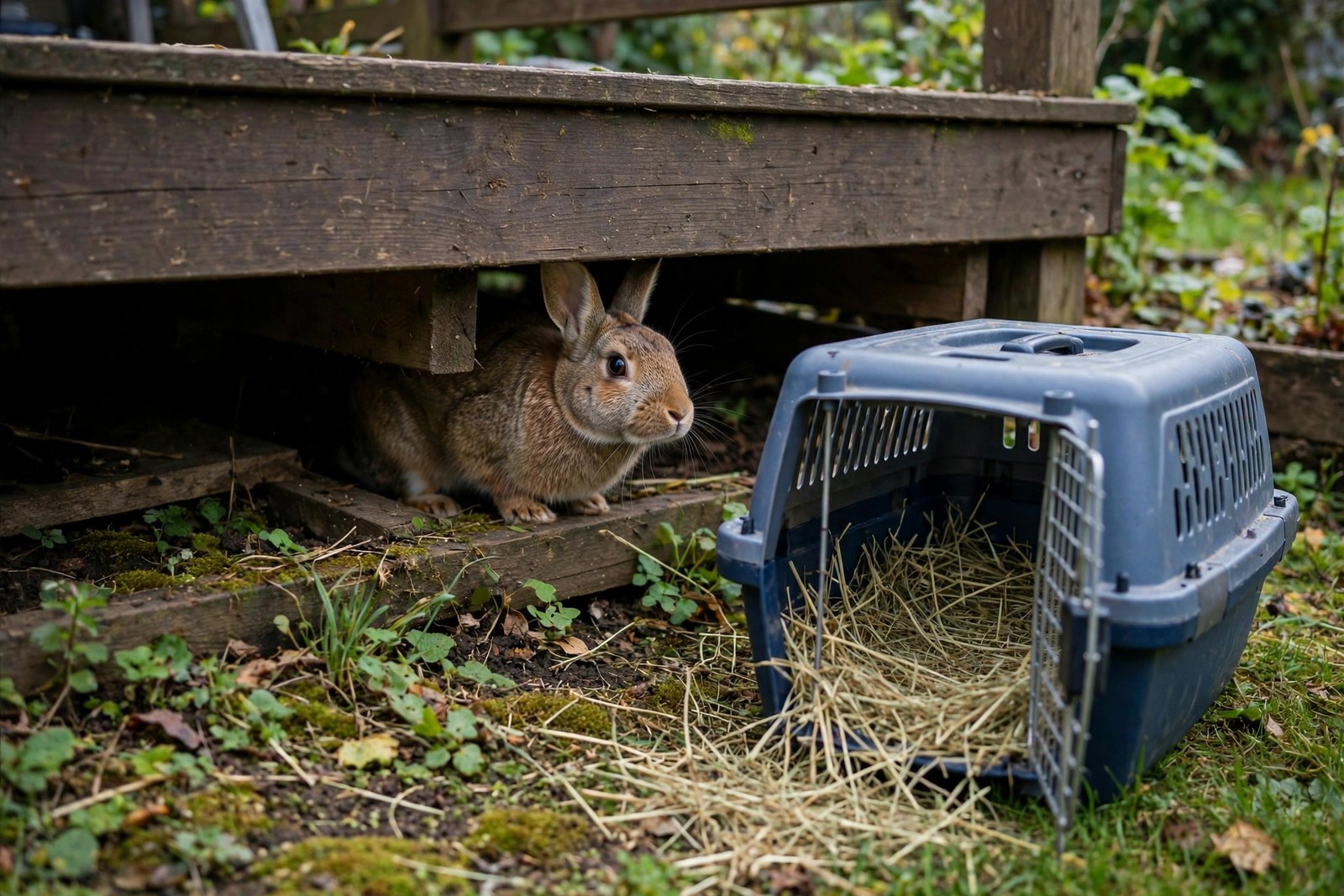
If your rabbit or guinea pig escapes, search quietly and close to home first — frightened small pets almost always hide nearby, under furniture, sheds, decking, or dense shrubs, rather than running far. Move slowly, speak softly, and resist the urge to chase: a scared prey animal that feels pursued will wedge itself deeper into cover or bolt somewhere harder to reach. Most escapes end within a few meters of where they started, so patience and a calm, methodical search beat panic every time.
Search the Hiding Spots First
Indoors, check behind appliances, under sofas and beds, inside cupboards left ajar, and behind curtains — anywhere dark, warm, and body-sized. Outdoors, work outward in a slow spiral from the escape point: under the hutch, beneath decking, behind plant pots, inside open sheds and garages, and along fence lines where a small body can squeeze behind a compost bin. Get down to pet height; gaps you would never notice standing up become obvious at ground level. A flashlight helps even in daylight, because eyes shine back from dark corners.
Lure, Don't Chase
Set up a "home base" near where the pet vanished: their familiar hideaway, carrier, or hutch with the door open, filled with hay and a favorite treat — a slice of banana or some fragrant herbs for a rabbit, a beloved veggie for a guinea pig. Many pets return to the smell of home once the garden goes quiet. Sit nearby at a distance and wait rather than looming over the trap. Guinea pigs may answer a rustled treat bag or a familiar whistle; rabbits often emerge at dusk when they feel safer. If you spot your pet, crouch low, let them approach the food, and scoop calmly from underneath rather than grabbing from above, which feels like a predator strike.
Get the Neighborhood Looking
Tell neighbors promptly and ask them to check their gardens, sheds, and garages before closing them up for the night — small pets slip through fence gaps and get accidentally shut in. A frightened rabbit can sit motionless for hours, so ask people to look, not just call out. Post in local community groups with a clear photo and your street area, and let nearby vets and rescues know in case someone hands your pet in. Leave your contact details with everyone you speak to.
Make the Next Escape Less Likely
Once your pet is home and has had time to settle with food and water, walk the escape route and work out how it happened: a latch not fully shot, a gap under the run, a child-sized hand and an open door. Fix the weakness the same day, and review handling routines — most escapes happen during cleaning or transfer, so use a carrier for moves rather than carrying a wriggling pet across the garden. If your pet seems injured, off their food, or unusually still after the ordeal, have your veterinarian check them promptly, since prey animals hide problems well.
A Faster Way to Be Found
Speed matters, and this is where KinsLe helps before an escape ever happens. The alert for a missing rabbit or guinea pig sits in a profile that costs nothing to use, becomes visible when people look at the map, and gives the person who finds your pet a direct message route to you, without posting your phone number publicly or waiting for a group admin to approve a post. Every profile also carries a unique QR ID linking straight to your pet's details. When an escape happens, open KinsLe, switch on the Lost Pet Alert System from that profile, and let anyone who spots your pet reach you by message through it.