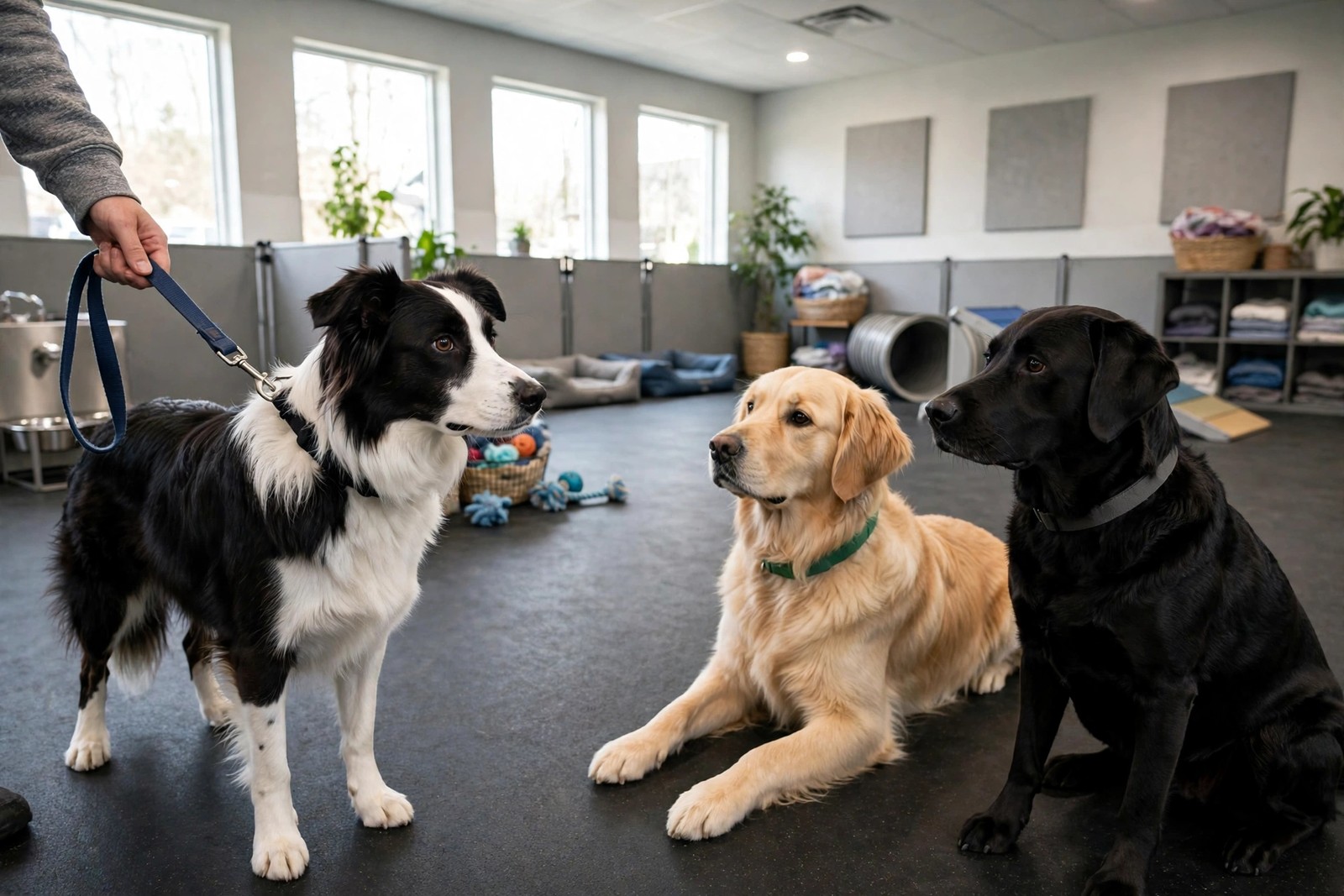
Group play puts your dog nose to nose with dozens of others, so daycares collect a standard file before the first session. Facilities set their own exact rules, but the list below covers what reputable daycares ask for, and arriving with all of it ready makes enrolment a five-minute job instead of a week of chasing paperwork.
Vaccination Proof
Expect to show dated certificates, not just your word, for three core vaccines. Rabies vaccination is the near-universal requirement and is a legal requirement for dogs in many places. Distemper cover, usually given as a combined distemper and parvovirus vaccine, must be current. Bordetella, the kennel cough vaccine, is required by almost every group-play facility because dogs mix so closely, and many daycares want it refreshed more often than the standard yearly interval. Some facilities also ask for canine influenza cover. Puppies are usually admitted only once their initial vaccine course is complete, and most daycares set a minimum age, so ask before you book a trial day for a young pup.
Spay, Neuter, and Health Status
Most daycares require dogs over a certain age, commonly around six or seven months, to be spayed or neutered for group play, and females in season are excluded until the season ends. You will also be asked to declare current flea and worm prevention, any diagnosed conditions such as heart problems, seizures, or joint disease, any allergies, and whether your dog is taking medication the staff may need to give during the day. Honest answers matter here: staff plan groups and rest breaks around what you tell them.
Temperament Assessment
Almost every group-play daycare runs an assessment, often called a trial day or evaluation, before accepting a dog. Staff introduce your dog to a few calm dogs first, then to a small group, and watch body language, play style, recall to handlers, and how the dog copes with breaks. Dogs who guard toys fiercely, pin or chase relentlessly, or panic in groups may be offered solo care or one-to-one walks instead, which is a safety decision, not a judgement of your dog.
Contacts, Vet Details, and Permissions
The file also includes you: your phone number, an emergency contact who can collect the dog if you cannot, your veterinarian's name and clinic number, and your out-of-hours emergency clinic. Daycares ask for signed intake forms covering emergency treatment authorisation, who may collect your dog, photo permissions, and agreement to their rules on late pickup and damaged property. Microchip details and a clear description or photo of your dog round out the identification section.
Feeding and Routine Notes
If your dog stays over a mealtime, the daycare needs food measured out with written amounts and times, any food that must never be given, and notes on quirks that affect care, such as resource guarding around bowls, fear of thunder, or a habit of eating socks. The more specific the note, the safer the day.
Assembling this file once in KinsLe Pet Passport, which keeps records together in one portable packet, means the same complete set can go to a daycare, a boarder, or a new vet without rebuilding it each time.