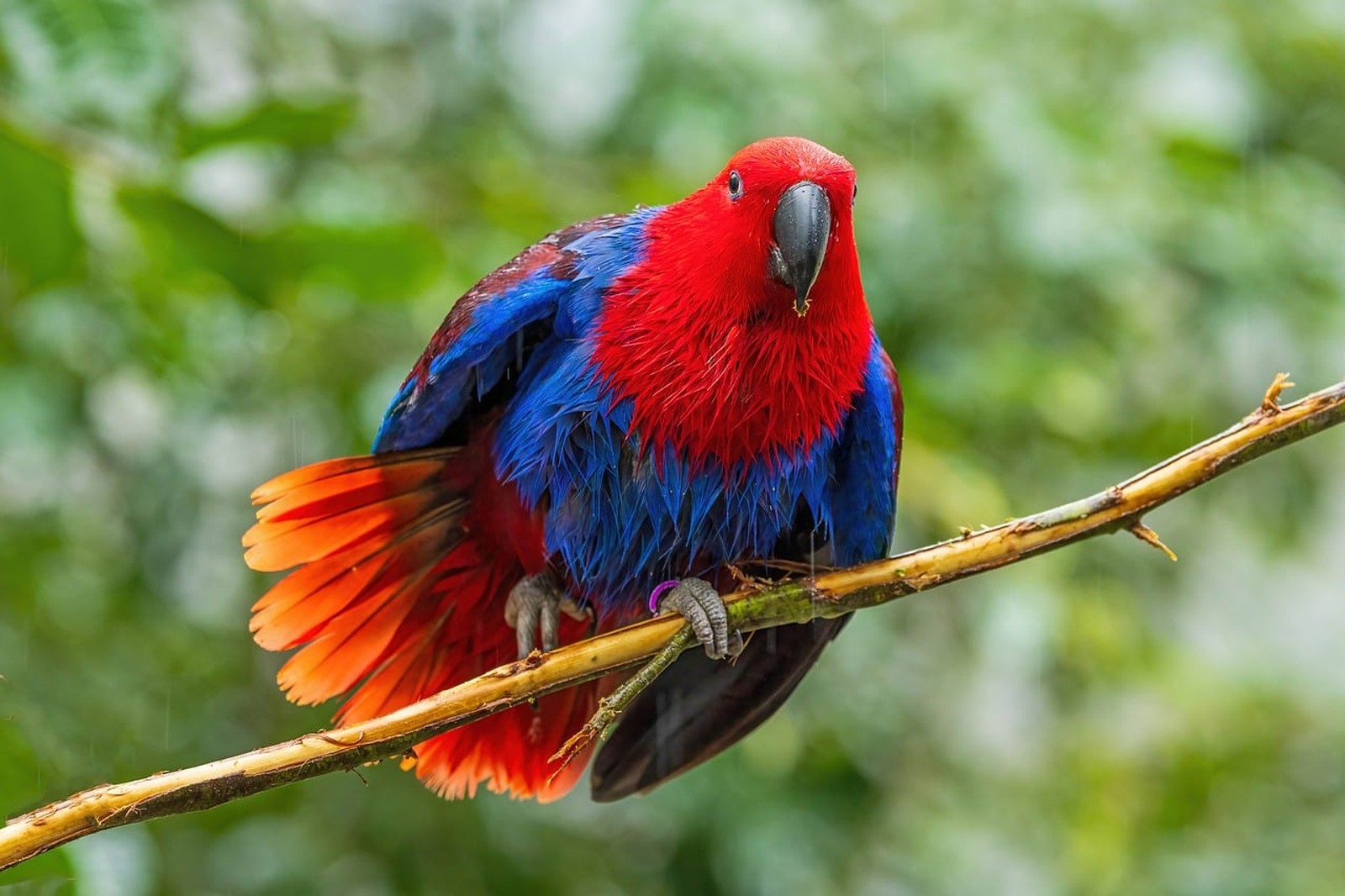
The small metal ring on an eclectus parrot's leg looks like an identity tag, and many owners assume it works like one — name, owner, phone number, a route home. It does not. A closed band is put on the bird as a young chick, slipped over the foot before the toes are large enough to stop it, and it stays for life as a birth record rather than an ownership document.
Reading the Three Pieces of the Band
Most closed bands carry three elements, though exact formats vary between breeders and countries. The letters are a breeder's code: the initials or registered mark of the aviary that bred the bird. The year — given in two or four figures — is the hatch year, which is also why a closed band is trusted evidence that a bird was captive-bred as a chick rather than taken from the wild later, since only a nestling's foot is small enough to receive one. The remaining number is the individual bird number, the chick's own entry in that breeder's records for that year. Together the three parts answer the questions who bred this bird, in what year, and which chick it was.
What the Band Cannot Do for a Lost Bird
If your eclectus escapes and is caught by a kind stranger, the band gives that person no way to reach you. There is no registry a finder can search by band number in the way a microchip database can be queried, and no contact detail is hidden in the codes. A band also does not, on its own, prove the bird is yours: anyone could quote a number they had been given. What proves a match is your own record, prepared before you ever need it — the full band number written down character for character, recent dated photographs showing the bird from both sides, and written notes of distinguishing marks: an unusual feather, a beak quirk, words the bird says, the exact shade and patterning of its plumage.
Build the Record Now, and Keep the Number Private
Copy the band number down on a calm day at home, reading it in good light and checking each character twice, since a single transposed digit quietly ruins the whole exercise. Add photographs taken the same day and refresh them as the bird's plumage or condition changes, plus the distinguishing notes, your contact details, and the bird's veterinary contact. Store a copy with a trusted person away from home as well. One discipline matters as much as the record itself: never publish the full band number in a public lost-bird appeal. Public posts carry description, photographs, and the area the bird was lost from — information that helps people spot a bird. The band number is your verification key, and it belongs in private hands only: given directly to the veterinarian, shelter, or police officer who is holding a found eclectus and needs to check it against your record. A claimant who can quote the full number privately is very probably genuine; a number broadcast publicly can be quoted by anyone.
A Record That Travels With the Bird
Birds outlive arrangements: eclectus parrots commonly live for decades, and a bird may be rehomed, boarded, or inherited along the way, taking its band but too often leaving its paperwork behind. Transferrable Profiles answers that by keeping the band record, photographs, and distinguishing notes inside the bird's own profile, which passes intact to a new keeper whenever the bird changes hands, so the recovery file is never orphaned from the animal it describes. The new keeper updates contact details while the band information — the part that can never change — stays exactly as recorded. Whoever holds the bird holds its identity, complete and ready, on the worst day as well as the ordinary ones. Keeping that profile current inside the Transferrable Profiles record on KinsLe means the number, the photos, and the marks are one search away if your eclectus ever slips out.