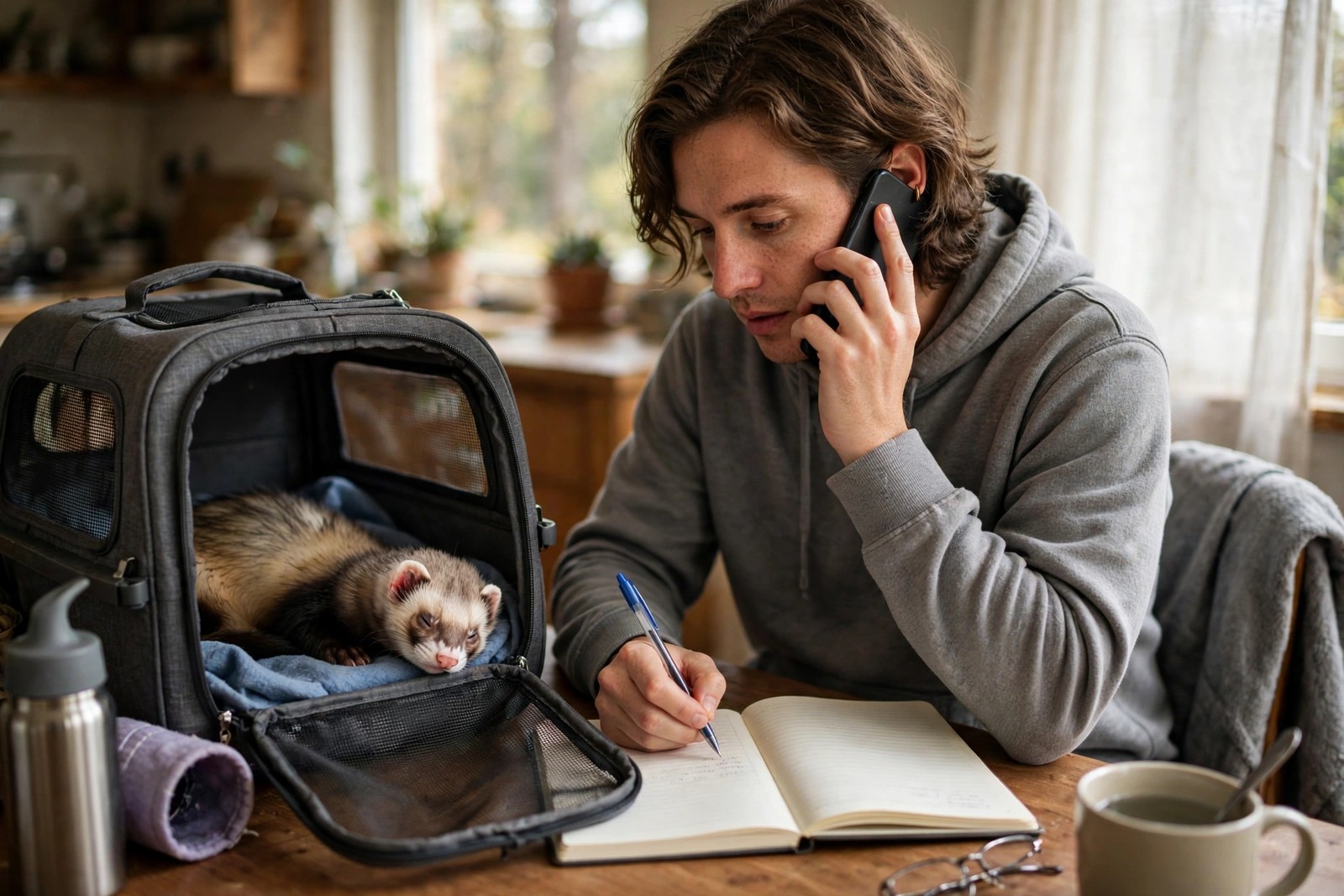
A ferret who has gone quiet and stopped eating needs a triage-ready summary, not a vague worry, when you phone the surgery. Note: when she last ate normally and how much she usually eats; when she last passed stool and urine and what they looked like (black, tarry stool matters — say so); her temperature if you can take it safely (a normal ferret runs about 38–39 °C / 101–102 °F, but do not struggle with a sick ferret to get it); any vomiting, drooling, or pawing at the mouth (a classic nausea and low-blood-sugar sign in ferrets); whether she could have swallowed something — rubber, foam, and soft plastic are ferret specialities and blockages are common; and her age, vaccination status, and any known conditions or medications.
Why This List Is Not Bureaucracy
Each item points the vet at a different emergency: pawing at the mouth with drooling suggests nausea or dangerously low blood sugar (insulinoma is common in middle-aged ferrets — a ferret who is limp, glassy-eyed, drooling, or seizuring may need a little honey or sugar syrup on the gums while you phone, if your vet advises it); possible swallowed objects point to obstruction; tarry stool points to bleeding ulcers; gradual decline with hair loss points to adrenal disease. Write the timeline down before you call, because stressed owners forget sequence, and sequence is diagnosis. Keep the ferret warm, quiet, and contained, do not offer a big meal 'to see if she eats', and be ready to go in: with ferrets, vets would always rather see a bright ferret who rallied than a collapsed one who waited.
Working With Your Vet
Make the call in the order a vet triages: say first that your ferret is lethargic and off her food, then give when she last ate normally, what her stools and urine look like, and whether drooling, vomiting, or pawing at her mouth has appeared. Add anything she could have swallowed and her age and known conditions, because each answer points the surgery towards a different emergency and a different speed of response. This article offers general information only; only a veterinarian who examines her can make a diagnosis.
A lethargic ferret who is off food should be phoned about today, not tomorrow — if she is limp, drooling, seizuring, or cannot be roused properly, that is an emergency now.
The Ferret Baseline Worth Keeping
For this species, a useful log is short and specific: her weight from a weekly weigh-in, how much kibble disappeared overnight, stool colour and consistency, water intake, and how long her sleep stretches run compared with her usual pattern. Ferrets sleep deeply even when well, so it is change from her own baseline — a missed meal, a quieter play burst, a tarry stool — that earns a call, and a fortnight of dated entries lets the vet see that change at once instead of reconstructing it from a worried summary.
Keep that timeline where the surgery can see it too: the portable packet in KinsLe, this ferret's Pet Passport, carries her earlier weights, vaccine dates, and past episodes into every appointment.