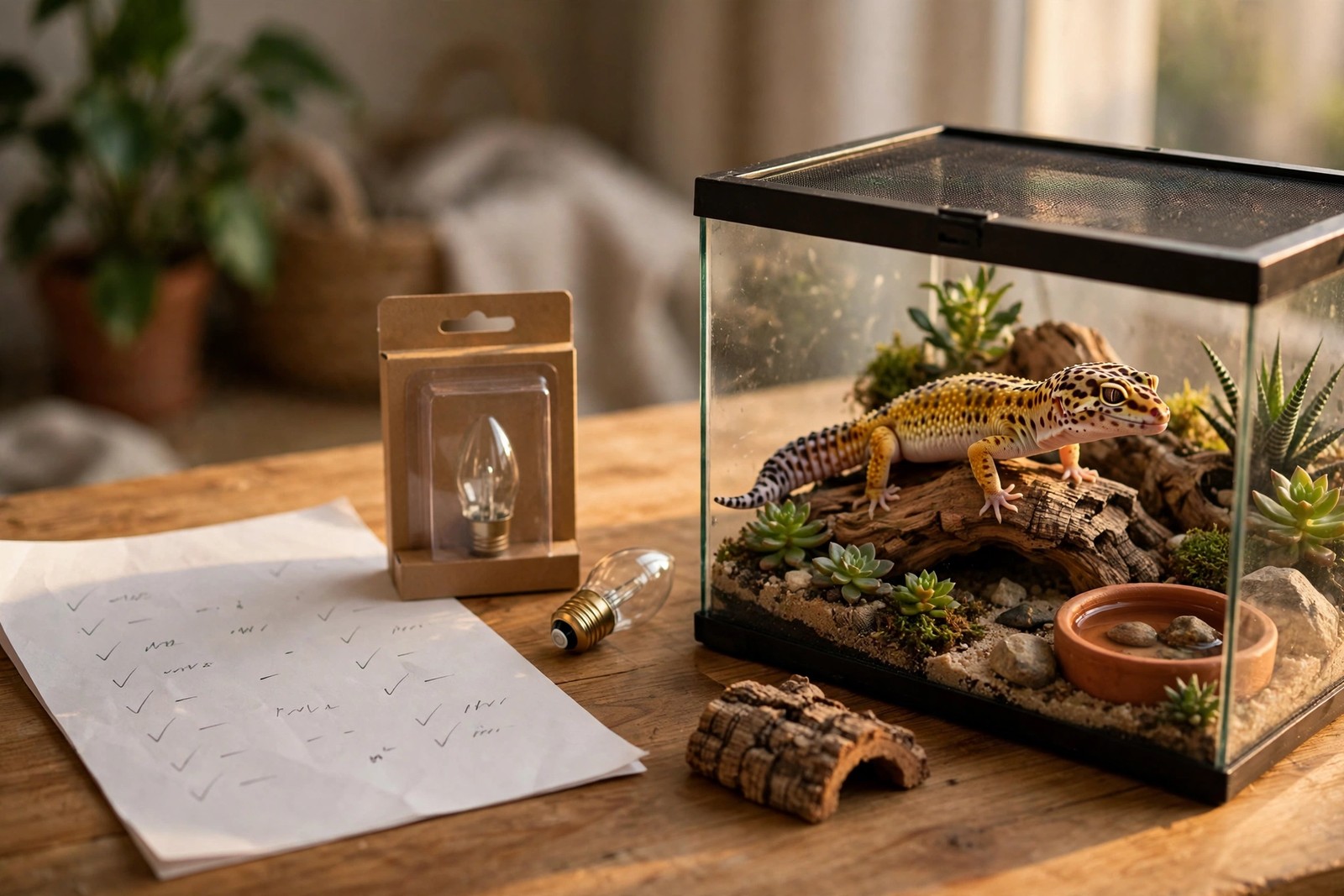
A reptile carer is not mainly feeding your pet — they are keeping a controlled climate running in your absence. Dogs forgive a late meal; a bearded dragon under a failed lamp or a python in a cold room cannot tell anyone. Your handover therefore needs to be a working sheet, written for the enclosure in front of them, covering the numbers, the routine, and the emergencies in that order.
The Enclosure Numbers, Written Plainly
State the warm-side and cool-side temperatures your animal should have, the humidity range, and where each thermometer or hygrometer sits, so the carer compares readings in the right places. Write the timer schedule for heat and UV lights — on and off times — and say clearly that the thermostat and its probe must not be moved, unplugged, or adjusted unless a reading moves outside the range you have given and they have called you first. Note which bulb is the spare, where it is kept, and how to change it, because a blown basking lamp is a classic holiday emergency.
Feeding, Water, and Misting in Exact Terms
List feeding days rather than “every few days”: which prey or portion, what size, how many, and whether food gets dusted with supplement, with a note of what a normal refusal looks like so one skipped meal does not trigger panic. Cover water just as precisely — bowl refreshed daily, misting morning and evening for species that drink droplets, bathing only if that is genuinely part of the routine. Add cleaning expectations in plain terms: spot-clean droppings as seen, full substrate changes can wait for you unless you say otherwise, and hands washed before and after any handling or cleaning.
Handling Limits and the Do-Not-Touch List
Say how much handling is welcome: many reptiles are best left alone beyond essential checks, and a nervous gecko or a snake that has just eaten should not be lifted for entertainment. Name the specific traps for your species and setup — never lift a gecko by its tail, never feed a snake in its enclosure if you use a feeding tub, never leave live insects in overnight with a sleeping lizard. A short do-not-touch list — thermostat, probe, timer plugs, and any locked or taped fittings — prevents the well-meant tidy-up that quietly breaks a working setup.
Emergencies, Contacts, and a Trial Run
End the sheet with what to do if the power fails (keep the enclosure closed, add insulation around it, call you), the signs that mean call the vet the same day — injury, a prolapse, gasping or wheezing, a limb caught or burned — and both your phone number and a reptile vet's details, with permission for the carer to authorise urgent care. Walk the carer through the sheet at the enclosure once before you leave and send a photo set of the settings as backup. Reptiles are not routinely vaccinated or microchipped, so this sheet — temperatures, feeding and shed notes, behaviour quirks, and contacts — is their real care record. KinsLe's Pet Passport holds that handover in one portable packet, so your carer works from a single complete sheet instead of hunting through messages while a thermometer climbs.