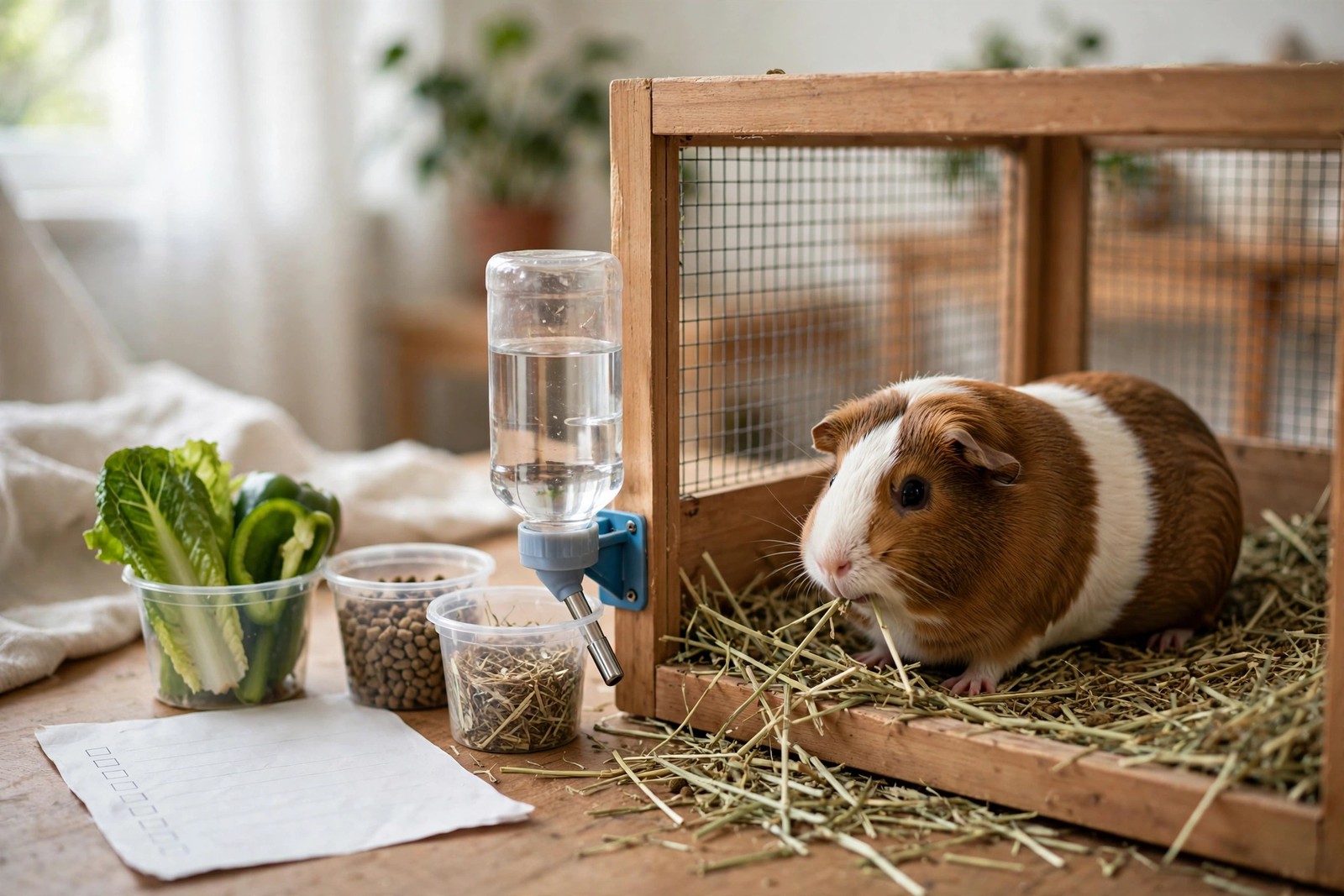
Small pets are unforgiving of vague instructions. A dog sitter can improvise a walk; a rabbit sitter who guesses at feeding can miss that the hay rack stood empty all weekend or that eating has slowed — and for prey animals that hide illness, the sitter's checklist is often the only early-warning system you have. Write it as if the sitter knows nothing about your species, because a kind neighbour may genuinely not know that a rabbit must never stop eating or that a guinea pig needs vitamin C in its diet daily.
Feeding: Exact Foods, Amounts and Timing
Name the foods precisely and portion them in advance where you can. For a rabbit or guinea pig, state that hay is unlimited and available at all times, name the hay type, and show where the supply is stored. Give measured amounts for pellets or muesli in the scoop or cup you actually use — a sitter cannot reproduce a handful — and list the fresh vegetables or greens your pet already eats safely, with rough quantities per day, plus foods that must never be offered. Pre-portioning daily food bags removes nearly all guesswork for stays of a week or so.
Add water instructions explicitly: bottle, bowl, or both; how often to check and refresh; and how to test that a bottle ball valve is actually flowing, since a blocked spout can leave an animal without water while the bottle still looks full. Note feeding times and any individual quirks — the guinea pig that will not eat while watched, the rabbit that takes medication hidden in a favourite leaf — with medication written as a separate, unmissable line giving the name, the amount you have been told to give, the time, and what to do if a dose is refused: call you or the vet, never double the next one.
Cleaning, Housing and Handling Rules
Write the cleaning routine as a schedule: daily spot-clean of wet bedding and toilet corners, water and bowl washing, and whether a full clean falls inside the sitting period — if it does, specify the bedding to use, how much, and where the used bedding goes. Include room temperature limits, draughts or direct sun to avoid, and anything electrical, such as heat mats, that must stay on or off.
Handling rules protect both parties. State who may be picked up and exactly how — a rabbit supported under the chest and hindquarters, never by the ears alone — who prefers not to be held at all, and how out-of-enclosure time works: which room is safe, and how the animal is caught calmly when exercise time ends. Warn about individual habits honestly: the hamster that bites when woken, the ferret that steals and hides objects, the guinea pig that freezes rather than struggles when frightened.
What Normal Looks Like, and What Is Not
Describe your pet's ordinary day in a few lines: when active, when asleep, typical appetite, droppings, sounds and sociability. Then list the changes that should trigger a call to you and the vet the same day: not eating or a clear drop in appetite, far fewer droppings than usual, hiding in an animal that normally greets people, laboured breathing, a wet chin or drooling, limping, or any animal found cold, limp or unresponsive — that last group is an emergency, not a wait-until-morning note. Leave your vet's name, address and phone number, the out-of-hours service your vet directs clients to, your own contact details, and a second emergency contact who can authorise and collect the animal if you cannot be reached.
Finish with the practical map: where food, hay, bedding, cleaning supplies, the carrier and a torch are kept, and how you want to be updated — a daily message with a photo suits owners well and quietly proves the routine is running. Packing all of this into KinsLe Care Pass gives your sitter one time-limited, complete set of instructions for your pet — feeding, cleaning, handling and emergency contacts included — that expires when you are home instead of lingering in someone's inbox.