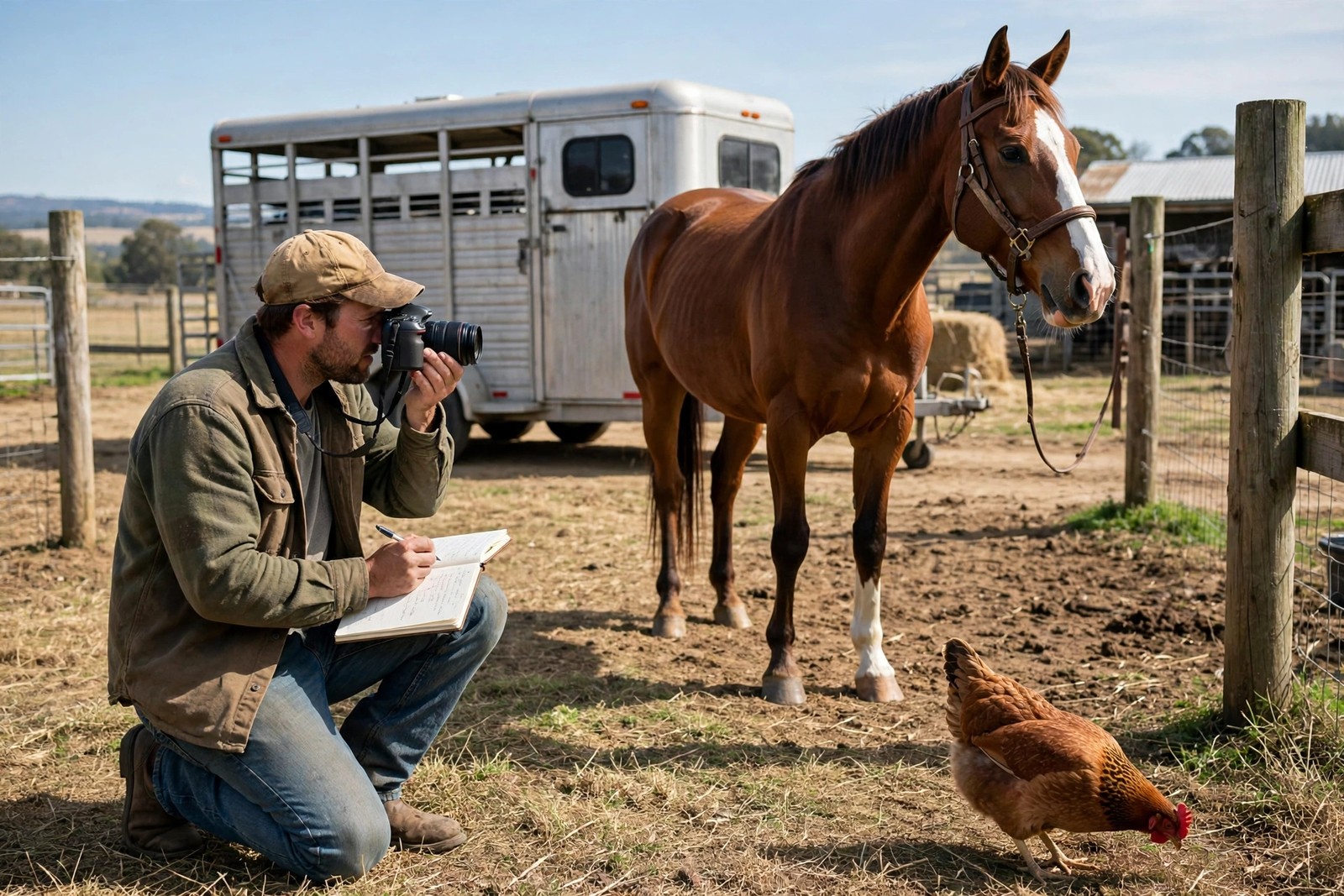
An arrival record written on day one is worth more than a file reconstructed at sale time, at a vet emergency, or during a dispute about what was promised. Farm animals change hands with surprisingly little paper, and memory quietly edits the details: the seller said the mare was nine, the teeth later suggest twelve; the worming was mentioned, but nobody wrote down what was used or when. A disciplined arrival entry takes twenty minutes and protects you, the animal, and every animal already on your farm.
Identity and Source: Who This Animal Is and Where It Came From
Record the animal's name, species, breed, sex, colour and markings, ear tag, brand, freeze mark or microchip number where present, and its age as stated by the seller, flagged as stated rather than verified if you have not confirmed it. Photograph the animal on arrival from both sides, the face, and any distinctive marks or existing scars, with the date attached to the images.
Then record the transaction itself: the seller's name, address and contact details, the purchase date and arrival date if they differ, the price paid or the transfer terms, and any paperwork handed over — registration documents, vaccination record, worming history, breeding history, or a bill of sale. Note who transported the animal and how long the journey took, because an animal off its feed after a long journey is a different concern from one that has travelled twenty minutes.
Condition and Treatment on Arrival
Walk the animal over the same day and write down what you find: body condition in plain terms, coat and skin state, feet and leg condition, any wounds, swellings, discharge, coughing, scouring or lameness, and behaviour — bright, nervous, unusually quiet. Record what the seller says it has been fed, in what amounts, so you can transition feeds gradually instead of switching abruptly on day one.
List every treatment the seller reports as already given — worming, vaccinations, foot trimming, dental work — with dates where known, and mark clearly which entries are seller-reported and which you have documents for. If anything is unknown, write unknown. An honest gap in the record is useful information; a guessed date written as fact is a future error.
Quarantine and the First Vet Check
Record where the animal is housed on arrival and your quarantine plan: separate grazing or housing away from the resident herd, separate tools and buckets where practical, and the date you intend the isolation period to end if all stays well. New arrivals can carry parasites or infections that resident animals have no exposure to, so note daily observations during quarantine — appetite, droppings, coughing, nasal discharge, temperature if you take it — in the same entry, dated as you go.
Book a vet check for the arrival and record its findings as part of the same packet: teeth and age assessment, worming plan based on your yard's programme, vaccination status and what is still needed, and any condition the vet wants monitored. If the animal is intended for breeding, add the breeding soundness findings and, for a female, any known service dates or pregnancy status. The vet's age assessment matters commercially as well as medically, because it replaces the seller's stated age with a professional estimate you can plan feeding and work around.
Settling, Feeding and Joining the Herd
Close the arrival record with the forward plan: the feed transition schedule from the seller's ration to yours, which group the animal will eventually join, and any handling notes for staff or family — easy to catch, headshy on the left, kicks at the wash bay. Update the record when quarantine ends and the animal joins the herd.
Kept this way, the arrival entry becomes the first page of that animal's lifetime file rather than a scrap of paper in the tack room. Holding it in KinsLe Pet Passport keeps the source details, dated arrival photographs, seller-reported history and first vet findings together in one packet that follows the animal through every later vet visit, move and sale.