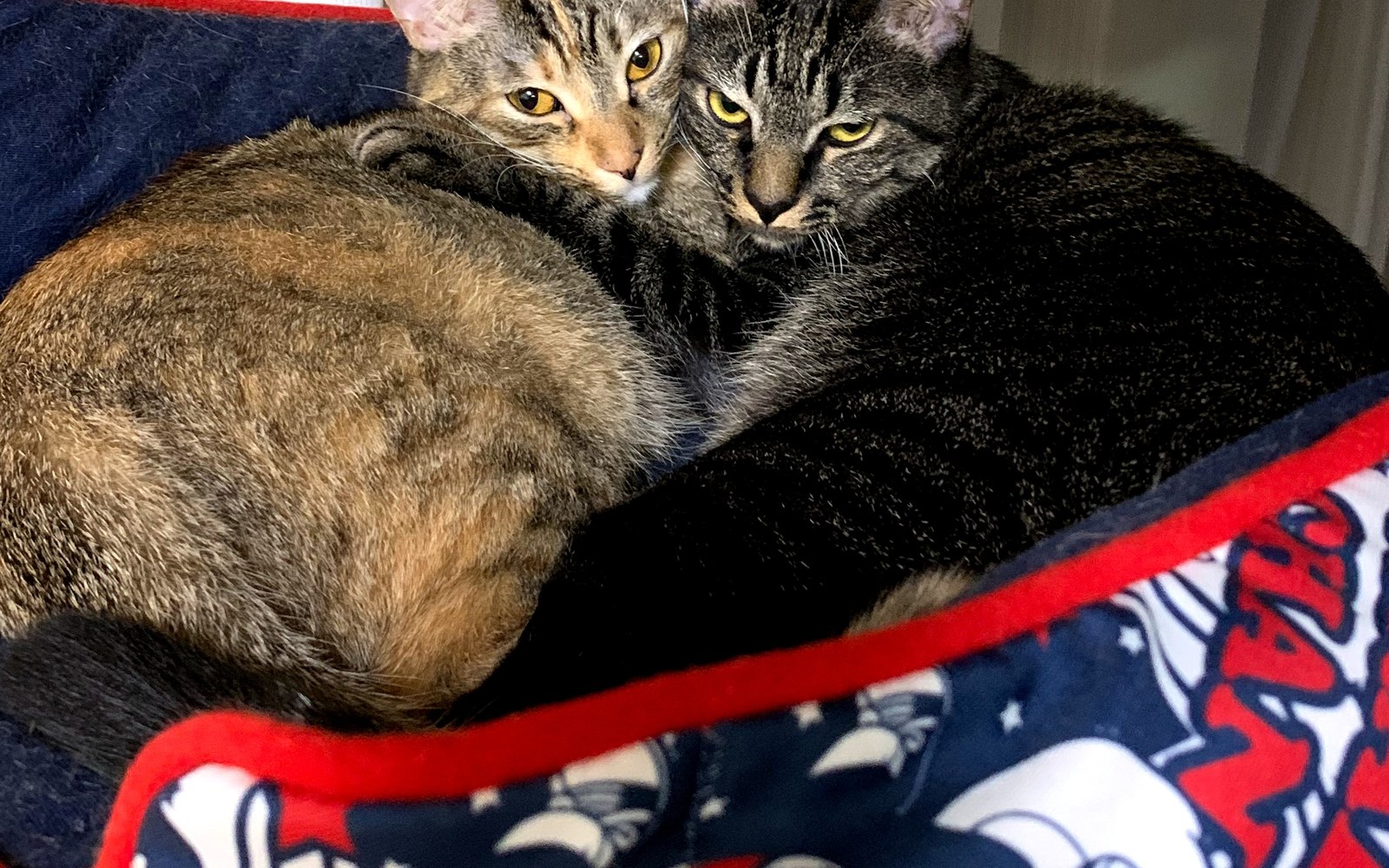
A bonded pair is two cats who rely on each other for comfort, confidence, and daily companionship — and no, you should not split them up. Bonded cats separated from each other can become stressed, withdrawn, or stop eating, which is why shelters almost always require that they be adopted together.
How bonding actually looks
Bonding is more than two cats tolerating each other. Bonded cats sleep touching, groom each other, play together, and look for each other when one leaves the room. A shy cat will often follow her confident partner into new situations like a shadow — the partner is effectively her translator for the world. Littermates raised together frequently bond, but so do unrelated adults who have shared a home or a shelter room through a stressful period.
Staff can usually tell you whether a pair is truly bonded or simply friendly kennel-mates. True bonds show in the details: eating side by side without tension, choosing to share one bed when two are available, and visible searching behaviour when separated even briefly for a vet check.
What happens when pairs are split
The stories are sadly consistent. One or both cats may grieve: crying at night, hiding, losing appetite, or becoming clingy or withdrawn in ways that look like behaviour problems but are really loss. Sometimes the decline is immediate; sometimes the more dependent cat fades slowly over weeks. Shelters ask for joint adoption precisely because they have watched these outcomes and will not risk them for a quicker placement.
There is also a practical upside you might not expect: adopting the pair usually makes your life easier. The transition is smoother, the cats entertain and reassure each other, and the shy one often blossoms faster with her anchor beside her than she ever would alone.
Life with a bonded pair at home
Give them shared and separate resources: two litter boxes plus a spare, a couple of feeding spots, and resting places both together-sized and solo. Expect their relationship to keep evolving in your home — most pairs stay close for life, though like any siblings they will have the odd squabble over the best sun patch. Do not be surprised if the pair bonds with you at different speeds; win the shy one over through her partner, with treats and play near them both.
If genuine circumstances ever forced a separation — which should be a last resort discussed with your vet and the shelter — it would need to be gradual and carefully supported, never a sudden removal.
One household, both cats' care
KinsLe's Family Sharing keeps both cats' care in one shared circle for your household, with family members able to see and help with each cat's feeding, duties, and updates in one place. A pair who do everything together deserves a care system that treats them as a family, too. Family Sharing on KinsLe gives everyone at home one shared view of each cat's feeding, routines, and updates, so the pair's care stays visible in a single place.