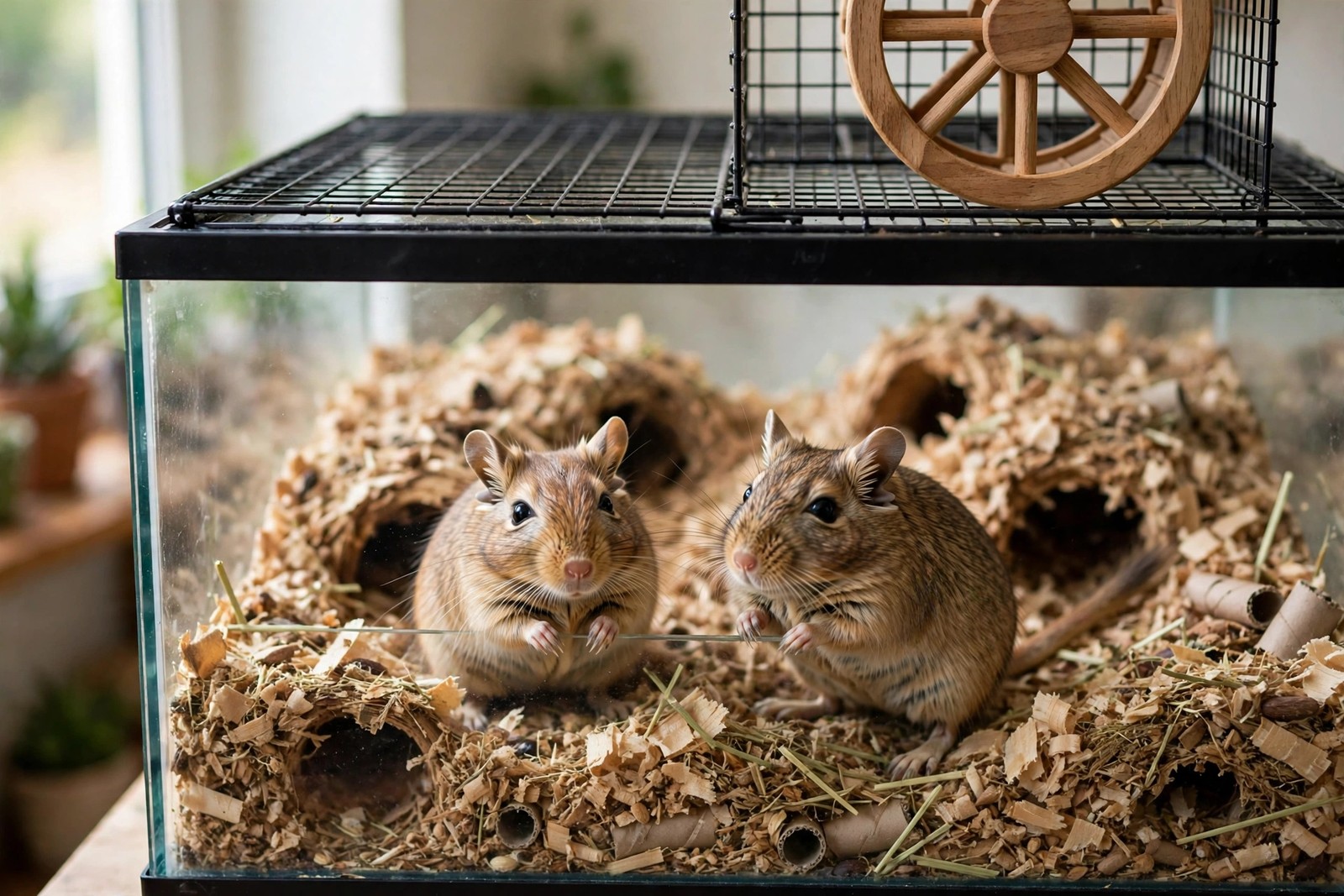
A gerbilarium answers one simple fact about gerbils: they do not live on a surface, they live under one. It is a housing design built around deep digging, with a barred topper added for the things that need air and access.
What a Gerbilarium Actually Is
The base is a glass or sturdy acrylic tank, filled with bedding to a depth of roughly 25 to 30 centimetres. Above it sits a barred topper section, reached by a ramp or platform, carrying the food bowl, water bottle, and exercise wheel, and providing airflow the sealed tank alone would lack. Owners convert plain aquariums by adding a topper, or use ready-made tank-and-topper units. Glass suits gerbils because they gnaw persistently and can work through plastic bases and thin trays over time, and a smooth tank wall gives teeth nothing to start on.
Why Gerbils Need the Depth
Wild gerbils excavate branching burrow systems with chambers for sleeping, storing food, and escaping heat and predators, and pet gerbils carry that full tunnelling drive into your home. With deep bedding they dig, collapse, and re-dig complex runs, hoard food in buried stores, and sleep underground, which occupies hours of every day and produces calm, confident animals. Mix bedding so tunnels hold their shape: a paper-based bedding layered or blended with hay gives the excavated walls structure that a single loose material lacks. Scatter a portion of their food through the bedding too, so foraging and digging combine.
What Goes Wrong in a Barred Cage
A standard barred cage with a shallow base tray frustrates this animal at every point. Bedding deep enough to dig in is kicked out through the bars within days, so owners keep it thin and the gerbils cannot burrow at all. Blocked from digging, many gerbils redirect the energy into repetitive bar chewing, which can damage teeth and wear the fur and skin on the nose, or into corner digging against the cage floor for long stretches. Tunnels, nests, and hoards, the whole structure of a gerbil's day, simply have nowhere to exist.
Setting One Up Well
Give a pair the largest tank you can house, keep the bedding depth genuine rather than decorative, and put the wheel, at a size that lets a gerbil run with a straight back, in the topper where it stays clear of the dig zone. Add cardboard tubes and plain boxes for gnawing, replaced as they are shredded into the tunnels. Clean selectively: spot-clean the topper often, and when you refresh the tank, keep back a portion of clean old bedding and mix it through the new, so the home still smells like theirs and the rebuilding starts from familiar ground. Housing details like bedding depth are exactly what gets lost between family members, so keeping the setup written down in KinsLe's Family Sharing means whoever tops up the gerbils' bedding restores the full depth rather than a token layer.