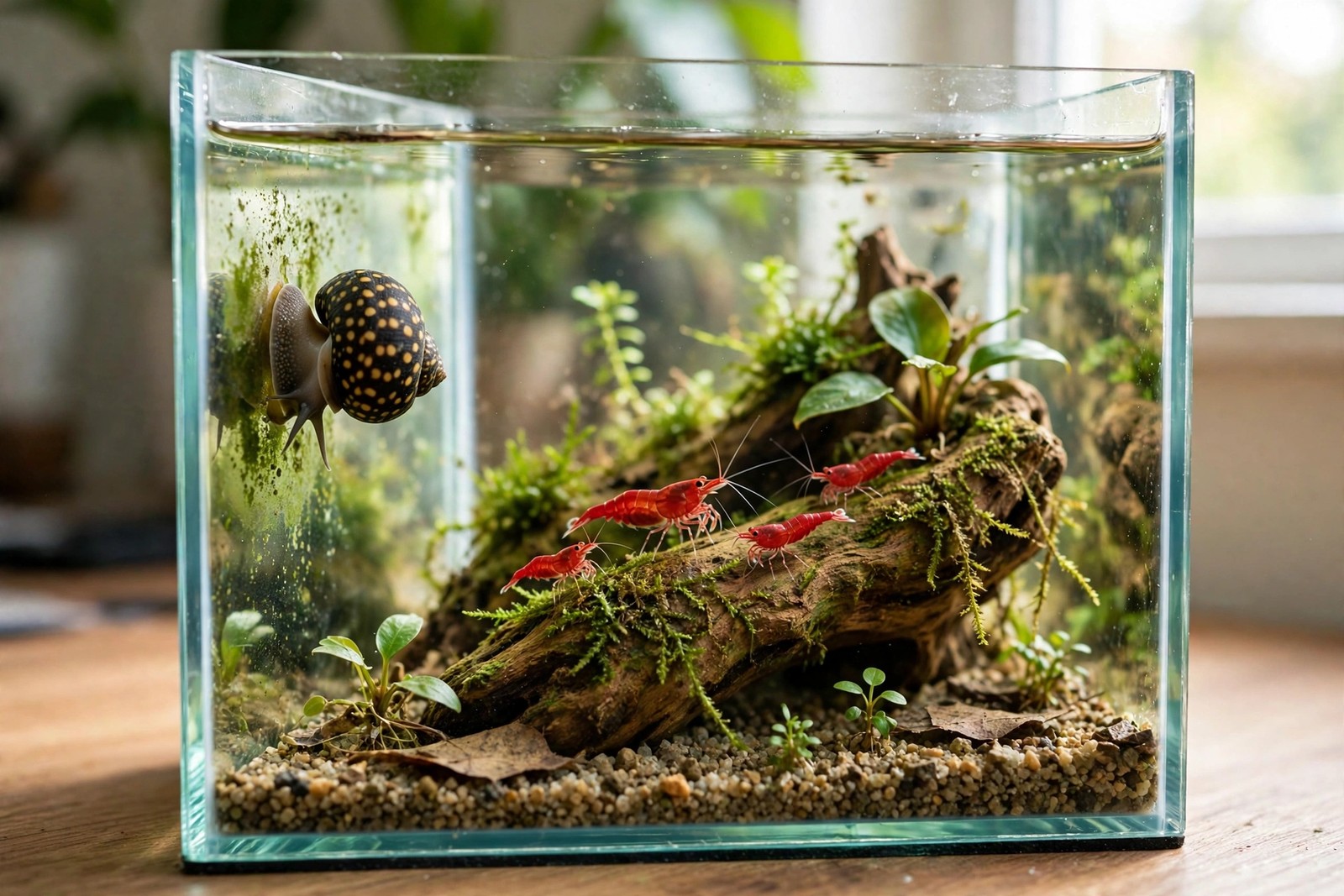
Small tanks need small workers. The algae eaters that suit them are measured in centimetres, graze gently enough for delicate plants, and add almost nothing to the waste load. The ones that ruin small tanks are usually sold as babies of something enormous. This is a group where checking the adult size before buying matters more than any other detail.
The Reliable Small-Tank Choices
Nerite snails are the first recommendation for most small aquariums. They graze film algae and soft green algae off glass, rock and leaves tirelessly, cannot breed in fresh water, and stay around an inch. One per five to ten gallons is a sensible stocking; their one drawback is white eggs laid on decor, which are cosmetic only. Amano shrimp are the other standout — bigger and hardier than most ornamental shrimp, keen on hair algae that snails ignore, and peaceful with everything that cannot eat them. Cherry shrimp work well in a calm, fish-light nano tank and breed into a self-maintaining colony, though small fish will hunt their young.
Otocinclus catfish earn their place in tanks of roughly twenty gallons and up. They are specialist grazers of soft algae and biofilm, utterly plant-safe and peaceful — but they are group fish that settle in fives or sixes, they are often half-starved on arrival from shops, and they need an established tank that already grows the film they eat. In a brand-new small tank, otos are a later addition, not a starter crew.
The Ones to Leave in the Shop
The common pleco is the classic error: sold at two inches, capable of well over a foot, producing waste on a scale that defeats a small filter and bulldozing planting as it grows. Even the smaller pleco species need more room and wood to graze than a nano tank offers. Siamese algae eaters are genuine algae workers but reach around six inches, stay constantly active, and can bother slow tankmates as they mature — a fish for a large community, not a small one. Chinese algae eaters start keen and turn territorial and lazy about algae with age, sometimes attaching to flat-bodied fish. Golden algae eaters in shop tanks are usually that same species in a colour form.
Feed the Cleaner, Fix the Cause
Every animal on the good list still needs feeding once the tank runs clean: algae wafers, blanched courgette or similar vegetables, and shrimp foods in rotation, especially at night when the grazers work. A starved snail or oto in a spotless tank is a stocking failure, not a success. And no crew out-eats a lighting problem — eight-plus hours of strong light plus heavy feeding grows algae faster than any small team grazes it, so shorten the photoperiod and feed less alongside adding cleaners, or you are hiring staff for a flood.
Before buying, have the shop confirm the adult size of anything labelled an algae eater and whether it needs a group. A knowledgeable local aquatic shop found through KinsLe's Pet Services Directory will tell you a pleco is wrong for your tank before you have paid for the lesson.