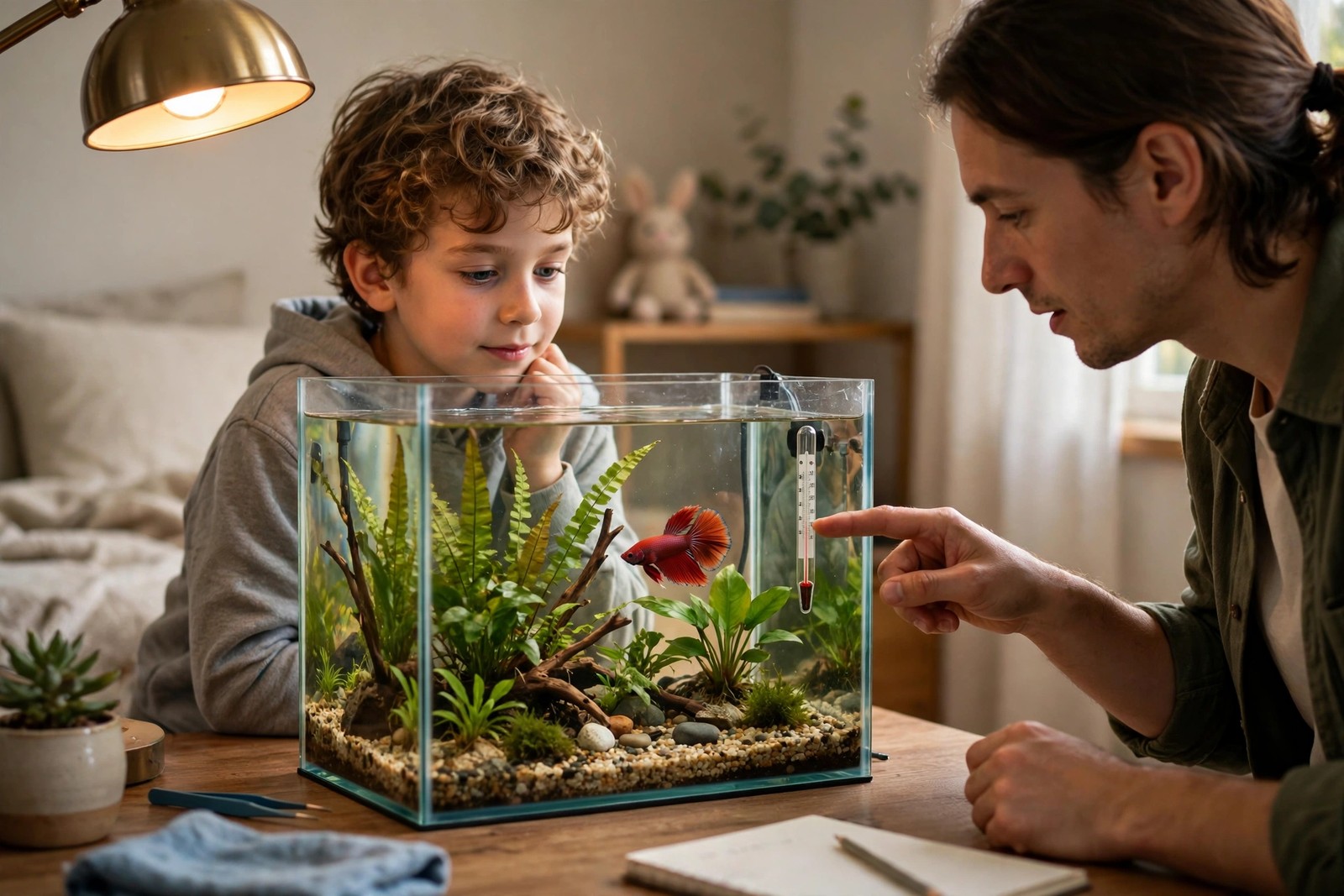
The right first fish is one a child can watch, feed, and learn from, in a tank an adult can genuinely maintain. Choose for hardiness and honest adult size, not for the smallest bowl on the shop shelf.
Three Choices That Work
A single betta is the most forgiving start for one fish with real personality. Kept alone in a heated, filtered tank of at least five gallons, a betta learns feeding routines, greets its keeper, and needs no companions to thrive. Guppies and platies suit a child who wants a busy tank: both are colourful, active, livebearing fish for a heated tank of ten gallons or more, and both breed readily, so choose all males unless the family wants fry and a plan for them. White cloud mountain minnows are the cool-water option, a small schooling fish that prefers an unheated tank and should be kept in a group of six or more, where their shyness disappears.
The Popular Choice to Skip
Goldfish are the fish most often sold as a child's starter and the least suited to it. A single fancy goldfish needs a large, strongly filtered tank, and common goldfish grow into pond-sized fish that can live for decades; in a small bowl they are stunted by their own waste long before they grow out of it. Tiny unfiltered bowls fail every fish, not just goldfish, because waste ammonia builds within days and temperature swings with the room. If the family cannot house at least a five-gallon filtered setup, a fish is not yet the right pet, and waiting is kinder than downsizing the animal's life.
What Adults Must Own
The adult's non-negotiable jobs are the invisible ones. Set the tank up and cycle it before any fish arrives, so beneficial bacteria are established and the water is safe; this takes days to weeks, and explaining that wait is itself a good first lesson. Test the water regularly, change a portion of it weekly with dechlorinated water matched in temperature, maintain the filter without sterilising it, and set the feeding limit, because overfeeding by enthusiastic small hands is the most common way first tanks fail. Adults also choose tankmates, watch for illness, and make the end-of-life decisions no child should carry.
The Jobs That Are Genuinely the Child's
A child can feed a pre-measured portion on agreed days, count and observe the fish at a set time, check that the filter is humming and the thermometer sits in range, and keep a simple tank diary of behaviour, appetite, and new arrivals. That diary turns noticing into a habit: a fish hiding, gasping at the surface, or leaving food is information an adult needs the same day. Dividing the work in writing keeps it fair, and KinsLe's Care Teams lets you assign the child's feeding and observation duties alongside the adult's water changes, each marked complete with a timestamp, so the tank's care is shared rather than assumed.