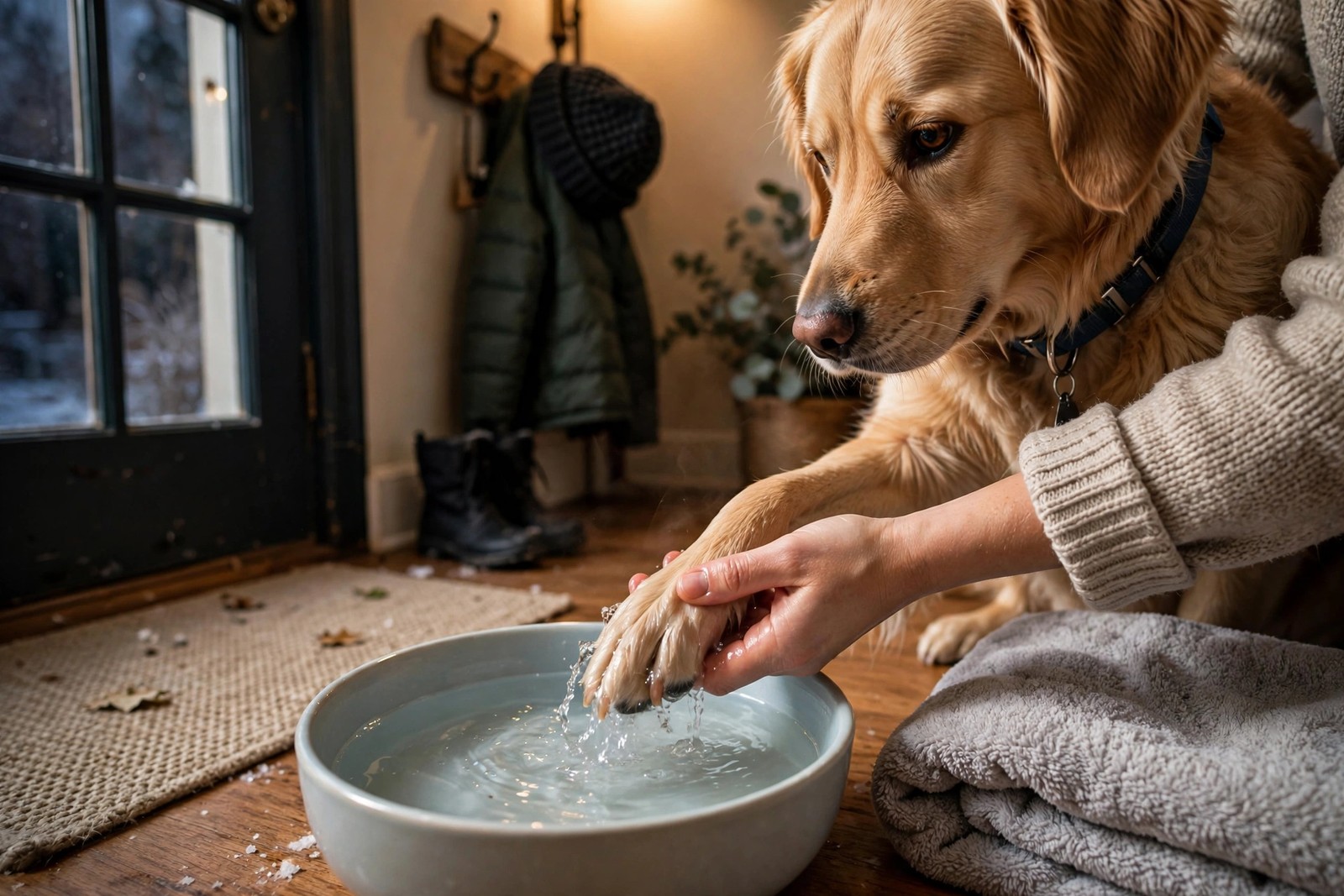
Road salt keeps pavements walkable and makes paws miserable. It dries and cracks pads, stings in any small cut, packs between toes mixed with grit, and then gets licked off indoors, which moves the problem from feet to stomach. A good routine therefore has three acts: barrier before, cleaning after, and inspection throughout the salty season.
Before the Walk: Balm or Boots
Start with a barrier while the paws are clean and dry. Paw balm worked into the pads and between the toes puts a protective layer between skin and salt, and it earns its keep on every walk, not just long ones, because even a short pavement stretch is salted in a cold snap. Apply it just before leaving so the dog walks it onto the pavement rather than licking it off the hallway floor, and reapply on return if pads look dry. Boots are the stronger barrier for dogs that tolerate them: fitted so they stay on without twisting, introduced at home in short, rewarded sessions before they are needed on a freezing morning. Some dogs never accept boots on all four feet; two front boots, or balm alone done consistently, still beat bare paws on salted grit. On the walk itself, steer around visible salt piles and slushy gutter edges where concentration is highest, and favour snow-covered verges or quieter treated paths when the route allows.
On Return: Rinse, Wipe and Dry Between the Toes
The rinse is the step that protects the stomach as much as the feet. Salt left on paws gets licked off, and that swallowed salt irritates the stomach itself, causing drooling, reduced appetite or vomiting in a dog that has groomed a heavy load off its feet, so rinse paws in lukewarm water, a shallow bowl per paw or a gentle jug pour, or wipe thoroughly with a damp cloth if a full rinse is genuinely impractical. Lukewarm matters: hot water on cold pads is uncomfortable and can worsen cracking. Then dry carefully, and dry between the toes properly rather than skimming the pad, because damp webbing in a warm house is where soreness and yeast-type irritation take hold. While drying, pick out grit packed between the toes and check for small salt-melted sores between the pads. Keep a dedicated paw towel and bowl by the door so the routine takes two minutes and survives tired evenings; a routine that lives in a cupboard upstairs quietly stops happening by midwinter.
Daily Pad Checks Through a Cold Snap
During a cold snap, add a daily inspection: look at each pad in good light for cracks, splits, redness and swelling, flex the toes gently to see the skin between them, and watch the dog's behaviour for the earlier signals, licking at one foot, lifting a paw on cold ground, reluctance on gravel, or a changed gait on the walk home. Small dry cracks call for more consistent balm and shorter salted stretches; a pad that is bleeding, a dog limping, swelling between the toes or licking that does not settle are reasons to rest the paw and ask your vet. Trim the hair between the pads level with the pad surface through winter, since long interdigital hair collects salt, grit and ice balls into a packed, stinging lump. The routine holds across a household when Care Teams in KinsLe assigns the balm, the rinse and the evening pad check as named, timestamped duties for each walk, so no one assumes somebody else handled the feet.