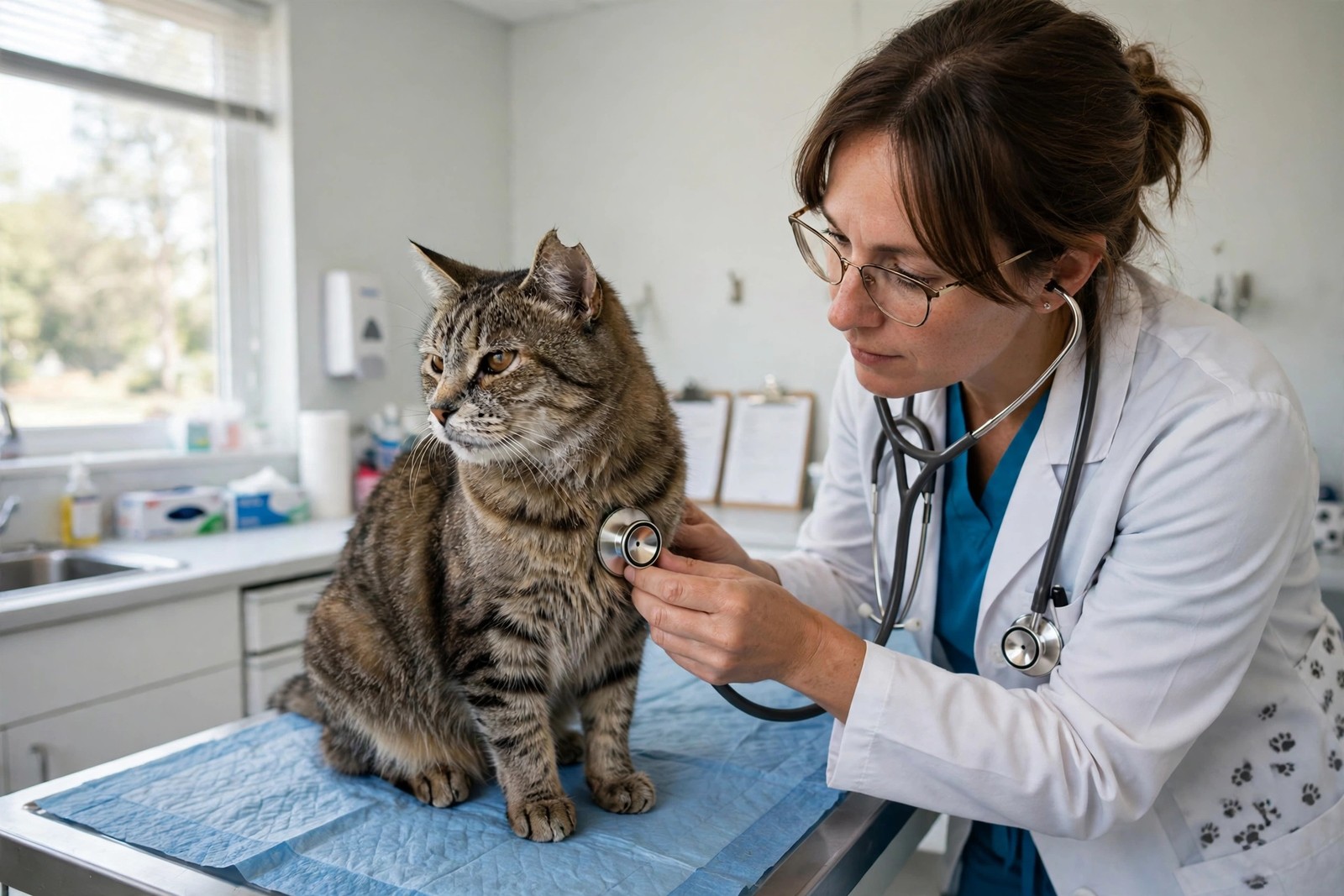
A senior wellness exam is the twice-yearly appointment most vets recommend once a cat reaches roughly ten years old. It is not a single test. It is a structured head-to-tail review, paired with laboratory checks, designed to catch the slow changes of ageing — kidney strain, an overactive thyroid, sore joints, dental pain — while they are still small and easier for your vet to manage.
The Physical Exam, Step by Step
The vet weighs your cat and compares the figure with previous visits, because gradual loss in a senior is information, not just old age. The vet feels along the spine, ribs, and muscle over the hips for muscle wasting, listens to the heart and lungs, and palpates the abdomen for thickened intestines, enlarged organs, or discomfort. The coat and skin are checked for lumps, flakes, and thinning, the ears are looked in, and the eyes are examined for cloudiness, changes in the lens, and signs the vet can link to high blood pressure.
The mouth gets close attention. Tartar, red gums, a broken tooth, or a painful resorptive lesion can quietly stop a senior cat eating well, and many cats hide oral pain completely. The vet also watches your cat walk and jump down, flexes the joints gently, and asks whether stairs, high beds, or the litter box sides have become harder to manage.
Bloodwork, Urine, and Blood Pressure
A senior screen usually includes a complete blood count and a chemistry panel covering the kidneys, liver, and blood sugar, plus a thyroid measurement, because overactive thyroid is common in older cats and can mask kidney changes. A urine sample shows how well the kidneys concentrate urine and can reveal infection or protein loss that blood results alone miss. Bringing a fresh sample from home in a clean container can save your cat a second procedure, so ask the clinic beforehand whether it wants one.
Blood pressure measurement, taken with a small cuff on a leg or tail after the cat settles, matters because raised pressure in seniors can damage the eyes, kidneys, heart, and brain without obvious signs at home. None of these results is a diagnosis on its own; your vet reads them together, against your cat's own previous values, which is why a steady twice-yearly rhythm builds a useful trend rather than a string of isolated numbers.
Your Half of the Appointment
The history you bring is part of the exam. Note changes in thirst and how much urine fills the litter box, appetite swings, vomiting, night-time vocalising, sleeping more, hiding, or missing jumps. A short phone video of the worrying movement or behaviour at home often tells the vet more than a description. Ask what weight range to aim for, whether the diet still suits a senior, and which changes should trigger a call before the next visit rather than waiting six months.
Between visits, keep weighing monthly if your cat tolerates the scales calmly, and write results down instead of relying on memory. KinsLe's Pet Passport stores those exam summaries, laboratory results, and home weight notes together, so the trend your vet needs is ready at every appointment, even at a different clinic.