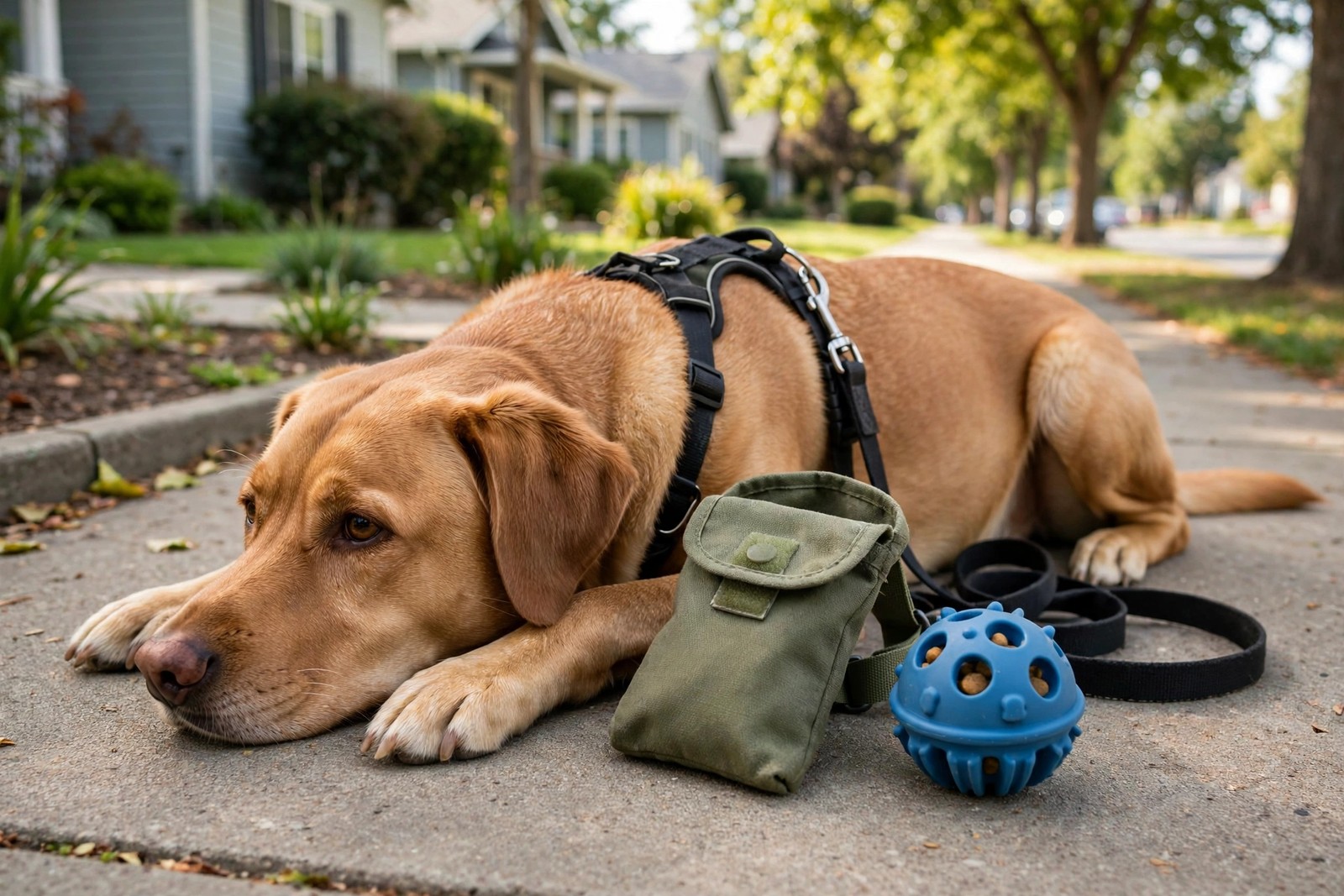
Start with the scale, not the toy box. Weigh out the dog's entire ration for the day before anything goes into a bowl, a puzzle or a training pouch. Food toys then get funded from that weighed total, exactly like a withdrawal from an account that never receives a second deposit. If your dog eats 300 grams (about 10.6 ounces) a day, one workable split is 240 grams served as meals and 60 grams held back for toys. The maths stays visible all day: 120 grams plus 120 grams in the two bowls, plus 30 grams plus 30 grams in two toys, equals the original 300 grams and not a gram more.
The Morning Weigh-Out That Sets the Whole Day
Do the division once, in the morning, while the kitchen is calm. Put the full 300 grams in a lidded container, scoop 60 grams into a second tub marked for toys, and leave the remaining 240 grams for meals. Anyone who feeds later that day then works from two labelled tubs instead of guessing at the bag, which matters in homes where a partner, a teenager and a sitter might each assume somebody else held food back. Dogs on a different total scale the same way: keep one fifth of the ration for toys and four fifths for bowls, whether the day totals 200 grams or 500 grams. One fifth of 200 grams is 40 grams for toys and 160 grams for meals, and one fifth of 500 grams is 100 grams for toys and 400 grams for meals, so the proportion survives any portion change your veterinarian advises.
Making 60 Grams Feel Like a Feast
Sixty grams disappears quickly if it is handed over loose, so stretch it with texture and time. Soak part of the toy allowance in warm water until it softens, pack it tightly into a stuffable rubber toy, and freeze the toy until the filling sets firm. A frozen filling can keep a dog licking and nudging far longer than the same kibble scattered on the floor. Puzzle feeders work the same way: kibble from the allowance rattles around inside, and the dog earns each piece through nudges and paw work. Keep fillings honest. A thin smear of the dog's own wet food, weighed inside the 30-gram toy share, flavours the whole toy, while spoonfuls of nut butter or cheese added from the fridge quietly break the budget. Training rewards come out of the same 60 grams too, broken into pea-sized pieces, rather than from a separate treat tin.
Watching the Waist, Not Just the Scale
Calorie-neutral on paper still needs proof on the dog. Run your hands over the ribs weekly: you should feel them under a thin fat cover without pressing hard, and you should see a waist from above and from the side. Weigh the dog monthly on the same scales and write the figure down beside the ration total. If weight creeps up while the split stays at 240 grams of meals and 60 grams of toys, the whole 300-gram total is slightly generous for that dog's current activity, so trim the total itself in a small step and re-split the new figure into the same four-fifths and one-fifth shares. If weight drops, raise the total the same way. Puppies, seniors and dogs with medical conditions need their totals set with veterinary guidance, and any sudden appetite change deserves a veterinary conversation rather than a bigger toy allowance.
A final habit keeps the system honest on busy days: empty containers at night mean the budget balanced, while leftover kibble in the toy tub means tomorrow starts with a smaller scoop from the bag, never a bonus. Households sharing these jobs stay aligned when KinsLe Care Teams records who weighed the ration, who handed out each toy and when each task was completed.