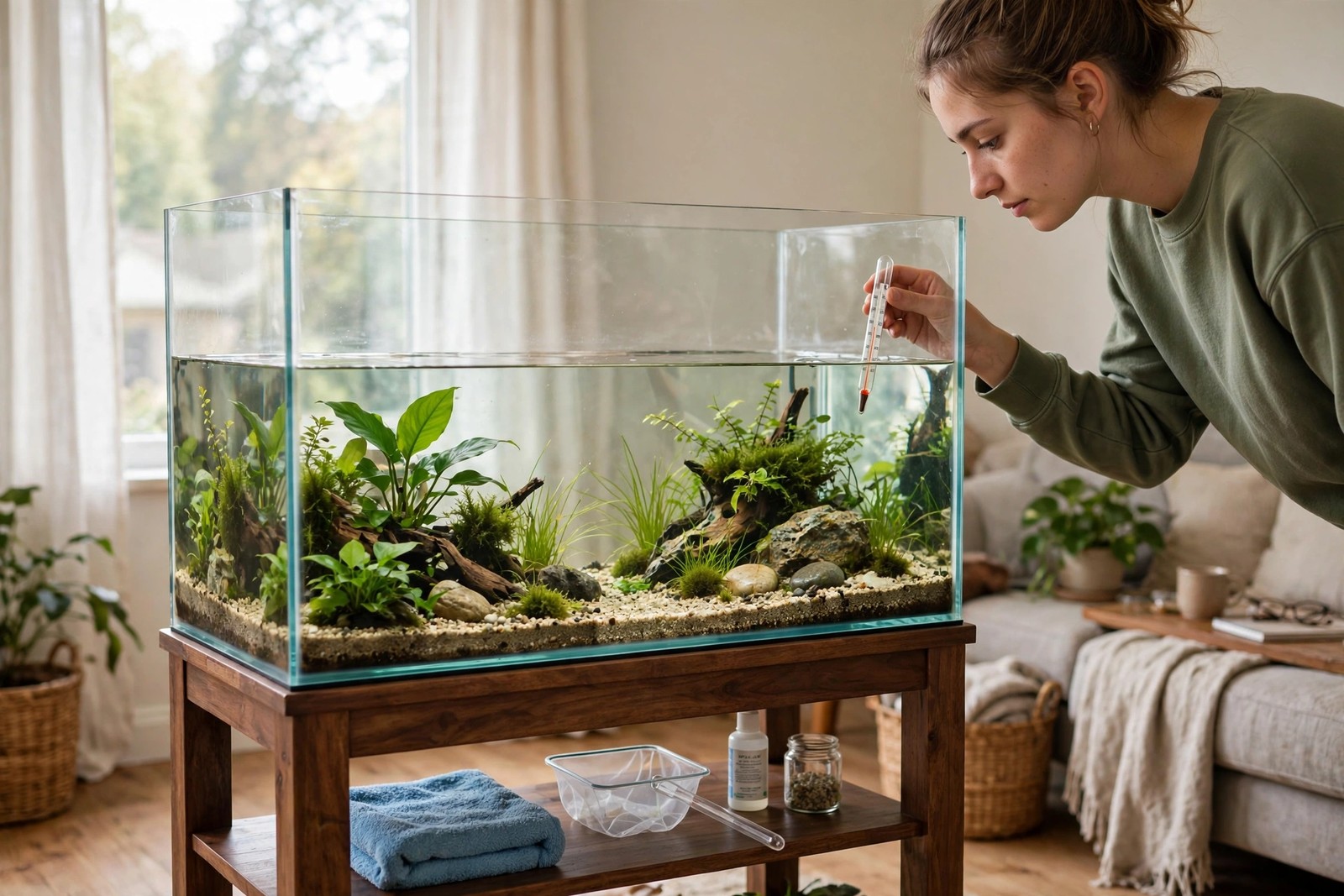
Start with a 20-gallon long tank. It is big enough to stay stable while you are learning, small enough to clean without dread, and shaped well: the long footprint gives small fish more horizontal swimming room than a tall tank of the same volume. If you have the stand space, a 29-gallon gives you the same footprint with a little more depth and water in reserve.
Why Bigger Water Is More Forgiving
Fish live in everything they excrete, so stability is the whole game for a beginner. In 5 gallons, one generous feeding can push ammonia up fast and a sunny afternoon can warm the water several degrees. In 20 gallons, that same feeding is diluted four times over and the temperature drifts far more slowly, which means your mistakes arrive as small warnings instead of emergencies. This is the real reason experienced keepers say bigger is easier: not that big tanks need no care, but that they give you time to notice and correct a problem.
A small bowl or a 5-gallon cube also limits you more than beginners expect. Most heaters and filters are sized for 10 gallons and up, tiny tanks swing too much for many tropical species, and the fish sold as bowl fish usually are not: a single betta is the honest exception, and even a betta does better heated and filtered in 5 to 10 gallons than in an unheated bowl.
What 20 Gallons Actually Holds
Stocked lightly, a 20-gallon long suits the fish beginners actually enjoy: a school of small tetras or rasboras, a group of corydoras catfish working the bottom, or a single centrepiece fish with a small school around it. It also leaves growing room, which matters because the fish in shop tanks are juveniles. What it does not suit is a common pleco, a goldfish, or any fish that will pass six inches as an adult — those belong in much larger setups, and a good shop will tell you so before you buy.
Budget for the whole system, not just the glass: a filter rated for the tank, a heater for tropical fish, a lid, a thermometer, a water test kit, and a stand that is level and rated for the filled weight. Twenty gallons of water, gravel, and glass weighs well over 200 pounds, so furniture choice is a safety decision, not a style one.
Setting Up in the Right Order
Fill, treat the water, and run everything for a full day to check for leaks and confirm the heater holds temperature. Then cycle the tank — building the beneficial bacteria that convert fish waste — before adding more than a first small group, testing ammonia and nitrite as you go. This takes weeks, not days, and it is where most beginner losses are prevented. Add fish in small groups a week or more apart so the bacteria can catch up each time, and keep up modest weekly water changes once stocked.
If several people will share this tank, agree who tests, who feeds, and who does the water change before the first fish arrives, because doubled feedings are a classic first-month problem. KinsLe Care Teams lets you assign those jobs for this tank to specific people and marks each one complete with a timestamp, so the cycling tests, feeds, and water changes for your first setup happen once, on schedule, and never by assumption.