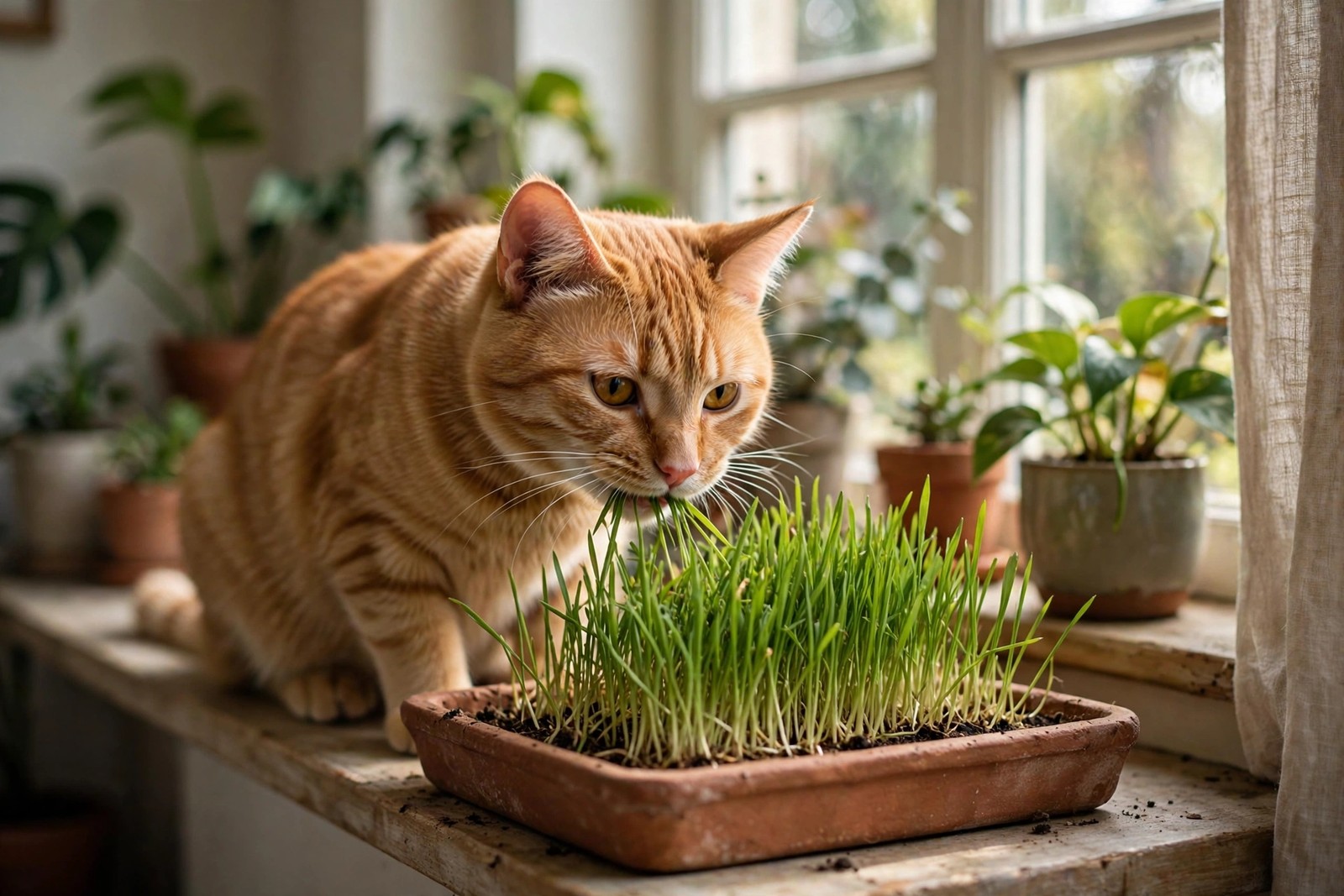
Cat grass is the fresh green shoots of cereal grains — most often wheat, oat, barley, or rye — sown in a pot or shallow tray and offered to cats at a few inches tall. It has nothing to do with the grass on a lawn, which may carry sprays and parasites, and it is a different plant from catnip, which is a herb in the mint family that affects cats through scent rather than chewing.
Why Cats Nibble It
Cats are not eating grass for calories. The attraction is the texture, taste, and the simple occupation of cropping blades, which suits an indoor cat with few chances to forage. The fibre passes through the gut and can help move swallowed hair along with the rest of the digestive contents, although grass is not a cure for hairballs and a cat who vomits often needs a vet conversation, not a bigger tray. A tray also gives a plant-chewing cat a permitted target, which helps protect houseplants — important because some common houseplants, notably true lilies, are genuinely dangerous to cats and should never share the windowsill plan.
Most cats nibble a little and wander off. A few gorge and then vomit blades, so offer the tray for set periods at first and watch the response. Repeated vomiting, drooling, loss of appetite, or chewing at the tray's soil instead of the grass are reasons to remove it and talk to your vet.
Growing a Tray That Actually Thrives
Use a wide, heavy, shallow container a cat cannot tip, and plain potting compost with no added fertiliser pellets or water-retaining crystals. Scatter seed thickly on the surface, cover it lightly, water it until the compost is evenly damp, and keep it somewhere warm and bright but out of fierce direct sun. Shoots usually appear within about a week. Once the blades stand roughly four inches tall, put the tray down for your cat.
Keep the compost damp rather than soaked, trim straggly growth with scissors, and sow a second tray about a week after the first so a fresh one is ready as the first yellows. Discard the whole tray at any sign of mould, sliminess, or a sour smell, and never use grass seed treated with fungicide or lawn seed of unknown coating. If you buy a ready-grown tray instead, rinse the roots, check for mould underneath, and treat it the same way once it is home.
Making It Part of Indoor Life
Place the tray where your cat already lounges, away from the litter box and food bowls, on a mat that catches scattered compost. Kittens should meet it supervised, and multi-cat homes may need two trays so a confident cat cannot guard the only one. Replace trays on a rhythm rather than waiting for a sad yellow pot that nobody owns. KinsLe's Care Teams makes that rhythm shared work, letting you assign watering on set days, trimming, and sowing the replacement tray, so the grass stays fresh instead of depending on one person remembering.