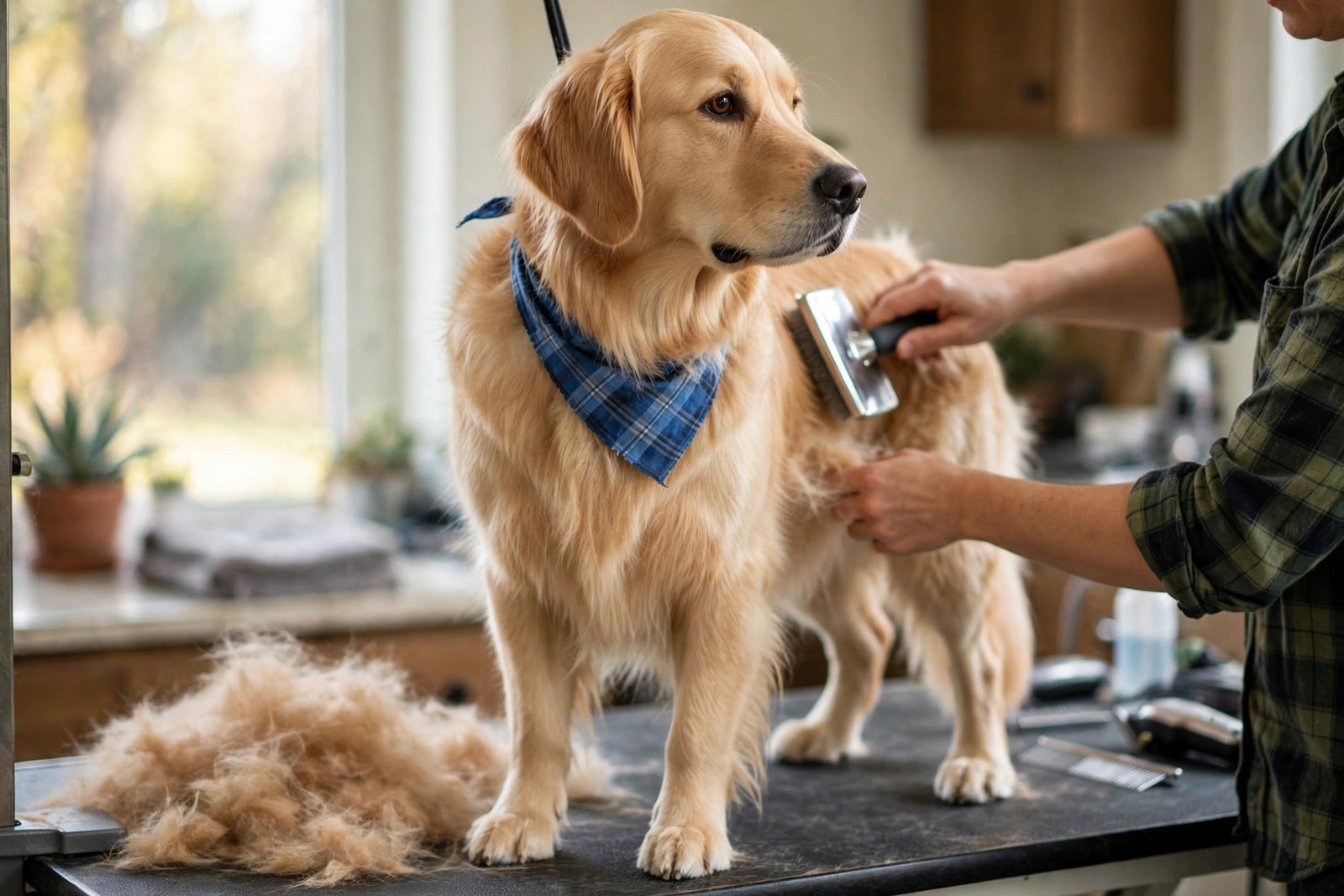
Deshedding is not a haircut and it is not ordinary brushing with a hopeful name. It is the systematic clearing of dead undercoat, the soft, dense layer under the guard hairs, so it comes out in your brush over one session instead of across your floors over six weeks.
What a Deshedding Session Involves
A thorough session usually starts with a bath, which loosens the dead undercoat, followed by drying with a high-velocity dryer that quite literally blows loose coat out of the jacket while showing you the skin underneath. Then comes methodical brushing in sections, working from the skin outward with a slicker brush, an undercoat rake, or a shedding tool chosen for the coat, until each section yields little more. Groomers offer it as a treatment, but the same sequence works at home in shorter sittings. Technique matters more than force: short, patient strokes, regular tool cleaning, and a stop before the skin reddens.
The Dogs That Benefit
Double-coated breeds are the candidates: Labrador and golden retrievers, German shepherds, huskies, collies, corgis, spitz breeds, and their mixes. These dogs grow a seasonal undercoat and shed it in a pronounced blow, typically in spring and again in autumn, with indoor dogs sometimes shedding moderately all year under artificial light and heating. For them, deshedding during a blow means less matting where undercoat packs down at the collar, armpits, and hindquarters, better airflow to the skin in warm weather, and far less drifting hair at home. Short-coated double coats, like a Labrador's, benefit just as much as dramatic husky coats, only faster per session.
The Dogs That Do Not Need It
Single-coated dogs whose hair grows continuously and is cut, poodles, many terriers, and hairless or nearly hairless breeds, have no seasonal undercoat to clear; they need clipping and combing against mats instead. Deshedding tools dragged repeatedly over the wrong coat can scrape skin and snap topcoat. One firm rule applies to the double coats themselves: deshed, never shave. The undercoat insulates in both directions and regulates temperature, and a shaved double coat can regrow unevenly or not at all, so clipping a husky for summer does the opposite of helping.
How Often, and What Is Too Much
Outside coat-blow season, a double-coated dog usually needs only a weekly brush-through, with a full deshedding session when the blow begins and perhaps once more midway through it. Daily aggressive tool work is a mistake: shedding tools used too hard or too often cut guard hairs and irritate skin, and the goal is removing coat that is already dead, never thinning coat that is alive. Shedding that comes with bald patches, itching, dandruff, odour, or a dull, staring coat is not a grooming issue at all; that pattern deserves a vet visit, since skin, diet, thyroid, and allergy problems all announce themselves through the coat. Between blows, the routine only stays done if it is shared, and KinsLe's Care Teams lets you put the weekly brush-throughs on a rota with timestamps, so one person is not left doing every session while the coat quietly rebuilds.