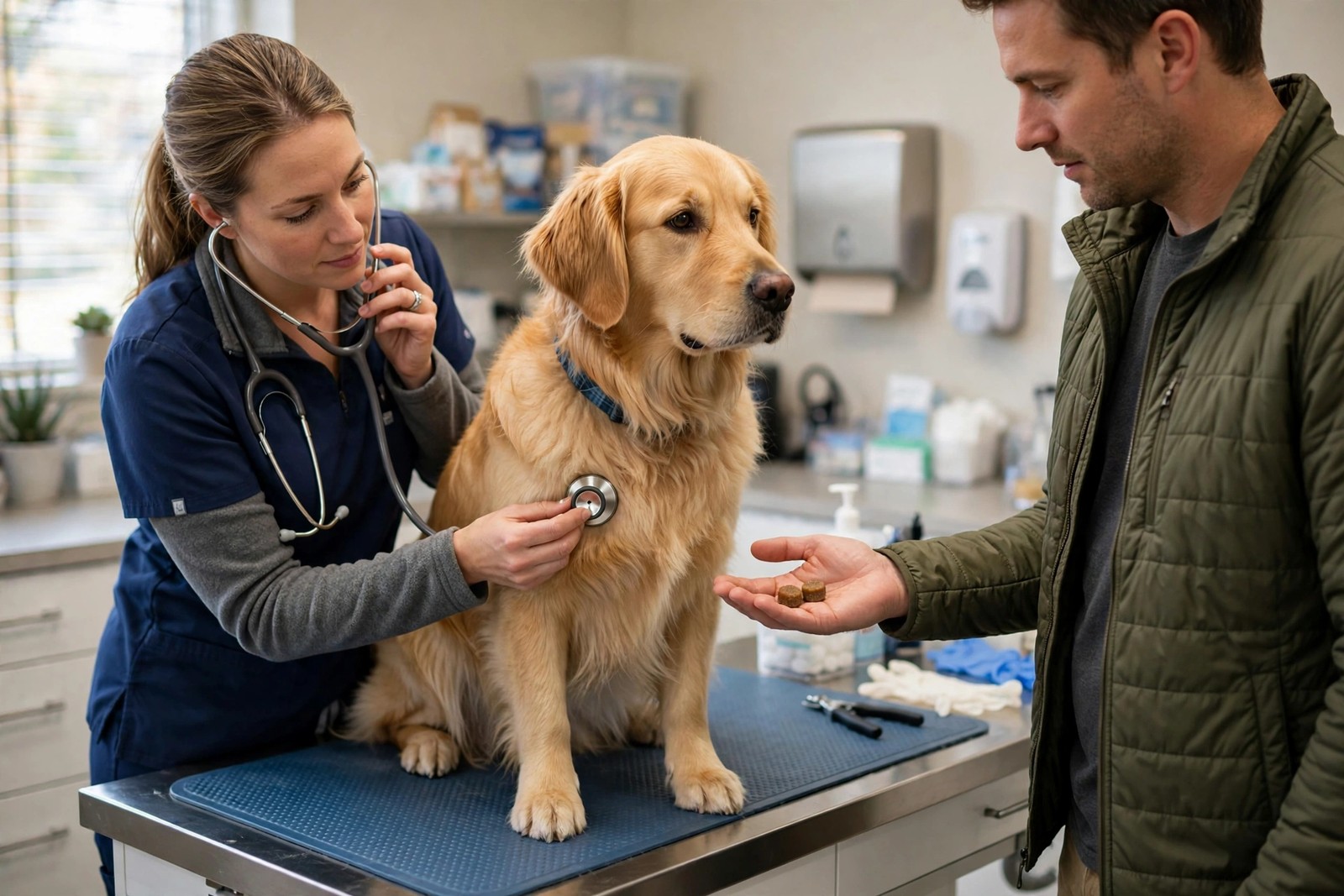
Heartworm earns its reputation quietly. The worms behind it lodge in an infected dog's heart and lungs and in the blood vessels around them, and the route in is always a mosquito: the insect feeds on an infected animal, picks up microscopic young worms, then delivers them into the next dog it bites. No direct dog-to-dog spread exists. Across roughly six months those larvae mature — adults can reach a foot long — while damage builds silently and early infection usually shows nothing at all.
Prevention Is Simple; Treatment Is Not
Because treatment of an established infection is long, expensive, and hard on the dog, prevention is the core of heartworm care where the disease occurs: vet-prescribed monthly preventive medication (or longer-acting options), given year-round and on schedule, with periodic blood testing as your vet advises. Prevention also typically requires a test first for dogs over about six months old who are not already on cover. Risk depends on where you live and travel — heartworm is widespread in the US and present in parts of southern Europe, among other regions — so this is a question to settle with your vet based on your dog's actual map, including holidays to warmer areas.
Working With Your Vet
Heartworm conversations with your veterinarian turn on geography and dates, so arrive ready with both: where your dog lives, any trips to warmer regions with their timing, and a clear record of prevention given so far, including any gap. That detail decides whether a blood test comes before starting or restarting cover, and which schedule suits your dog. Coughing, tiring quickly, weight loss or a swollen belly in an at-risk dog should be described precisely and assessed promptly rather than watched at home.
Discuss heartworm prevention at your next visit if you live in or travel to an affected region — before the trip, not after. If a dog has missed several months of prevention, your vet will advise testing before restarting. Coughing, tiring easily, weight loss, or a swollen belly in an at-risk dog all warrant prompt assessment.
The heartworm file worth keeping is mostly a calendar: prevention doses with the day each was given, test results in order, and travel dates that changed the risk picture. Set that sequence beside general notes on stamina and coughing, and review it before holidays or a house move, because a new region can rewrite the plan. Your vet can then judge cover from documented dates instead of reconstructed memory at the appointment.
Keep dose dates and test results in the Pet Passport on KinsLe, and any vet you see can confirm your dog's heartworm cover from the record itself instead of from memory.