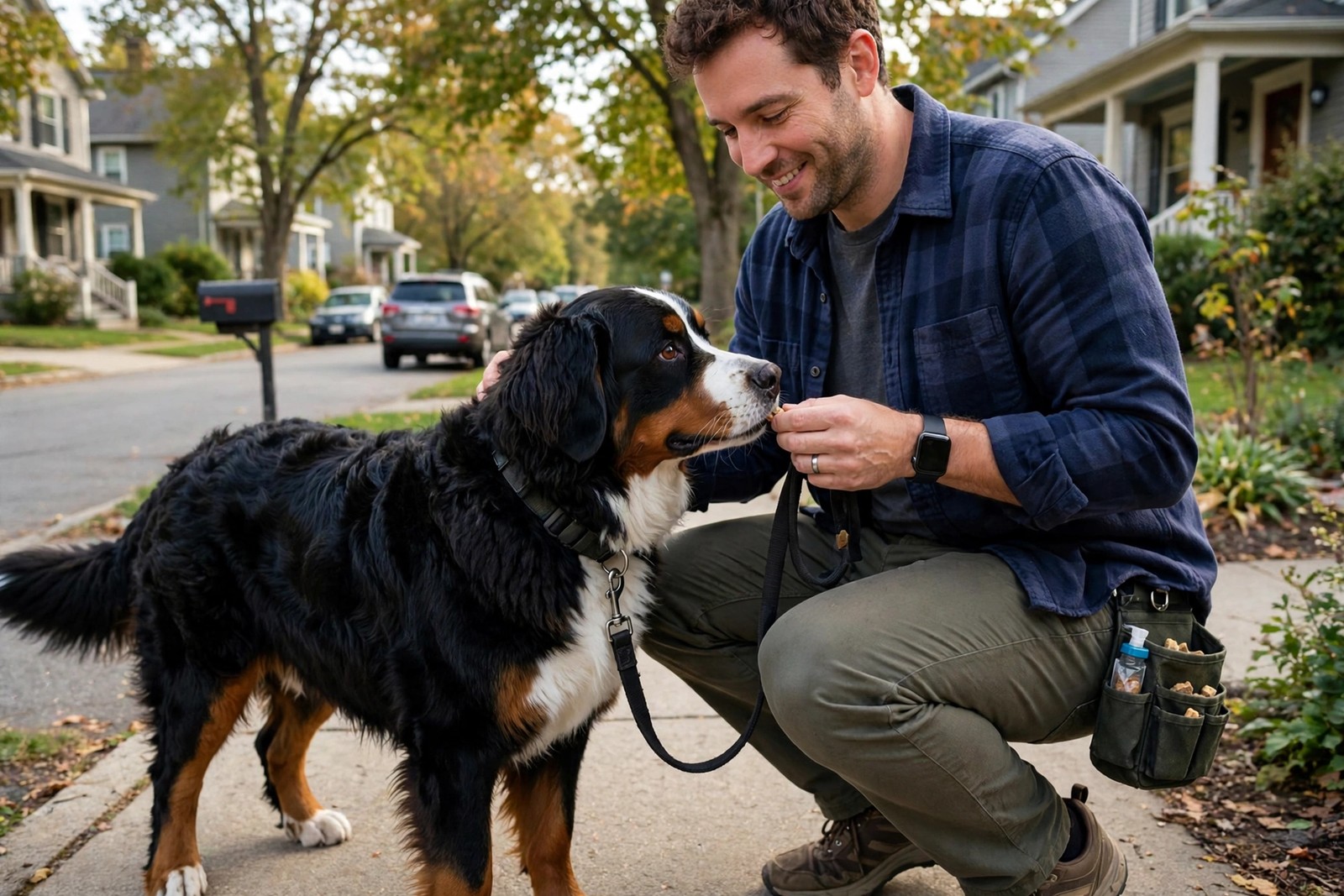
Mornings with a Bernese Mountain Dog usually begin with a hopeful face at close range and a tail thumping the floorboards. This is a dog bred for farm work in cool mountain air, and the modern version still does well with around an hour to ninety minutes of moderate exercise spread across the day: a proper morning walk, garden pottering, and a slower evening stroll once the air cools. Heat reshapes everything. A thick black coat absorbs summer sun quickly, so warm days move exercise to dawn and dusk, shorten midday outings to shaded toilet trips, and fill the middle hours with indoor rest on a cool floor in the house. Owners who love winter walking often find the seasons suit them both, since a Bernese typically brightens as temperatures fall.
Size That Reorganises a House
An adult Bernese weighs 70 to 115 pounds (about 32 to 52 kilograms), often near 100 pounds (about 45 kilograms), and daily life bends around that mass. The dog occupies a whole hallway, turns around in stages, and needs a car arrangement that handles a large, heavy passenger safely. Food arrives in big bags and leaves in big portions, measured rather than poured freely, because extra weight on a large frame loads hips and elbows over time. Puppies need particular care: growth is rapid, stairs and jumping strain developing joints, and short, frequent outings suit a young Bernese better than one long hike. Ask your veterinarian about growth, joint concerns and comfortable weight at each check, and treat limping or reluctance to rise as a reason to book an appointment promptly rather than a wait-and-see week.
Brushing Two or Three Times a Week, Every Week
The tricolour coat is beautiful and relentless. Brushing two or three times a week, working through the dense undercoat behind the ears, under the collar and along the feathering on the legs, keeps loose hair on the brush instead of the sofa. Twice a year the undercoat loosens heavily, and daily sessions during those weeks keep mats from forming in the thick ruff. Start grooming handling with a puppy in short, rewarded bursts, since a grown dog who dislikes the brush is a wrestling match nobody wins gracefully. Bathing is occasional and logistically memorable, given the volume of wet dog involved, and drying takes patience because the coat holds water deep against the skin.
Evenings Spent Leaning In
Socially, a Bernese often behaves like a quiet shadow. Evenings typically involve the dog stationed against a chair leg, following its person between kitchen and sofa, and settling with a sigh that suggests the day's supervision is complete. Time alone needs building gradually, as a dog this bonded can fret when the house empties suddenly. Training responds well to calm, consistent handling and food rewards, with sessions kept short and kind, since harsh corrections tend to shut this sensitive breed down rather than speed anything up. Visitors get a polite, sometimes enthusiastic greeting, and then the dog usually returns to its post near the family, content to watch the room from floor level.
Running costs match the scale of the animal, and honesty here prevents surprises later. Food for a dog near 100 pounds is a major monthly line, grooming tools need to be sturdy rather than decorative, and veterinary fees for a giant frame, from anaesthesia to medication sized by weight, run higher than for a small breed. A vehicle check belongs on the pre-puppy list too, because a Bernese who cannot travel safely to the veterinarian, the groomer or a holiday cottage will shrink the whole family's world within the first year of ownership.
Should a Bernese ever move households, KinsLe Transferrable Profiles passes along grooming rhythm, measured portions and veterinary history together, sparing the next family any guesswork.