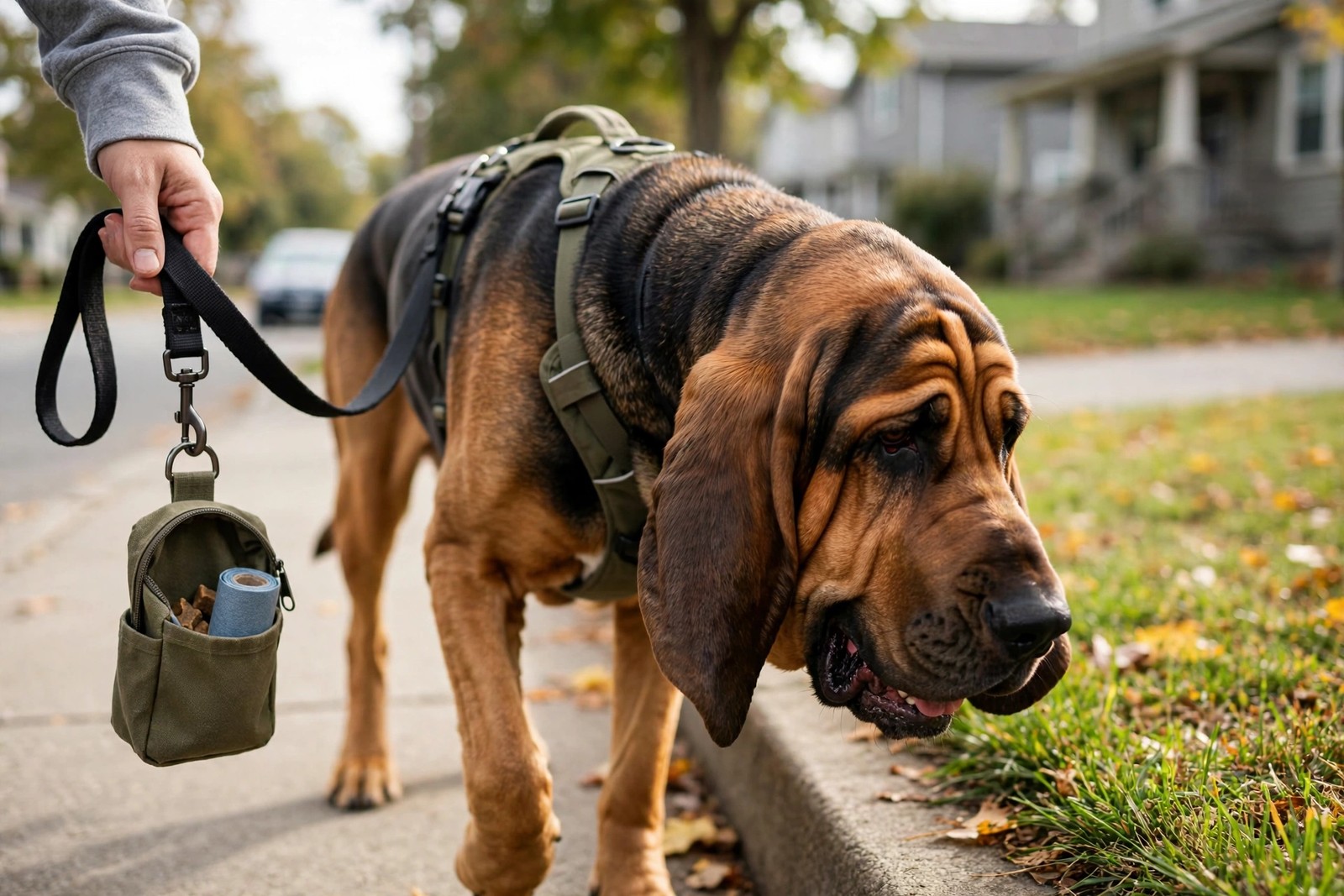
The Bloodhound day has two distinct gears. Indoors, this large hound is often a placid, almost sleepy housemate who claims a bed, sighs through the morning and conserves energy with real commitment. Outdoors, the nose takes command. A Bloodhound was shaped over centuries to follow a trail single-mindedly, and one to two hours of steady exercise and scent work suits that wiring: long-line walks where the dog chooses the route, tracking games in fields, and hide-and-seek with a family member waiting at the end of a laid trail. Off-lead freedom in unfenced ground is a gamble many owners stop taking, since a dog locked onto scent may not hear recall at all. A secure garden with fencing the dog cannot slip or dig under is not a luxury here.
Living With Drool, Wrinkles and That Voice
Physical upkeep centres on ears and folds. Those famously long ears sweep the ground, drag through bowls and hold moisture against the canal, so cleaning and thorough drying belong on the weekly schedule, alongside wiping the folds around the muzzle and neck where saliva and debris collect. The short coat itself needs only a weekly brush, although the breed carries a noticeable hound odour that regular ear care and clean bedding reduce but rarely erase. Then there is the bay: a deep, resonant, carrying sound used freely when a scent or a visitor excites the dog. Detached housing and tolerant neighbours make life easier, and a bored Bloodhound left alone may serenade the street, so company, scent games and a properly tired dog are your noise management plan.
Feeding a Big Nose Without Feeding the Floor
Adults weigh 80 to 110 pounds (about 36 to 50 kilograms), and meals are correspondingly large, measured out rather than eyeballed because a food-driven hound will campaign for seconds with genuine theatrical commitment. Expect slobber around the bowl, ears dipped in dinner unless you use a snood or a narrow, tall bowl, and a post-meal face wipe becoming part of the furniture-protection routine. Deep-chested large breeds deserve unhurried meals and rest around feeding rather than wild exercise straight after eating, and your veterinarian can advise on feeding patterns suited to the breed. Training works when it pays the nose: reward with small, strongly scented pieces, practise recall as a high-value game on the long line, and accept that progress outdoors is measured against the distraction of a fresh trail, not against an empty village hall.
Evenings on the Mat, Nose Finally Off Duty
By evening the hound usually reverts to first gear. A thorough sniffy outing, dinner, a fold wipe and a final ear check settle a Bloodhound into heavy sleep near their people, punctuated by sighs and the occasional dream-whine. Puppies and adolescents test patience with chewing and counter-surfing at impressive reach, so management, chew toys and tidy counters beat repeated scolding. This is a breed for owners who find scent work fascinating rather than frustrating, and who want a gentle giant at home whose outdoor agenda is written by a nose far better qualified than theirs.
Space and security shape the budget as much as food does. Fencing tall and tight enough to hold a determined scent hound is a genuine upfront cost, a long line and a well-fitted harness are working equipment rather than accessories, and the laundry load from drool towels and bedding is a weekly reality in a Bloodhound house. Owners often keep a dedicated towel by the water bowl, another by the door and a third in the car, rotating all of them through the wash before the hound perfume settles into soft furnishings.
When ownership changes, KinsLe Transferrable Profiles moves the feeding plan, ear-care schedule and trailing preferences across in a single handover.