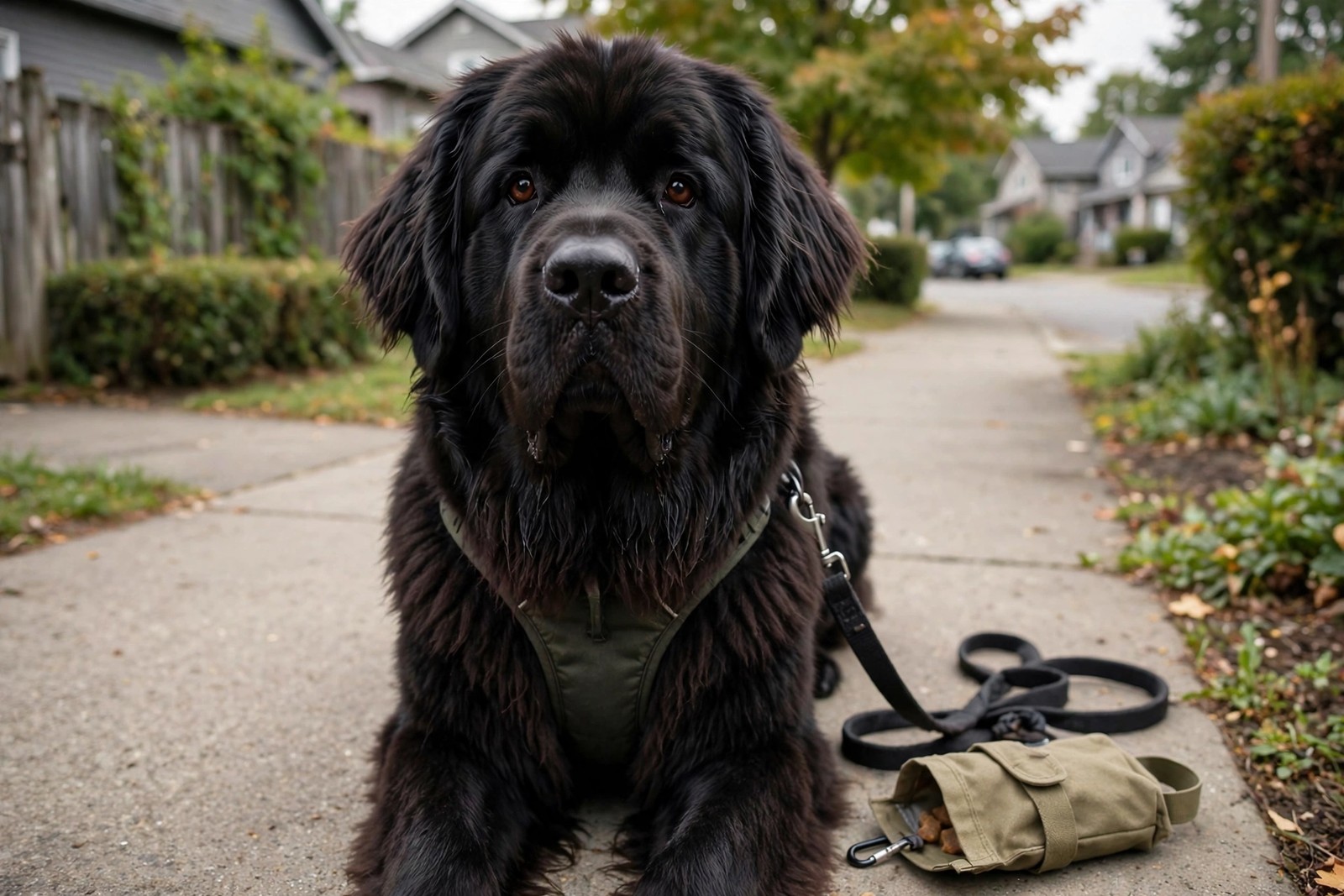
Newfoundland days proceed at a calm, deliberate pace set by a very large dog. Around an hour of moderate exercise across the day suits a typical adult: a steady morning walk without rushing, garden time, and a gentler evening outing, with swimming as the highlight whenever safe water is available. The breed's history as a working water dog shows in webbed feet, a powerful swimming stroke and a magnetism toward any lake, river or large puddle on the route, so towels live in the car permanently. Heat needs respect, since a huge body under a thick black coat warms quickly, and summer exercise shifts to early and late hours. Puppies grow at remarkable speed and need short, controlled outings rather than long hikes while their joints develop.
Floorspace, Furniture and the Slobber Budget
A Newfoundland weighing 100 to 150 pounds (about 45 to 68 kilograms) changes how a home functions. Doorways become single-file for everyone else, the dog's bed resembles a small mattress, and turning circles in kitchens require choreography. Drool is not an occasional event but a daily system: strings after drinking, head-shake spray across walls and ceilings, and a wet beard that transfers to trousers, sofas and visiting relatives. Owners station hand towels in several rooms, choose washable covers, and accept a certain gloss on the paintwork at dog height. Food arrives in large sacks and is measured in generous but controlled portions, because carrying surplus weight on giant joints shortens comfortable life, and your veterinarian should guide growth feeding for puppies and weight checks for adults, with any limping or reluctance to climb into the car raised promptly.
Brushing Several Times a Week, Plus Mud
The thick waterproof double coat needs brushing several times a week, section by section, reaching the dense undercoat on the chest, trousers and tail rather than skimming the glossy surface. Seasonal shedding arrives in volume, filling bags rather than dustpans. After wet walks, and Newfoundlands specialise in wet walks, drying takes time and often a blower or several towels, since moisture held deep in the coat can leave skin sore and the house smelling of pond. Ears should be checked and dried after swimming, paws rinsed when mud season peaks, and the whole routine started gently with a puppy who will soon be too large for arguments about the brush. Bathing a Newfoundland is an event requiring planning, drainage and a following afternoon.
Evenings With a Patient Giant
Temperament is the compensation for all of it. Evenings typically bring a dog who positions itself near children and adults alike, patient under household noise, steady with visitors and content to rest a heavy head on a foot. Newfoundlands often adore family life and tolerate remarkable amounts of fuss, although size alone means small children need supervision simply because a turning dog can bowl a toddler over without noticing. Training should be kind and consistent from puppyhood, when manners are easy to teach and hard to retrofit onto 60-plus kilograms of adult enthusiasm. Alone time is usually accepted calmly once the dog is exercised and settled, with destruction uncommon in a mature, well-kept dog.
The running costs of a Newfoundland deserve a clear-eyed paragraph of their own. Food in giant-breed quantities, a vehicle that fits the dog lying down, a ramp for older joints, heavy-duty grooming tools and veterinary fees calculated partly by weight all exceed medium-dog budgets by a wide margin. Water bills and laundry rise with the towel rotation, and holiday planning narrows to sitters and boarding arrangements genuinely equipped for a dog of this size, strength and slobber output, which is a short list in many towns.
Whoever takes over a Newfoundland later receives swim routines, drying steps and portion history through KinsLe Transferrable Profiles, avoiding a fresh learning curve.