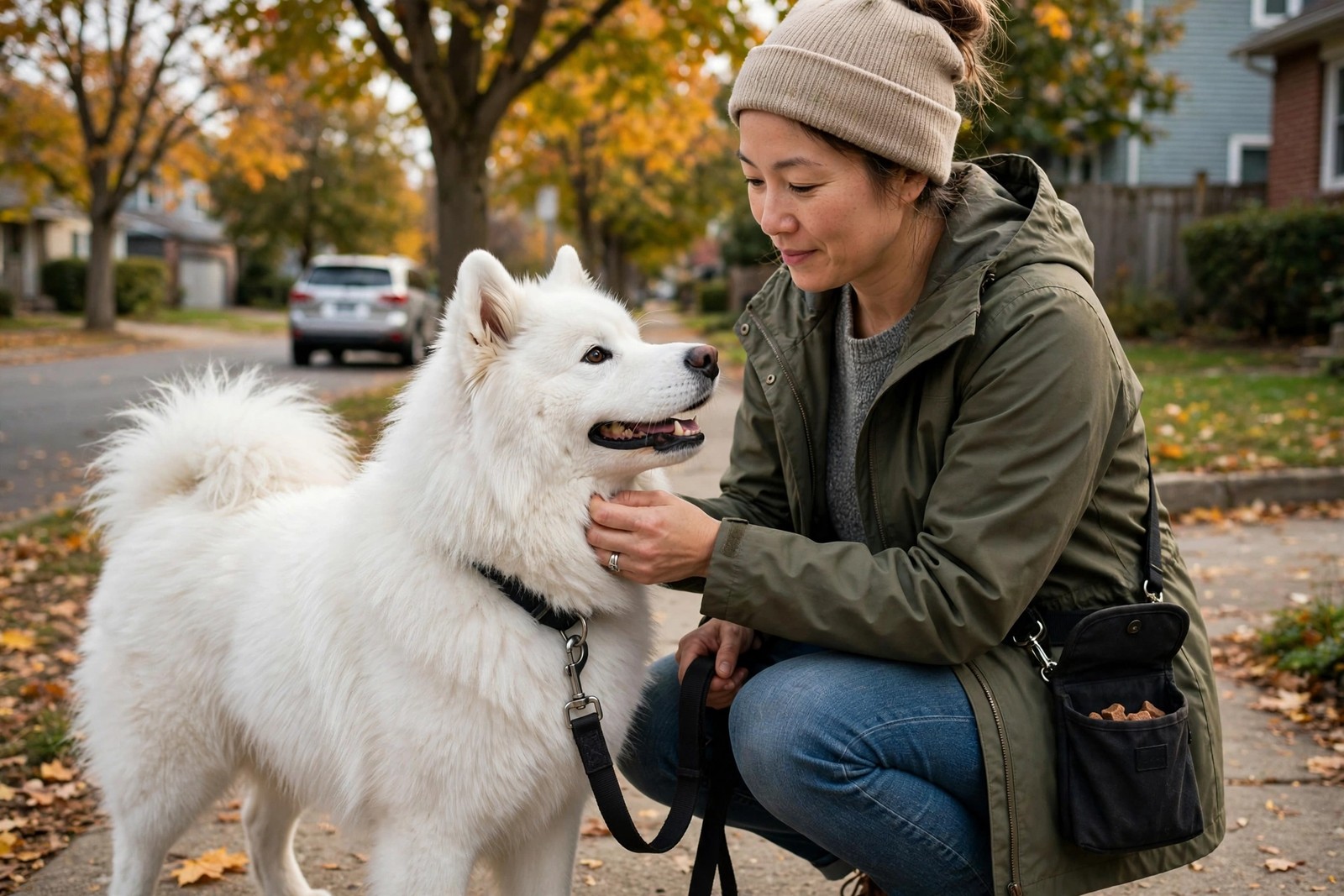
Samoyed days are sociable, noisy in a cheerful register and covered in fine white hair. A healthy adult typically needs one to two hours of exercise and activity: a substantial morning walk, play or training through the day, and an evening outing with time to sniff and greet the world. The breed worked alongside people in demanding cold conditions and still behaves like a colleague rather than an ornament, following household projects, supervising gardening and requesting involvement in anything involving the garden gate. Under-occupied Samoyeds often redecorate by digging, rearranging flowerbeds or holding extended vocal discussions with the neighbourhood, so a digging patch, puzzle games and honest daily mileage form the management plan rather than an optional extra.
The Coat, the Blow and the Brush Schedule
At 35 to 65 pounds (about 16 to 30 kilograms), a Samoyed carries a double coat engineered for serious cold: a dense, soft undercoat beneath a harsher outer layer that gives the breed its halo outline. Brushing several times a week, in sections and down to the skin, keeps the undercoat from compacting, especially behind the ears, around the neck and through the trouser feathering. Twice a year the undercoat releases in a coat blow, and sessions lengthen substantially for several weeks while clouds of white fur emerge from a dog who somehow still looks fully coated afterwards. Skipping the deep work lets the undercoat felt into mats that pull skin and hide irritation, so check the skin as you brush, keep nails trimmed, and raise persistent redness or scratching with your veterinarian. Remarkably, the coat sheds dirt well once dry, and mud usually brushes out of the outer layer after a walk.
Voice, Manners and the Garden Treaty
Socially, a Samoyed often talks. Wooing, grumbling commentary and full-throated greetings are normal household audio, and neighbours should be factored into the decision, especially in flats. Training responds to upbeat, varied sessions with genuine rewards, since repetitive drilling bores a bright dog into inventing variations of its own. Recall outdoors needs a secure area or a long line until it is proven against distractions, because a friendly dog with an independent streak may rank a fascinating stranger above your cue. Puppies need the usual frequent outings, gentle handling practice for the grooming years ahead and early, positive exposure to varied people and places, delivered in short doses that end before excitement boils over.
Evenings Inside the Circle
Evenings typically end with the dog installed inside the family's circle rather than at its edge, resting a chin on a foot, monitoring snacks with bright optimism and settling once included. Food portions should follow body condition under all that coat, checked by hand along the ribs, since fluff conceals both slimness and surplus. Heat deserves caution in summer, with exercise shifted to cooler hours and constant access to shade and water, because a coat built for Arctic work insulates in both directions. Owners who want an involved, funny, high-maintenance companion tend to flourish with the breed, while owners wanting a low-effort coat and a quiet house rarely do.
Travel and housing choices bend around the coat and the voice. Cars need ventilation and a liner that white hair cannot ruin, rentals and shared walls need neighbours tolerant of cheerful wooing, and gardens need fencing checked for digging at the base, since an industrious Samoyed excavates under barriers as happily as inside them. Many owners channel the digging into a sanctioned pit filled with sand and buried toys, refreshed regularly, which preserves the flowerbeds while honouring a deeply satisfying breed behaviour.
Coat-blow dates, brush order and exercise habits stay recorded for this Samoyed inside KinsLe Transferrable Profiles, ready for a successor household.