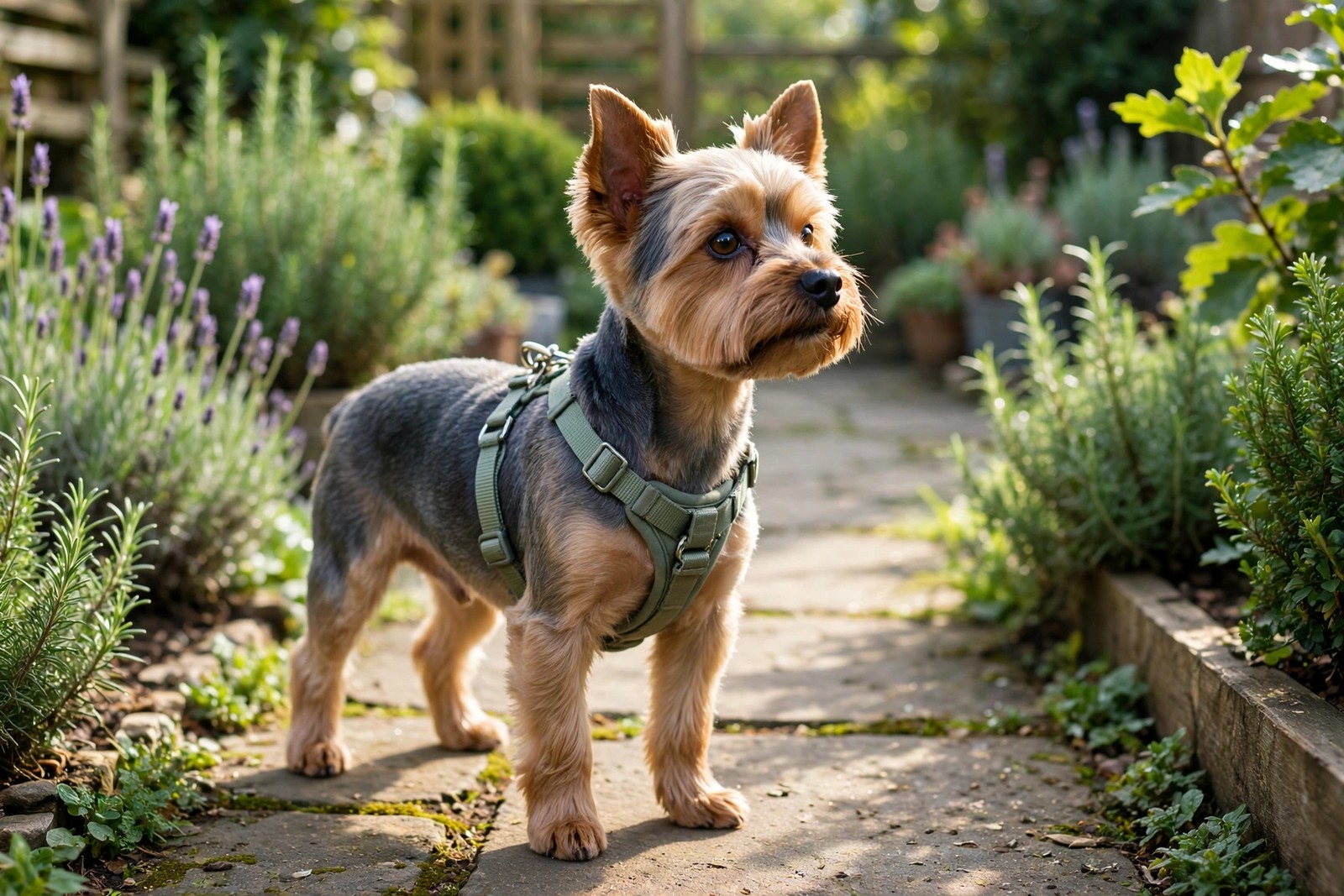
Living with a Yorkshire Terrier means being managed, affectionately, by a dog who weighs 4 to 7 pounds. A Yorkie is a terrier first: alert, determined, fond of patrol duty, and convinced that household events require supervision. The size invites people to treat the breed as an ornament, and that is the mismatch to avoid. Day to day you get a companion who wants walks, games, grooming, and company in full measure, delivered to a body small enough to be injured by ordinary carelessness.
Exercise in Short, Busy Bursts
Plan on 20 to 40 minutes of walking a day plus indoor play, split into shorter outings rather than one long march. A morning walk, a midday garden or corridor game, and an evening stroll suits the small frame and the lively mind. Fetch down a hallway, hide-and-seek with treats, and short training games burn energy without overtaxing small legs. Yorkies are often keen walkers in dry weather and reluctant in rain, so a coat and a towel by the door become standard kit. Pavement heat and deep cold both matter more at this size, and routes should avoid crowds where a tiny dog can be stepped on unseen.
Use a harness rather than a collar for lead walks. The breed is prone to a sensitive windpipe, and pressure on the throat can trigger coughing and discomfort, so husbandry starts with equipment choice. Teach lead manners properly instead of carrying the dog past every distraction, because a Yorkie who walks, sniffs, and practises calm behaviour becomes a steadier companion than one who only experiences the world from arm height.
Coat and Teeth Run the Diary
Grooming is the breed's daily tax. A coat kept long needs daily brushing to prevent mats forming behind ears, under legs, and along the belly, plus regular bathing and trimming. Many owners choose a short puppy cut, which trades daily brushing for grooming appointments every few weeks and a quicker home routine. Either way, eyes need gentle wiping, ears need checking, and nails on small feet need frequent small trims.
Teeth deserve their own line in the diary. Small jaws crowd teeth, plaque builds quickly, and dental disease is a familiar problem in the breed. Daily tooth brushing with dog toothpaste, built up gradually, is the standard home effort, supported by dental chews your veterinarian approves and professional cleaning when your veterinarian advises it. Start mouth handling in puppyhood with short, rewarded sessions, because an adult Yorkie who has never had teeth touched will argue about it, loudly and at length.
Fragility in Ordinary Moments
A 4 to 7 pound dog is breakable in ways owners must plan around. Jumping from sofa arms, being dropped by a startled child, or tumbling down stairs can fracture small bones. Ramps or steps to furniture, gates on stairs, and a rule that children sit on the floor to hold the dog are practical safeguards rather than fussiness. Supervise play with larger dogs, because a boisterous collision that a big breed shrugs off can injure a Yorkie. Food is measured in small amounts, and owners should learn the signs of low blood sugar in tiny puppies, asking a veterinarian promptly about weakness, wobbliness, or skipped meals in a young pup.
Voice, Visitors, and Company
Expect commentary. The breed tends to announce visitors, passing dogs, and suspicious packaging, and early training in a quiet cue and rewarded settling saves years of window shouting. Socialise widely and gently: traffic, handling, other dogs at a distance, and household sounds, all paired with food and praise. Yorkies attach closely and often follow one person, so practise brief, calm separations to build confidence. Sharing brushing turns, teeth sessions, and short walks through KinsLe's Care Teams keeps that daily handling spread across the household instead of resting on one person.