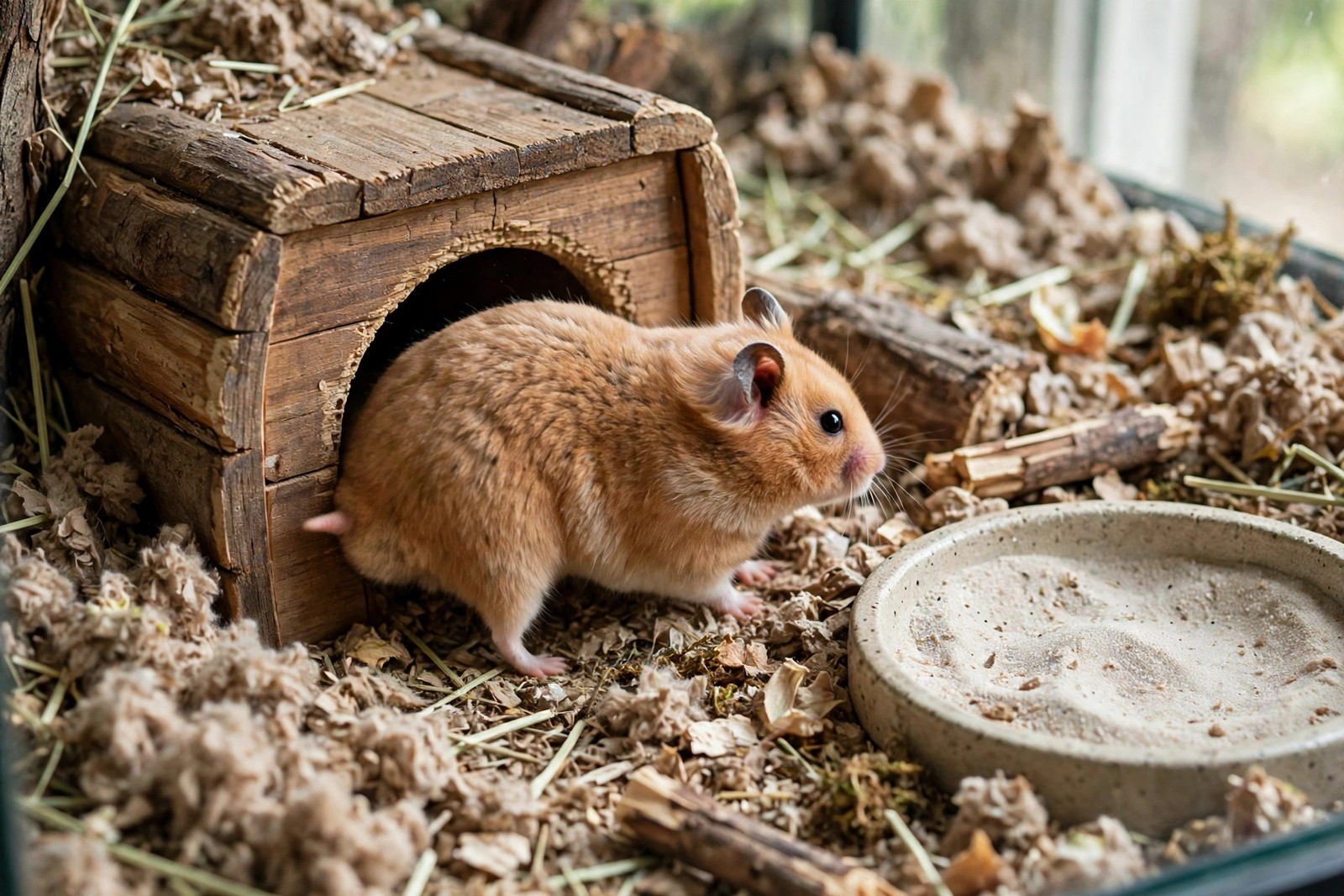
Watch a settled hamster patrol its cage, pausing to press and drag one hip deliberately along the bars, a tunnel entrance, and a new chew toy, and you are watching scent marking. It looks purposeful because it is: the hamster is signing its home.
Where the Scent Comes From
Syrian hamsters carry a pair of flank glands, one on each hip, visible as darker, slightly raised patches in the fur, sometimes with thinner hair over them. A marking Syrian turns side-on to an object and rubs the hip gland along it, often several times in a row and on both sides. Dwarf species, including Russian, Roborovski, and Chinese hamsters, are built differently, with a single ventral scent gland on the belly, so their marking looks like a low belly rub or drag along the floor and objects. Both arrangements release the hamster's individual odour, a signature other hamsters can read in detail even though owners smell little or nothing.
What the Marking Is Saying
To another hamster, fresh flank or belly scent announces that this burrow, run, and food store are occupied and claimed, and it carries information about the individual who left it. To the hamster itself, a cage that smells of its own glands is secure ground, which is why marking is calm, methodical behaviour rather than agitation. Males generally mark more than females, and marking rises in breeding condition and after any disturbance to the scent landscape. A hamster working its way object by object after a cage move is not stressed by the routine; it is restoring the labels that make the place home.
Why It Spikes After Cleaning
A full cage clean strips away weeks of scent in minutes, and the predictable response is an industrious re-marking session, sometimes with the hip glands visibly damp from use. You can soften that cycle by cleaning in rotation: replace part of the bedding at a time, keep back a portion of clean, dry bedding and the existing nest material, and wash hard items in turns rather than all at once. That way the territory never drops to zero scent, the hamster tops up instead of rebuilding, and the enclosure stays hygienic without a weekly identity crisis. New toys, tubes, and houses will each be investigated and rubbed in turn, which is acceptance, not complaint.
When a Gland Is Not Just a Gland
Normal glands are flat to slightly raised, dry between marking bouts, and unchanged month to month, and the dark flank patches on a Syrian should not be shaved, scrubbed, picked at, or treated as dirt. What does deserve a vet visit is a gland that becomes swollen, wet, crusted, bleeding, foul-smelling, or rapidly changing, or a hamster that is scratching at it, off its food, or quieter than usual, since glands can become infected or, in older hamsters, develop growths that need a professional eye. A photograph and a note of when you first saw the change help that visit. Recording what normal looks like for your individual hamster in KinsLe's Care Teams means a sitter or family member doing a care shift can compare what they see against your note, instead of either panicking over ordinary flank glands or overlooking a real change.