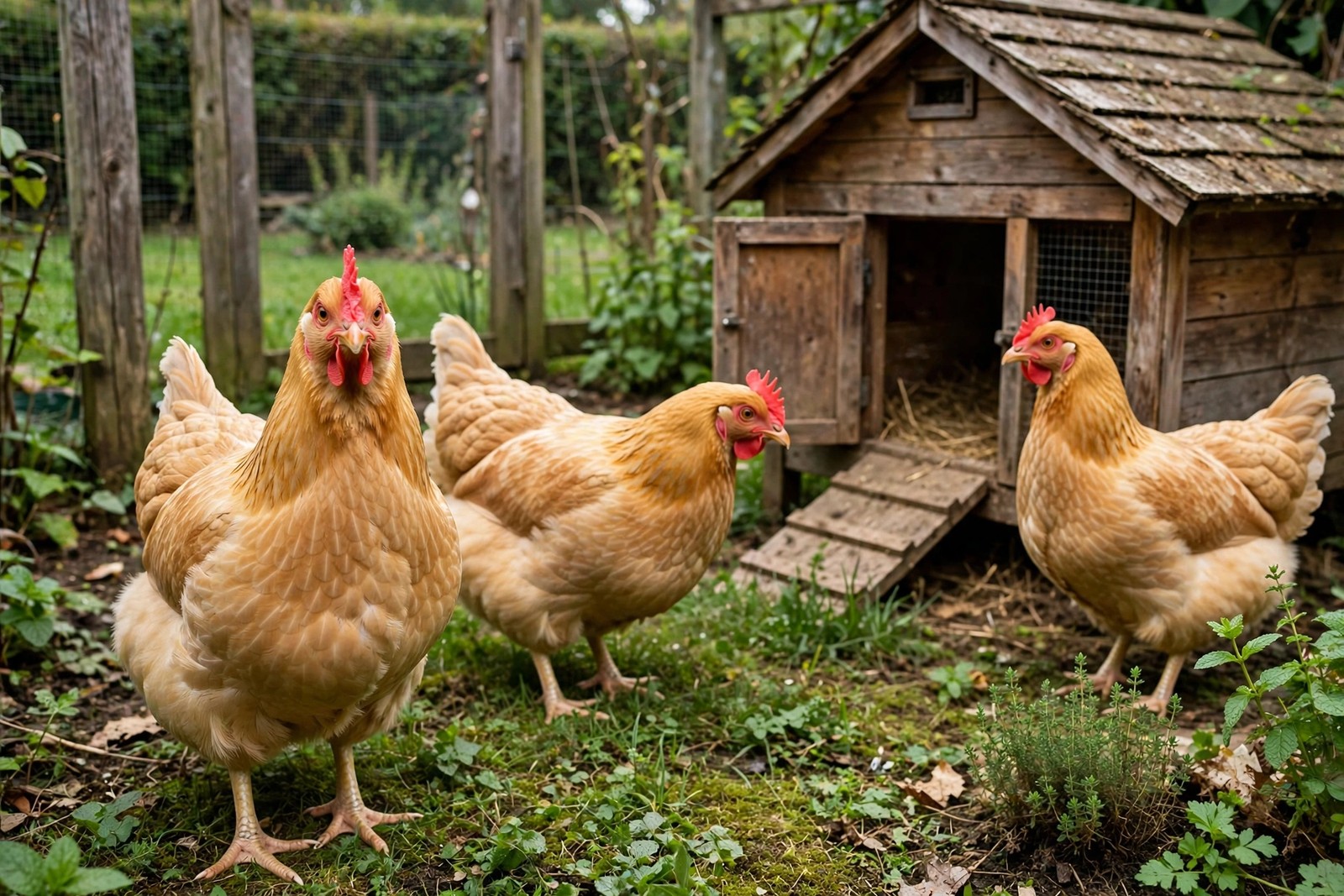
Beginner-friendly in a chicken means four things at once: a temperament that tolerates handling and mistakes, hardiness in ordinary weather, steady egg laying without fuss, and a bird that stays healthy on straightforward feeding and housing. Three well-known breeds deliver that combination in different proportions.
Buff Orpington: The Calm First Choice
The Buff Orpington is the breed most often recommended to first-time keepers, and the reason is temperament. These large, heavily feathered hens are docile, tolerate children and handling well, and rarely bully flockmates, which keeps a small new flock peaceful. They lay large brown eggs at a steady rather than spectacular rate, typically a good handful most weeks in season, and their thick plumage handles cold winters comfortably, though it needs shade and airflow in hot summers. Orpingtons also go broody more readily than many breeds, sitting tight on eggs; that is a gift if you ever want chicks and a small management task, lifting her off the nest daily, if you do not.
Australorp and Rhode Island Red
The Australorp is the close alternative: a calm, glossy black hen bred from Orpington stock, known as a reliable layer of light brown eggs, hardy in cold, and content in a run rather than demanding wide ranging, which suits smaller gardens. The Rhode Island Red is the workhorse option, an exceptionally hardy, prolific layer of brown eggs that shrugs off weather and forages keenly, with one honest caveat: reds can be assertive, and a hen at the bottom of a mixed flock's order may get pushed around, so beginners keeping several breeds often let reds be the majority or keep them in their own group. All three are dual-purpose heritage breeds, big enough not to be fragile and common enough to source easily.
Breeds and Setups to Avoid at the Start
Skip flighty, ornamental, and high-production specialist birds for a first flock. Very nervous breeds make routine handling a contest, heavily feathered feet need extra mud management, and hybrids bred for maximum laying can be shorter-lived and more prone to laying problems. Bantams are charming but lay small eggs and fly well; roosters are unnecessary for eggs, often restricted by local rules, and best added later, if ever, with experience behind you. Whatever the breed, hens are flock animals: keep at least three, and four to six is a kinder starting group that still fits a modest coop and run.
Setting the First Flock Up Well
Before birds arrive, check local rules on keeping hens, then prepare a dry, draught-free coop with perches, nest boxes, ventilation above head height, and a run secured against digging and climbing predators, with clean water and a complete layer feed as the daily base. Hens begin laying in their first year once mature, taper in winter's short days, and reward keepers who handle them calmly and check daily for appetite, posture, and droppings changes. The daily rhythm, morning feed and water check, egg collection, evening shut-in, is exactly the kind of shared routine that slips when one person is away, so putting those flock duties in KinsLe's Care Teams lets family or a neighbour cover each task on a rota, with completions timestamped for the keeper to see.