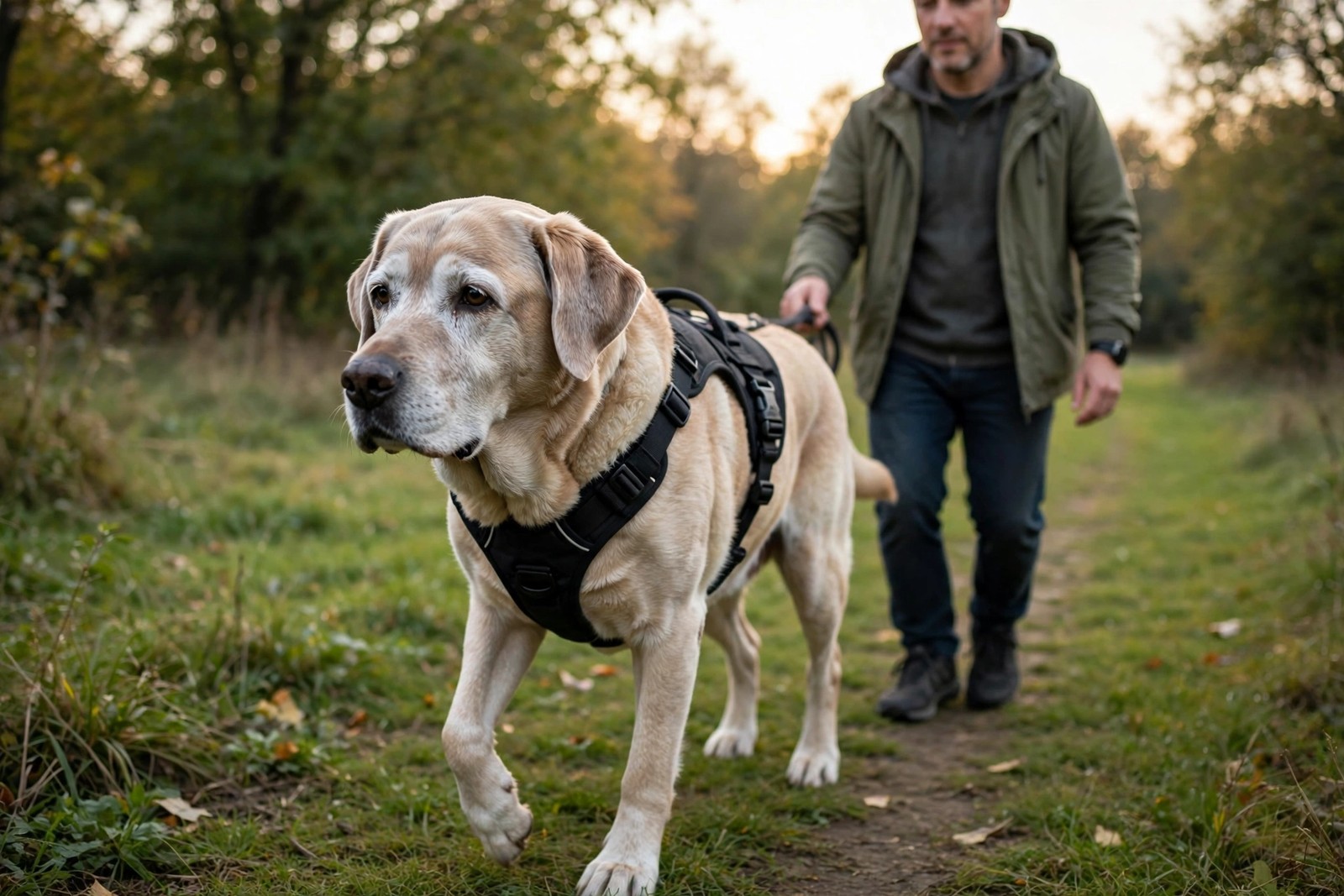
Stiff joints tempt owners into rest, but total rest backfires: muscles waste, weight creeps up, and stiffness deepens. The goal for an older dog with sore joints is steady, low-impact movement that keeps muscles strong enough to support the joints, dosed in amounts the dog can recover from by the next morning.
Short, Frequent, Gentle Walks
Several short walks beat one long march every time. For many stiff dogs that means three to five outings of ten to twenty minutes rather than a single hour, although your vet's guidance and your dog's response set the real number. Choose soft, level ground where you can: grass and packed earth forgive joints in a way pavement and loose gravel do not. Keep the pace steady and unhurried, let the dog sniff, and resist the weekend-warrior pattern of quiet weekdays followed by one huge hike, which is the classic recipe for a dog who cannot get up on Monday. Mornings are often the stiffest time of day, so make the first walk the gentlest and shortest, and expect looser movement once the dog has warmed up.
Swimming and Hydrotherapy
Water is the stiff dog's best friend because buoyancy carries most of the body weight while the limbs still work through a full range of movement. Supervised hydrotherapy in a controlled pool or underwater treadmill is the safest form, with warm water, a fitted flotation harness, and a handler who watches for fatigue. Open-water swimming suits confident swimmers in calm, shallow-entry water, but avoid steep muddy banks, cold water in winter, and any swim that ends with the dog hauling itself out over a hard edge, because the exit can undo the session's good. Dry the dog thoroughly afterwards and keep it warm, since chilled muscles stiffen faster.
What to Avoid
Skip the activities that load joints suddenly or unevenly. Repetitive ball chasing combines sprinting, skidding stops, and twisting turns, and is the single hardest game on sore elbows, hips, and knees. Jumping in and out of cars and on and off furniture slams weight through the front legs, so use a ramp or lift a small dog instead. Long flights of stairs, slippery laminate or tile floors at home, and wrestling play with much younger dogs all belong on the avoid list. At home, runners and rugs on slick routes to the garden, and a supportive bed in a draft-free spot, quietly protect the progress walks are making.
Read the Next Morning, Not Just the Walk
A stiff dog will often look happy and keen during exercise, because excitement masks discomfort. The honest report comes later: a dog who struggles to rise that evening, lags more than usual the next morning, or licks persistently at one joint has told you the dose was too much, so shorten the next sessions rather than stopping altogether. Keep a simple note of walk lengths and next-day stiffness for two weeks and patterns appear quickly. Any sudden change, such as a new limp, a joint that feels hot or swollen, yelping, or refusal to bear weight, is a vet visit, not a wait-and-see, and only your vet can advise on pain relief or joint medication for your individual dog.
Splitting the day's short walks between family members is easier when the rota lives in KinsLe Care Teams, where each completed outing is marked off so the dog gets movement without accidental double sessions.