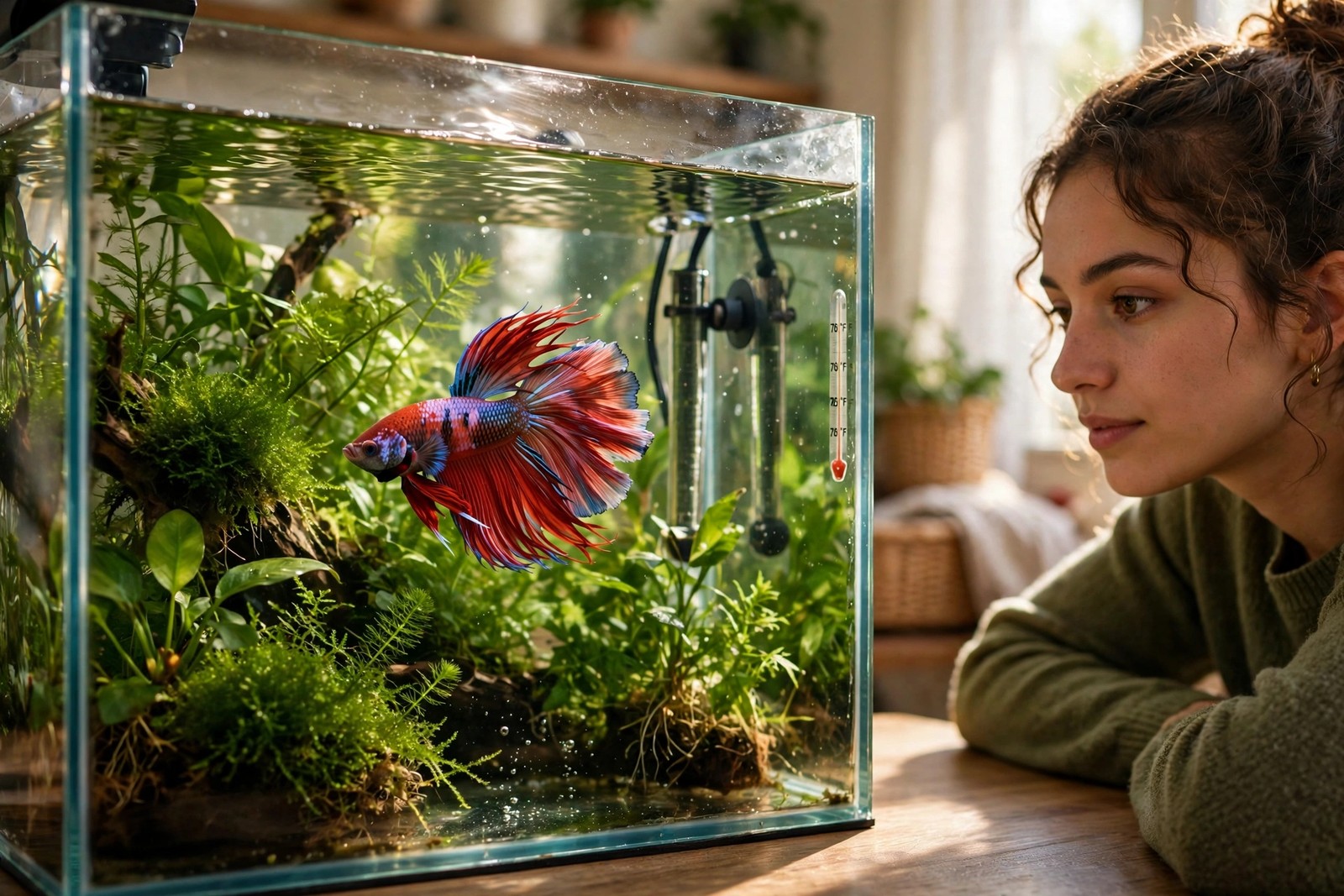
There is no single best first fish, but there is a clear profile: hardy, small as an adult, peaceful, bred widely in captivity, and bold enough to eat in a new tank. Fish matching that profile forgive the wobbles in water quality and feeding that every beginner produces in the first months, which is exactly what a first fish needs to do.
The Strongest Choices
A betta is the best solo first fish. Kept alone in a heated, filtered tank of 5 to 10 gallons, a betta is personable, undemanding about company, and easy to feed in measured amounts. The catch is the word alone: males fight males, and bettas in community tanks are a gamble that depends on the individual fish.
For a 20-gallon community, white cloud mountain minnows are close to foolproof — small, active, peaceful, and happy in cooler water without a heater in most homes. Zebra danios are equally hardy and constantly on the move near the surface, though their speed can unsettle very shy tankmates. Platies and guppies bring colour and endless activity; choose all males if you do not want a tank filling with fry, because livebearers breed whether you planned it or not. A group of corydoras catfish rounds a community out at the bottom, shuffling through the substrate, and they should always be kept in a group of their own kind rather than as a single cleaner.
Popular Fish to Skip for Now
Goldfish top the misleading list. They are sold small and cheap, but a single-tailed goldfish grows past a foot, lives for decades, and produces enough waste to overwhelm a small tank quickly; fancy types still need far more room than a starter bowl. Angelfish, most cichlids, and anything labelled semi-aggressive reward experience, not beginners. So do fish with exacting water needs or wild-caught fish that arrive stressed and reluctant to eat prepared foods. None of these are bad fish — they are second-year fish.
Judge the Individual Fish in the Shop
Species choice is half the decision; the individual in front of you is the other half. Look for fish that are active, holding their fins open, breathing evenly, and interested in their surroundings, in a tank with no dead or visibly sick fish. Ask the shop how long the fish has been in stock and what it is eating, and watch it feed if you can. A good shop will also ask about your tank — its size, whether it is cycled, what else lives in it — and will happily hold off a sale that is set up to fail. That conversation is worth more than any discount.
Set Up Before, Not After
Cycle the tank first and let the bacteria establish, stock lightly, and add fish in small groups rather than filling the tank in one exciting afternoon. Feed sparingly at the start; more first tanks are lost to kindness at feeding time than to anything else. Keep the first month boring — same food, small water changes, no new arrivals — and your forgiving first fish will usually reward you by settling fast.
Finding the right shop matters as much as finding the right species, and that is what KinsLe's Pet Services Directory is for: look up local aquatic shops and pet services near you, choose one whose tanks and advice you trust, and your first fish starts life with you already ahead.