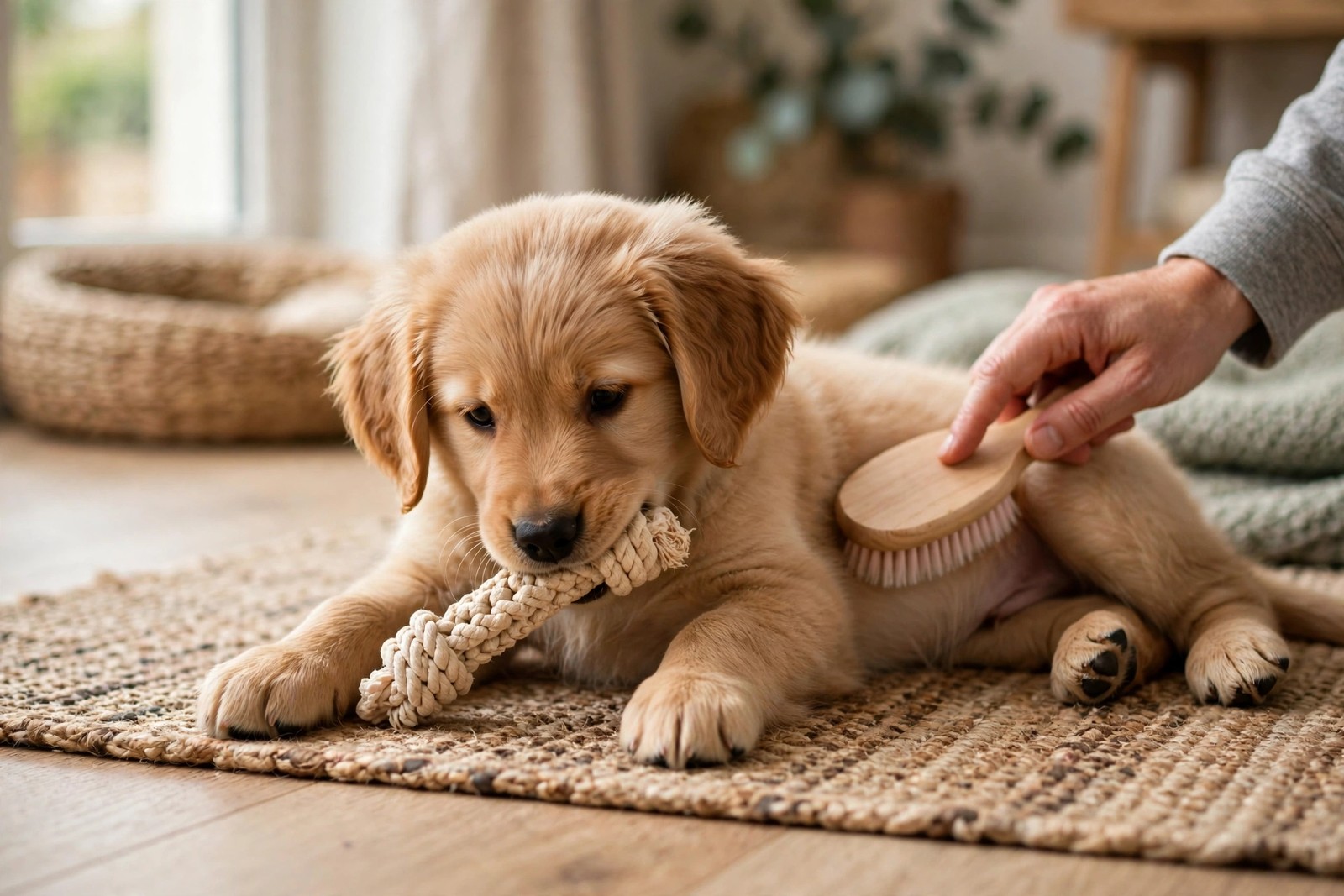
A new puppy does not need a polished coat in its early weeks at home. It needs to learn that hands, a brush and touch around sensitive places predict good things and end before worry builds. Treat the session as handling practice for life: future brushing, vet examinations, paw checks and collar fitting all become easier when the puppy has already learned that being touched all over is safe.
Set up a session the puppy can succeed at
Choose a moment when the puppy is calm but not asleep, and settle it on a non-slip mat or on the floor beside you. Give it something safe to chew, because chewing occupies the mouth and gives the puppy a reason to stay settled while your hands move. Keep a soft brush in reach before you begin, so you are not rummaging around once the puppy is in position.
Make a few gentle strokes along the back and sides, then pause and reward. The brush should barely do grooming work at this stage. Its job is to become familiar and harmless. Keep the whole session under two minutes, once daily, and end it while the puppy is still content. Stopping early teaches the puppy that cooperation is brief and safe, which makes it easier to start again tomorrow.
If the puppy rolls, mouths the brush or tries to turn the session into a game, stay cheerful and simplify. Return to one easy stroke, reward that, and finish. A shortened success is worth more than a complete session achieved by holding on.
Touch tail, belly, paws and collar on purpose
The question includes tail and belly for a reason: those are areas owners often avoid until a mat, injury or examination forces the issue. Add them gently from the beginning. Stroke the tail briefly, touch the belly while the puppy is settled, lift or hold each paw for a moment, and run fingers under the collar area. Pair each new area with food or praise and keep your touch light.
Do not roll the puppy over and hold it there to prove a point. If the belly is offered, use the opportunity. If it is not, touch the side and chest instead and try again another day. Paws deserve the same patience, because a puppy that accepts paw handling as a puppy is far easier to help with nail care, grass seeds or a sore pad later.
Belly and tail touches should stay brief enough that the puppy does not have time to become tense. One calm touch, reward, move on. Repetition across days builds the acceptance, not one long session.
Never chase, pin or finish at all costs
If the puppy walks away, let it go. Chasing it around a room for one more stroke teaches that brushing starts a capture game, and pinning it down teaches that struggling is the only way to communicate. Either lesson will return when the puppy is larger and genuinely needs grooming.
Build duration over weeks instead. Add a few more strokes, introduce a comb lightly after the brush is accepted, and later practise standing on a mat or a stable low surface if a groomer will work that way. Keep the chew, the rewards and the early finish in place as the sessions lengthen, so the pattern stays recognisable. Some days will go backwards after a busy outing or a poor night's sleep, and returning to a very short session on those days protects the habit.
Care Teams through KinsLe helps different family members share those brief sessions without anyone repeating handling on the same day by mistake.