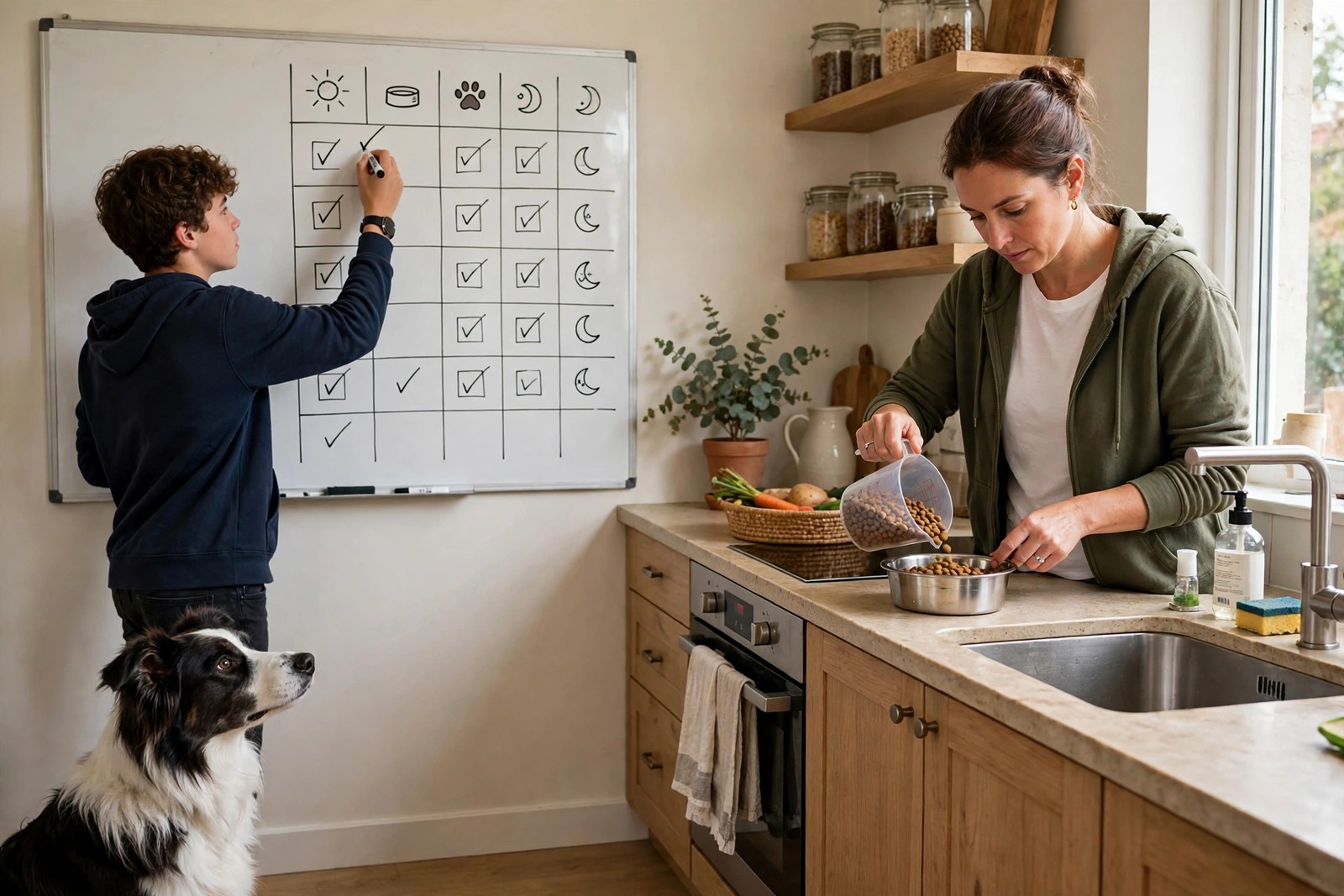
Dogs in busy families rarely suffer from neglect. They suffer from assumption: one parent feeds because the other is out, a teenager feeds again because nobody said the first feed happened, and the dog quietly eats twice while his walk gets forgotten entirely. Sharing duties well is not about dividing love. It is about making every job visible, owned, and recorded.
Start by Listing the Real Work
Write down everything your dog actually needs across a week, with times attached. For most dogs that means a morning feed and toilet break, at least one proper walk and usually two, an evening feed, fresh water checks, poop patrol in the garden, grooming sessions, training practice, and any medication given at set times. Add the invisible jobs too: washing bowls, booking vet and grooming appointments, and noticing when food is running low. Families are often surprised the list runs to twenty or more tasks, and that surprise is useful, because it shows why one person quietly doing everything eventually burns out.
Turn the List Into a Named Rota
Assign each job to one person for a set stretch, ideally a week at a time, rather than renegotiating daily. Pair jobs with existing anchors: the person who is up first takes the morning feed and garden break, the one home from school takes the afternoon walk, and the last person downstairs does the final toilet trip and water refill. Rotate the unpopular jobs, especially poop patrol and weekend early walks, on a visible schedule so fairness is obvious rather than argued. Keep the rota where everyone passes it, and treat a missed job as a rota problem to fix, not a character flaw to prosecute.
Match Jobs to Ages Honestly
Children can do real, valuable jobs: filling the water bowl, measuring a feed under supervision, scattering a sniff game in the garden, reading to the dog, and being the official tick-off checker. What children should not carry alone is medication, solo walks with a strong or reactive dog, or responsibility for noticing illness. Teenagers can usually walk a steady dog on an agreed route, do full feeds, and log anything odd they notice. Adults keep medication, vet decisions, and any dog whose strength or behavior needs adult judgment. Giving a child a job that is genuinely theirs, sized right, is how care skills and attachment both grow.
One Source of Truth, Ticked Off as You Go
The single most valuable habit is a completion record. Every feed, walk, and dose gets marked done the moment it happens, by the person who did it. That stops double feeds, prevents missed medication, and ends the shouted cross-household question of whether anyone has walked the dog. If the record shows a job undone at its usual time, the rota's named backup steps in without debate. KinsLe's Care Teams holds exactly that record for a family dog, with duties assigned to each member and a timestamp on every finished task, so the dog's day is provable rather than remembered.