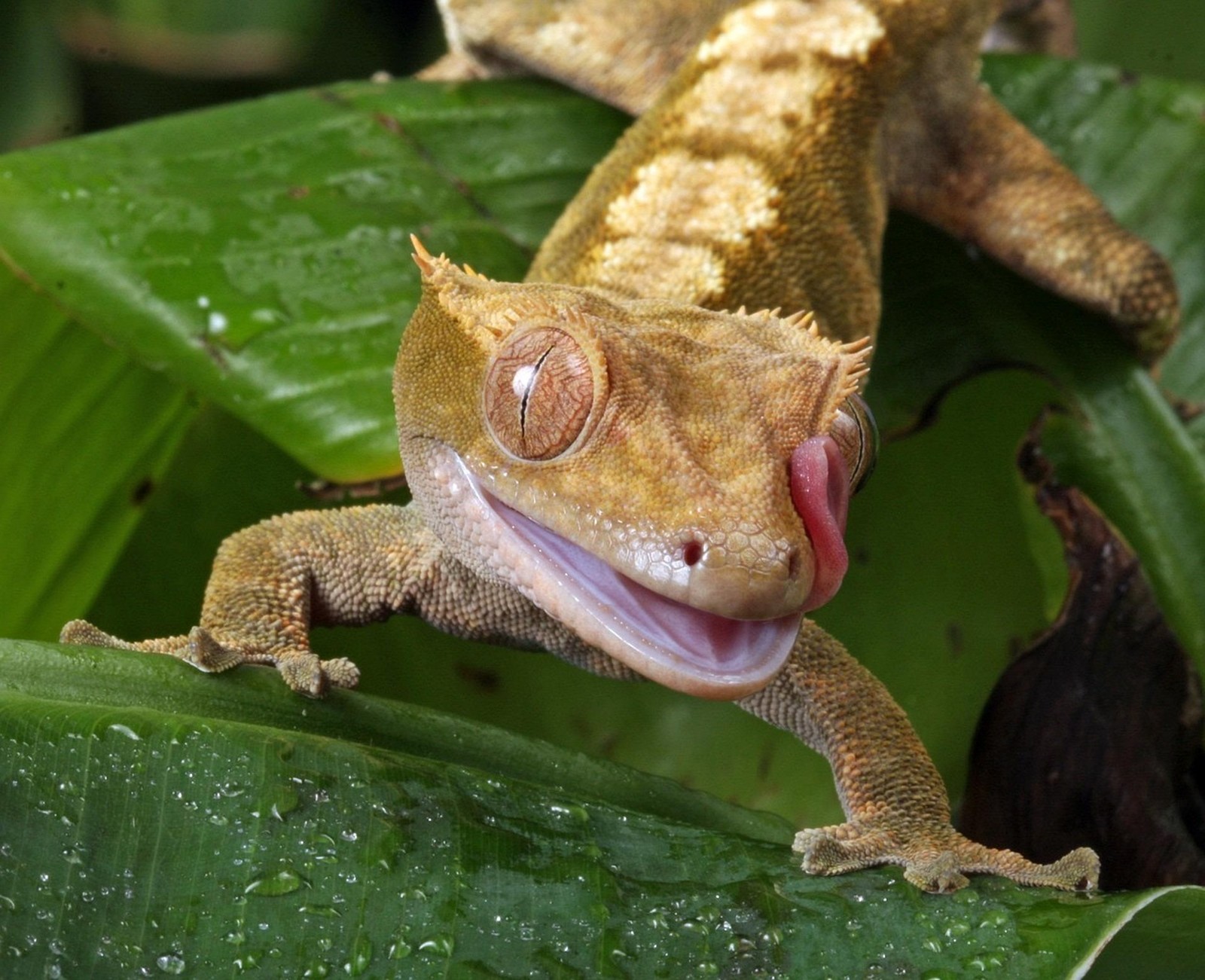
A crested gecko does not bite, tear or carry food away. It laps at a prepared gecko diet with its tongue, often at night, and by morning the dish can look almost untouched even after a good feed — or look disturbed after a few exploratory licks and nothing more. Guessing from the dish's appearance is how appetite changes get missed for weeks. The clear answer is to log three small pieces of evidence at every feed: the dish's weight, the lick marks in the surface, and the flavour offered.
Weigh the Dish Before and After
A small gram scale is the honest witness. Weigh the dish with its freshly mixed food before it goes into the enclosure, then weigh what remains when you remove it, and write down both numbers. The difference is what left the dish. Licked food also loses a little moisture overnight as it sits in warm enclosure air, so the weight drop slightly overstates a tiny meal — which is exactly why the weight is paired with the lick score below rather than used alone. Keep the food mixed to the same consistency each time, because a runnier mix spreads, dries and weighs differently from a thicker one, and keep the same dish so its empty weight never changes the maths.
Score the Lick Marks
Smooth the food's surface flat with the back of a spoon when you serve it, and the tongue leaves readable evidence. Use the same four-step score every time. A score of 0 means the surface is untouched. A score of 1 means isolated lick trails cross part of the surface. A score of 2 means lick trails cover roughly half the surface or one area is clearly worked down. A score of 3 means the surface is broadly cleared or the food is eaten down across the dish. Photographing the dish under the same light once in a while gives you a visual check on whether your scoring is drifting. The score catches what the scale misses: a gecko investigating a new flavour, licking widely but shallowly, reads very differently from one that settles and feeds deeply in one spot.
One Line Per Feeding, Always the Same Fields
Write one line per feeding with exactly five fields: the flavour offered, the grams before, the grams after, the lick score, and the time the dish was removed. A line might read: fig flavour, 14 grams before, 11 grams after, score 2, removed at 8 in the morning. Because every line carries the same fields in the same order, a month of lines can be scanned in seconds — you can see the flavour that always scores 0, the week the grams after crept up, or the steady pattern that proves a shy gecko is feeding well. Add live insects, when you offer them, as a short note on the same line, counting what was taken rather than what was released.
What the Pattern Tells You
Single skipped feeds mean little for a crested gecko; adults often feed every other night and may pause around a shed. The log earns its keep at the level of trends: falling weights and scores across two weeks, one flavour consistently refused while others are eaten, or a previously reliable feeder going quiet. Those are the patterns worth raising with a reptile vet, and arriving with dated lines beats describing a feeling. KinsLe's Pet Passport stores those feeding lines with your gecko's weights and shed notes in one record packet, so the whole appetite history is ready the moment a vet asks how long the change has been going on.