
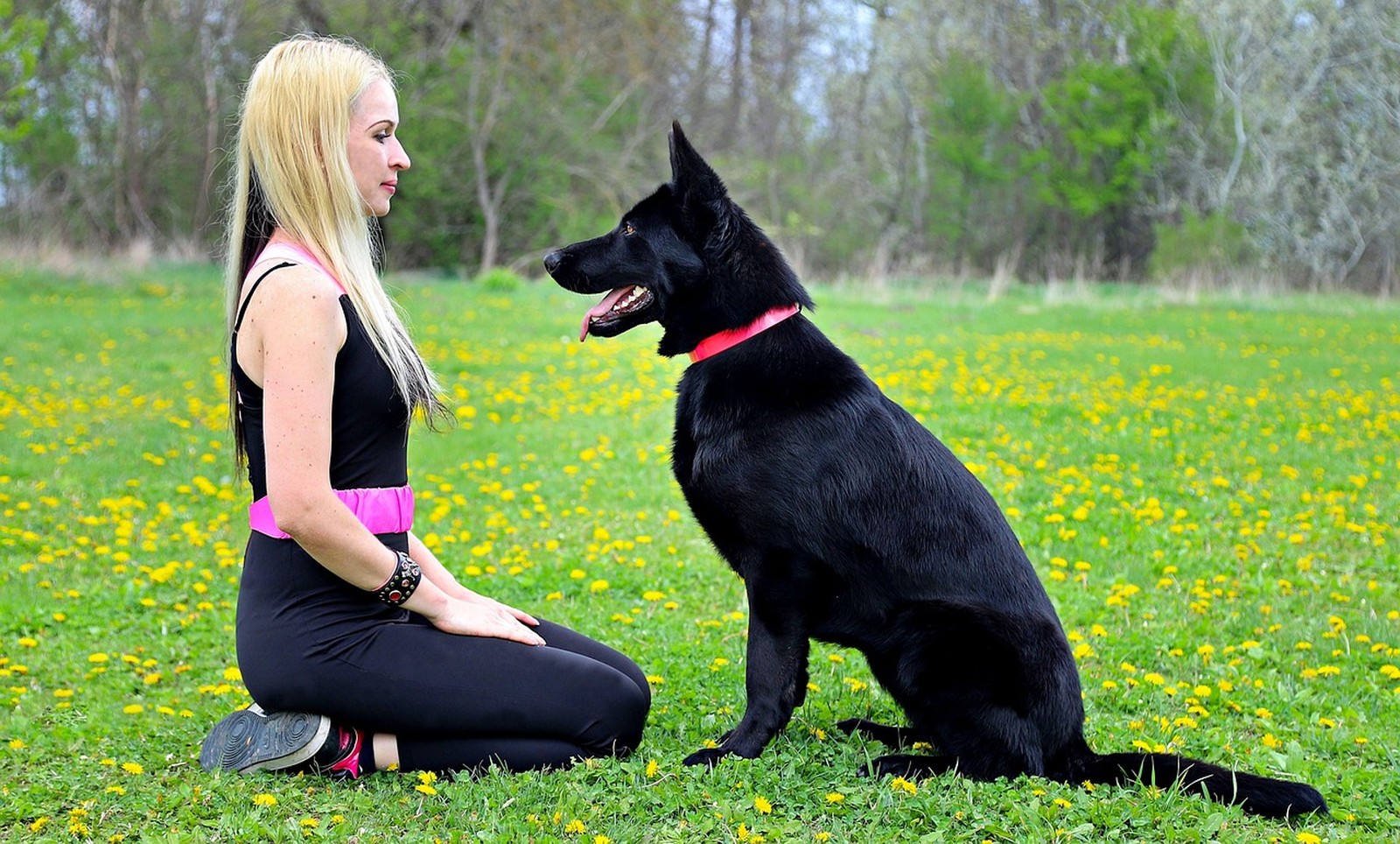
These two breeds dominate working-dog photographs side by side, and social media has blurred them into one generic tactical dog. Owners live with a real distinction. The German Shepherd was developed as an all-purpose herding and service dog: powerful, thoughtful, and adaptable to guide work, search work, and family guarding. The Belgian Malinois, one of the Belgian shepherd varieties, was refined for relentless farm work and is now prized where speed and extreme drive matter most. Similar silhouette, very different throttle setting.
Build and movement
German Shepherds are larger and heavier-boned, with a long body, a bushy tail, and a dense double coat most often black and tan, sable, or solid black. The angled rear and flowing trot divide opinion but give the breed its unmistakable outline. Malinois are smaller, square-built, and noticeably lighter, with a short fawn coat darkened by a black mask and black-tipped hairs. Everything about the Malinois looks coiled: it accelerates faster, turns tighter, and climbs, jumps, and scrambles in ways that surprise owners used to Shepherds. Think family estate car versus rally car, both capable, one far twitchier.
Drive and intensity, the heart of the matter
A well-bred German Shepherd has strong prey and guarding instincts balanced by a desire to work with its handler and, importantly, an ability to settle after work. A Malinois often lacks that off-switch unless it is deliberately trained in. The breed's focus can look like obsession: staring at a ball, a sleeve, or a moving bicycle with total commitment. That intensity is gold for detection and protection professionals and a liability in a pet home, where under-stimulated Malinois redirect drive into spinning, shadow-chasing, furniture destruction, and lunging. Honest breeders of Malinois routinely talk pet buyers out of puppies, and that honesty should be believed.
Temperament with family and strangers
German Shepherds are loyal, watchful, and typically aloof with strangers, bonding deeply to their household and accepting a family rhythm when trained and exercised. They suit experienced owners who want a trainable guardian and companion in one. Malinois bond with an almost frantic closeness to their handler but are less forgiving of chaotic households, visiting children, and inconsistent rules. Both breeds can be reactive without early socialisation, and both are mouthy youngsters. The Shepherd's mouthiness is a training phase; the young Malinois explores the world through its teeth with professional enthusiasm for much longer.
Training and daily workload
Budget serious daily time for either: long exercise, structured training, and jobs such as scent games, obedience, or sport. The Shepherd generally learns the pet-life contract faster, settling into routines and downtime. The Malinois needs its work scheduled like employment, with variety, rest enforced rather than expected, and handling skills most pet owners have to learn from a good trainer. Coat care favours the Malinois, whose short coat needs little beyond brushing, while the Shepherd sheds its dense double coat heavily and continuously. Health conversations for Shepherds often centre on hips and elbows; for Malinois, on soundness under extreme athletic load.
An honest recommendation
For most active families, the German Shepherd is the manageable choice: still a serious dog needing training, but bred to live alongside its work. The Malinois belongs with handlers who actively want a canine sport or working career and have structured their days around it. Choosing a Malinois because it looks impressive in videos is the single most common mistake in this comparison. If you adopt or rehome a trained adult of either breed, KinsLe Transferrable Profiles preserves its commands, routines, and medical history so the new handler starts from knowledge, not trial and error.