
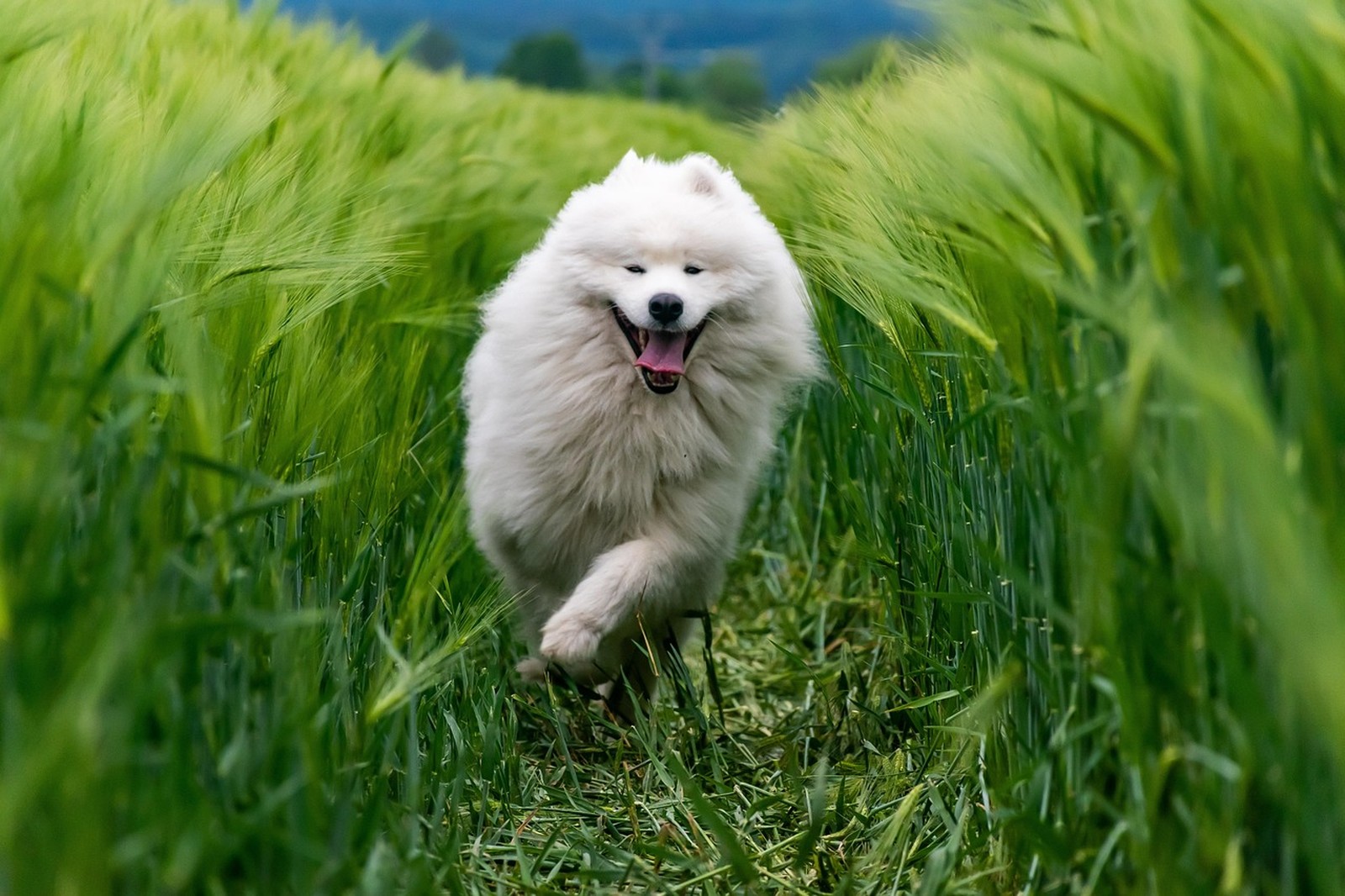
At a distance these two spitz breeds can look like the same smiling, curled-tail dog in different colours. Up close, and across a lifetime of care, they ask quite different things of an owner, starting with the jobs they were bred to do.
Origins explain the size gap
The Samoyed comes from Siberian sled work: pulling loads, herding reindeer and sharing tents for warmth, which produced a larger, stronger dog that expects to live in the middle of family life. The Keeshond developed on Dutch barges and farms as an alert watchdog and companion, which produced a smaller, more portable dog whose main job was noticing things and announcing them. That history still shows: the Samoyed leans into a harness and into work, while the Keeshond patrols, watches visitors arrive and settles nearer the centre of the household.
Coat colour, coat volume and shedding
The Samoyed is famously white or cream, with a thick double coat that blows out in clouds and mats behind the ears, in the armpits and around the collar if brushing slips. The Keeshond wears its colour in layers: a grey, black and cream mix with a pale ruff, feathered legs and those dark spectacles framing the eyes. Its coat is also dense and shedding is also serious, but there is simply less dog and less coat to work through at each session. Both breeds need line-brushing down to the skin, not a quick pass over the top, and both leave hair on clothes, cars and furniture as a permanent condition of ownership.
Voice, energy and daily life
Expect noise from both, in different styles. Samoyeds talk: they bark, woo and argue back, and a bored Samoyed outdoors may serenade the street while digging for entertainment. Keeshonds are sharp, watchful barkers at arrivals and changes, but they are generally less driven to roam, dig and pull than a Samoyed with energy to spare. On exercise, the Samoyed needs the fuller programme: long walks, play, training and ideally a pulling or hiking outlet. The Keeshond is lively and playful and still needs daily activity and company, yet it usually downshifts indoors more readily once its watchdog duties are done.
Temperament and training notes
Both breeds are people-focused, clever and capable of selective hearing when something more interesting appears. Samoyeds combine friendliness with independence and physical strength, so recall and lead manners need patient, early work before adolescence makes the experiments bigger. Keeshonds are often described as intuitive and eager to stay close, which can make training feel more cooperative, though their alertness needs channelling so every passer-by does not become an announcement. Neither breed thrives on long daily isolation; loneliness in a spitz tends to come out as barking, chewing or creative escape attempts rather than quiet sadness.
Making the call between them
Choose the Samoyed if you want a larger, athletic companion, you genuinely enjoy grooming and outdoor time, and your household can absorb joyful noise. Choose the Keeshond if you love the spitz look and personality in a smaller, more home-centred package and want a watchdog rather than a sled dog. Meet breeders' adult dogs, ask how much coat care a week really takes, and believe the answer. When your chosen dog comes home from a breeder or rescue, KinsLe Transferrable Profiles carry its coat-care notes, feeding routine and known history across to you, so its first month is not guesswork.