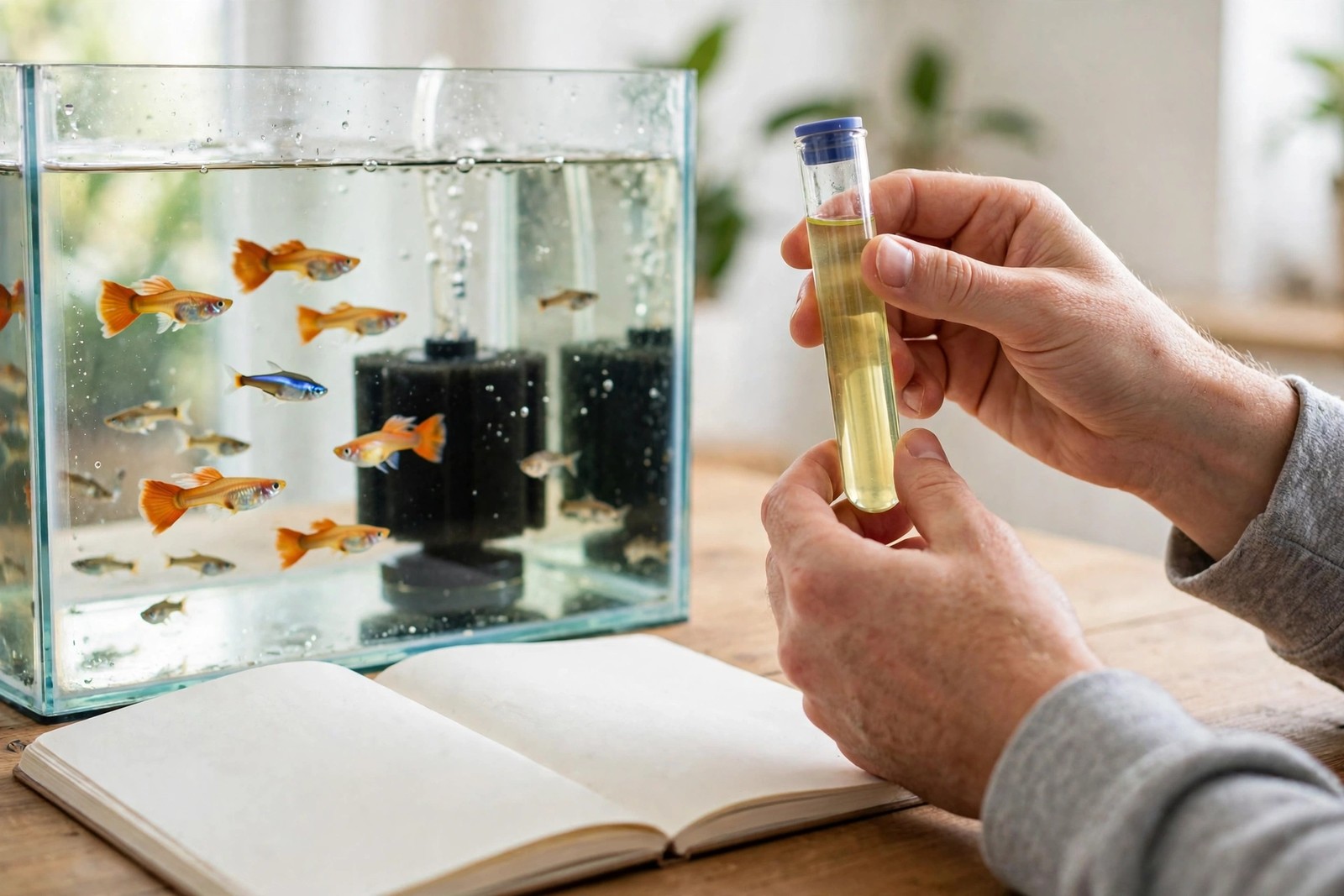
A new filter starts out sterile, and fish waste produces ammonia that burns gills and skin. Cycling means growing two groups of bacteria in the filter media: one converts ammonia into nitrite, which is also toxic, and a second converts nitrite into nitrate, which fish tolerate at modest levels. Until both groups are established, a stocked tank is a tank being slowly poisoned. The two cycling methods differ in one thing only: what supplies the ammonia while those bacteria grow.
Fishless Cycling: You Are the Ammonia Source
In a fishless cycle the tank is set up, filled, heated, and filtered with no fish at all. You add ammonia directly, either from a plain ammonia solution or by letting a measured amount of fish food decay, and raise the level deliberately, higher than any fish could safely tolerate. Because nothing living is at risk, you can hold that level steady, test every day or two, and simply wait while the bacteria multiply: ammonia falls, nitrite spikes and then falls, and nitrate appears. Only when a full dose of ammonia converts through to nitrate within about a day is the tank ready, and it can then take a full stocking at once. The cost is patience and an empty tank for several weeks.
Fish-In Cycling: The Fish Are the Ammonia Source
In a fish-in cycle, a small number of fish go into the new tank and their waste starts the process. Now every decision is a welfare trade-off. Ammonia and nitrite must be kept very low to protect the fish, so you test daily, often twice daily at the peaks, and do frequent partial water changes to dilute toxins the moment readings climb. Those changes also remove the bacteria's food, so the colony grows more slowly and the cycle typically takes longer. The fish still live for weeks in water that is never entirely safe, and the stress, gill damage, and losses that follow are why the old advice about using a hardy fish to cycle a tank has fallen out of favor. No species enjoys ammonia; some merely survive it more often.
Choosing Between Them
Fishless cycling is the clear recommendation for anyone setting up a first tank, planning delicate species, or able to wait before buying fish. Fish-in cycling is sometimes unavoidable, for example when fish arrive as a rescue or a tank fails and its occupants need immediate housing, and then the discipline is non-negotiable: very light stocking, very light feeding, daily testing, a detoxifying water conditioner used as directed during changes, and water changes whenever readings rise. Seeded filter media from an established healthy tank shortens either method considerably. Whichever route you are on, the daily tests and changes are a shared household job for weeks, and KinsLe's Care Teams lets you assign each day's testing and water-change duties to family members, with a timestamp on every completed check so no peak gets missed.