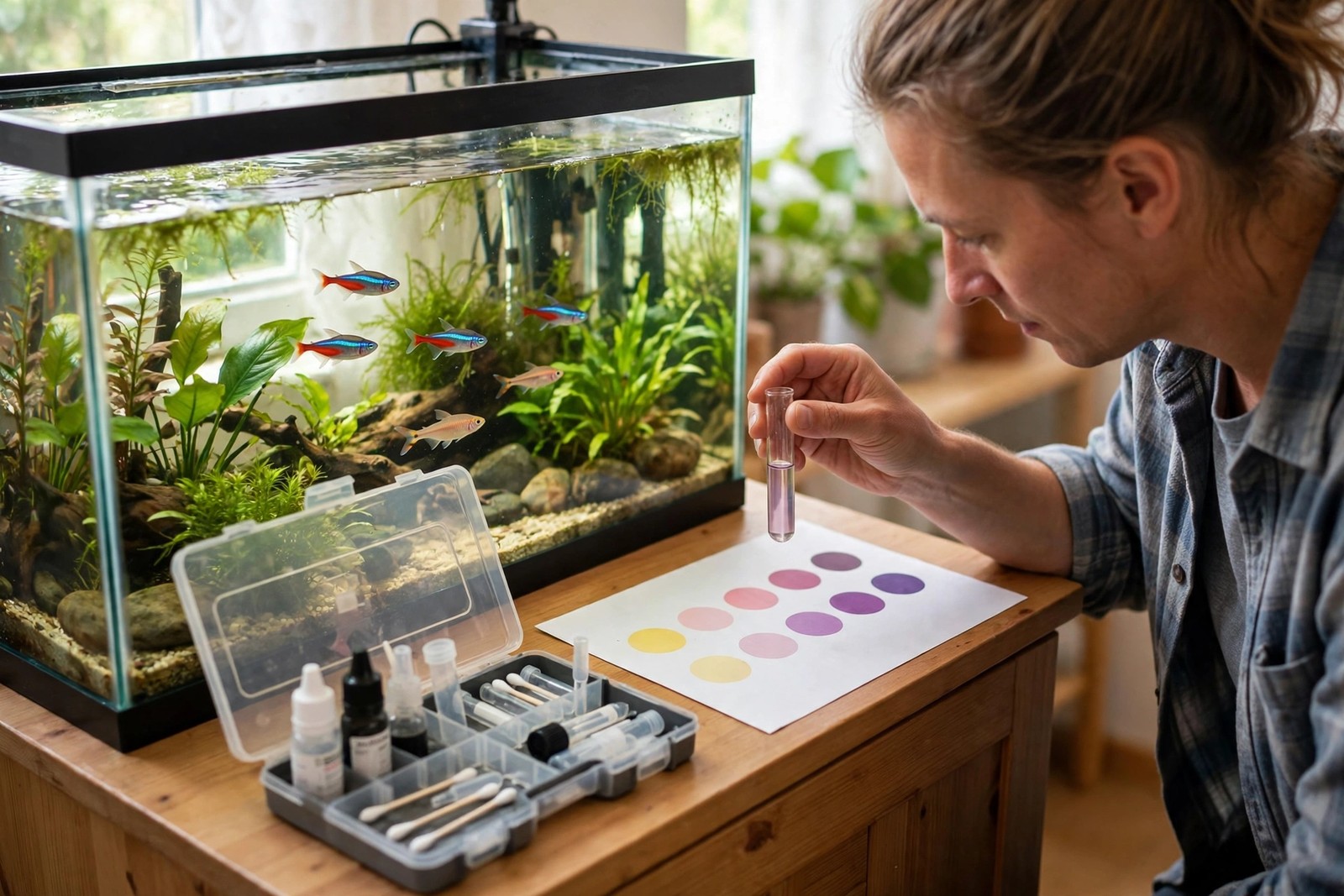
Nitrite and nitrate differ by one oxygen atom, one step in the nitrogen cycle, and an enormous difference in how much they should worry you. Mixing them up — easy, given the names — leads beginners to panic over the wrong number and shrug at the right one. Here is the cycle they both belong to, in order.
The Cycle, Step by Step
Fish produce ammonia in their waste, and uneaten food rotting on the substrate produces more. Ammonia is highly toxic, so the first colony of beneficial bacteria in your filter converts it into the second compound: nitrite. Nitrite is still seriously toxic, so a second group of bacteria converts nitrite into the third compound: nitrate. Nitrate is where the bacterial chain ends. Nothing in a typical tank converts it further, so it leaves only when you remove it — through water changes, and to a lesser extent through growing plants using it as fertiliser.
In a newly set-up tank this chain builds in stages, which is why cycling takes weeks: ammonia rises first, then nitrite spikes as the first bacteria get going, then nitrate appears and the first two fall to zero as the second colony catches up. A tank is cycled when both ammonia and nitrite test at zero and nitrate is present.
Nitrite: The Dangerous Middle Step
Nitrite harms fish from the inside. It enters through the gills and interferes with the blood's ability to carry oxygen, so a fish in nitrite-laden water can effectively suffocate while surrounded by oxygen — gasping at the surface, breathing fast, and hanging listless are typical signs. Because even low levels do damage, the only acceptable nitrite reading in a stocked, established tank is zero. Any measurable nitrite means something is wrong right now: a new tank still cycling, a filter that was cleaned too aggressively or left off, overfeeding, or a dead fish hidden somewhere adding ammonia faster than the bacteria can process it. The response is prompt partial water changes to dilute it, a check of the filter and stocking, and daily retesting until it holds at zero.
Nitrate: The Maintenance Gauge
Nitrate at the low levels a maintained tank runs is tolerated well by most freshwater fish — the danger is in letting it climb unchecked for months. Chronically high nitrate stresses fish, suppresses immunity, and feeds algae enthusiastically, because algae read it as fertiliser just as plants do. Many keepers aim to keep nitrate below roughly 40 parts per million through regular partial water changes, with sensitive species kept lower. The trend matters more than any single reading: nitrate creeping up week after week means your water changes are too small, too rare, or your tank is overstocked or overfed for its size. A nitrate reading near zero in a planted tank can even mean your plants are hungry.
Read together, the two numbers tell a story: nitrite above zero is a fault to fix today, while nitrate is the slow dial that shows whether your routine is keeping pace with your fish. Test both weekly, write the results down rather than trusting memory, and patterns will jump out long before fish suffer. That routine is easy to share without duplication in KinsLe Care Teams, where the weekly test, the result, and the water change it triggers can be assigned to one named person and marked complete with a timestamp for everyone else to see.