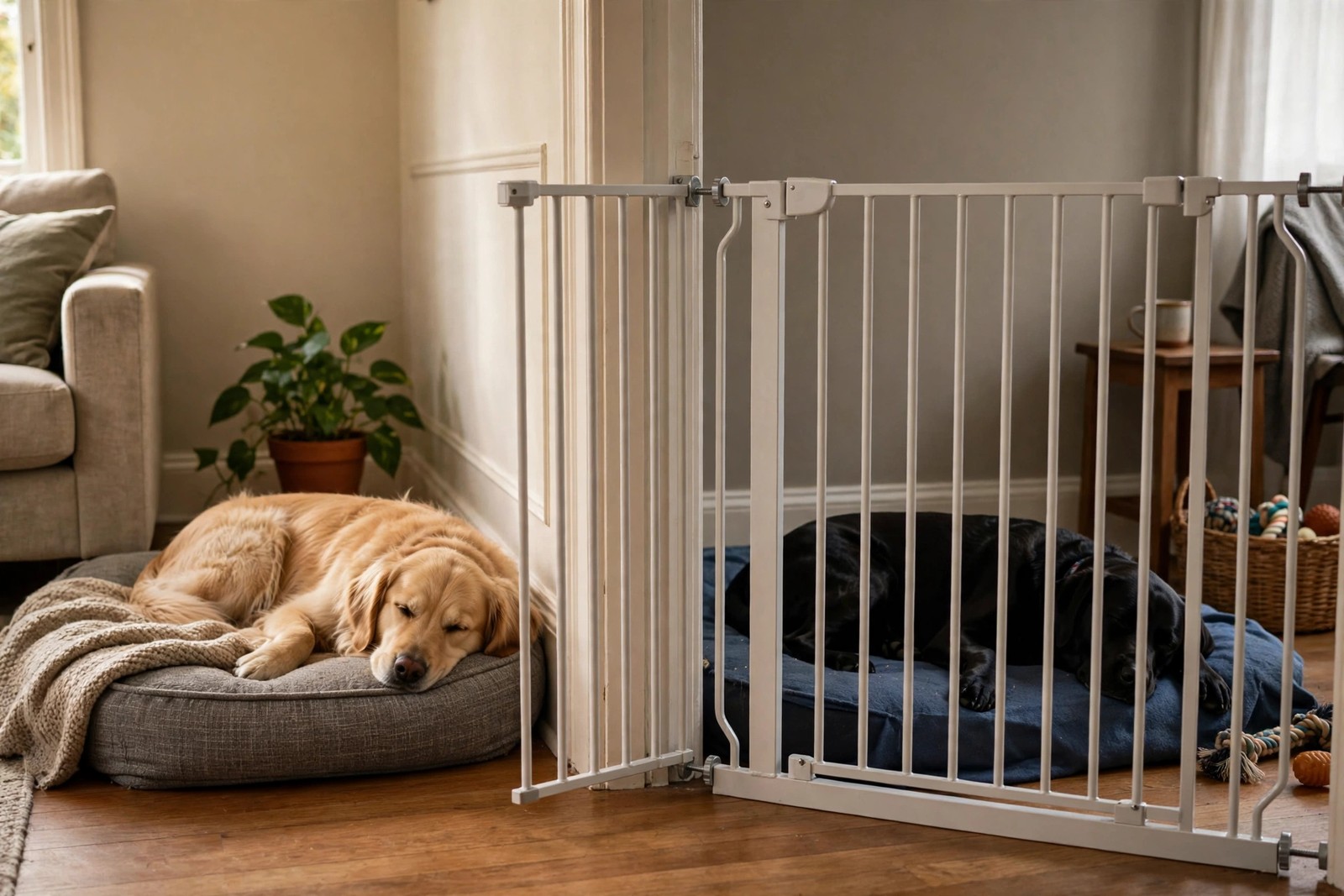
The kindest way to break up a scuffle is also the safest one: interrupt the fight without putting your hands anywhere near teeth. A dog in full arousal may bite whatever touches it, including a beloved owner reaching in, and that redirected bite is how many people get hurt during fights between dogs who would never normally bite them. Work from a distance first, separate the dogs completely, and then use the following hour for cooling down, careful checking, and honest notes rather than for making the dogs be friends again.
Interrupt Without Reaching In
Start with sound and surprise. A sharp shout, a loud clap, banging a metal bowl, or an air horn blast can freeze both dogs for the second you need. Water helps too: a splash from a bowl, a spray bottle, or a hose can break focus when noise does not. If the dogs are still locked on, slide a barrier between them, such as a board, a baby gate, a large cushion, or the lid of a trash can, and use it to lever them apart and steer each dog toward a different doorway. Never reach for a collar, a scruff, or a harness mid-fight, and never bend over the dogs with your face or hands inside the tangle.
If two calm adults are available and the fight will not break, the hind-leg lift, often called the wheelbarrow, is the careful next step. Each person takes one dog, lifts both hind legs off the ground by the upper legs, and walks backward steadily, keeping the dog moving in a small arc so it cannot turn and bite. As soon as a dog lets go, move it behind a closed door or gate before anyone releases the legs, and keep hands away from the head end throughout.
The Hour Afterward: Separate Completely
Once apart, the dogs stay apart, in different rooms with a closed door between them, for the full hour and longer if either still looks wound up. Adrenaline falls slowly, and a dog that seems calm after five minutes can flare again at a single hard stare through a gate. Let each dog settle alone with water available. No forced reintroduction belongs in this hour: no leashing them side by side to prove peace, no shared treats, and no scolding, which only adds stress to an already loaded memory of the other dog.
Check Both Dogs Closely
When breathing has slowed and bodies look loose again, examine each dog separately and slowly. Punctures hide under fur and can look like nothing more than a damp patch or a small parting in the coat, so run your hands gently over the neck, shoulders, ears, legs, and belly, parting thick fur as you go and watching for flinching. Look for bleeding, swelling, torn ears, a damaged eye, or limping once the dog walks. Any puncture, deep cut, eye injury, swelling that grows, or a dog that stays subdued or sore belongs with a veterinarian the same day, because bite wounds can close over at the surface while damage continues underneath.
Write Down What Triggered It
While the hour is still fresh, write a plain account of what happened: where the dogs were, what they were doing, and what changed in the seconds before the scuffle. Common sparks include a dropped piece of food, a prized chew, a tight doorway, an exciting visitor, or one dog guarding a resting spot. Agree as a household on the method everyone will use next time, who grabs the barrier, who closes which door, and who checks which dog afterward, and keep that agreed method plus a shared trigger log in one written place every person can find. Repeated scuffles, fights that escalate, or any fight that ends in injury need a qualified behavior professional as well as veterinary care.
When the plan lives in KinsLe, Care Teams show who checks each dog, who separates the rooms, and who records what sparked the fight.