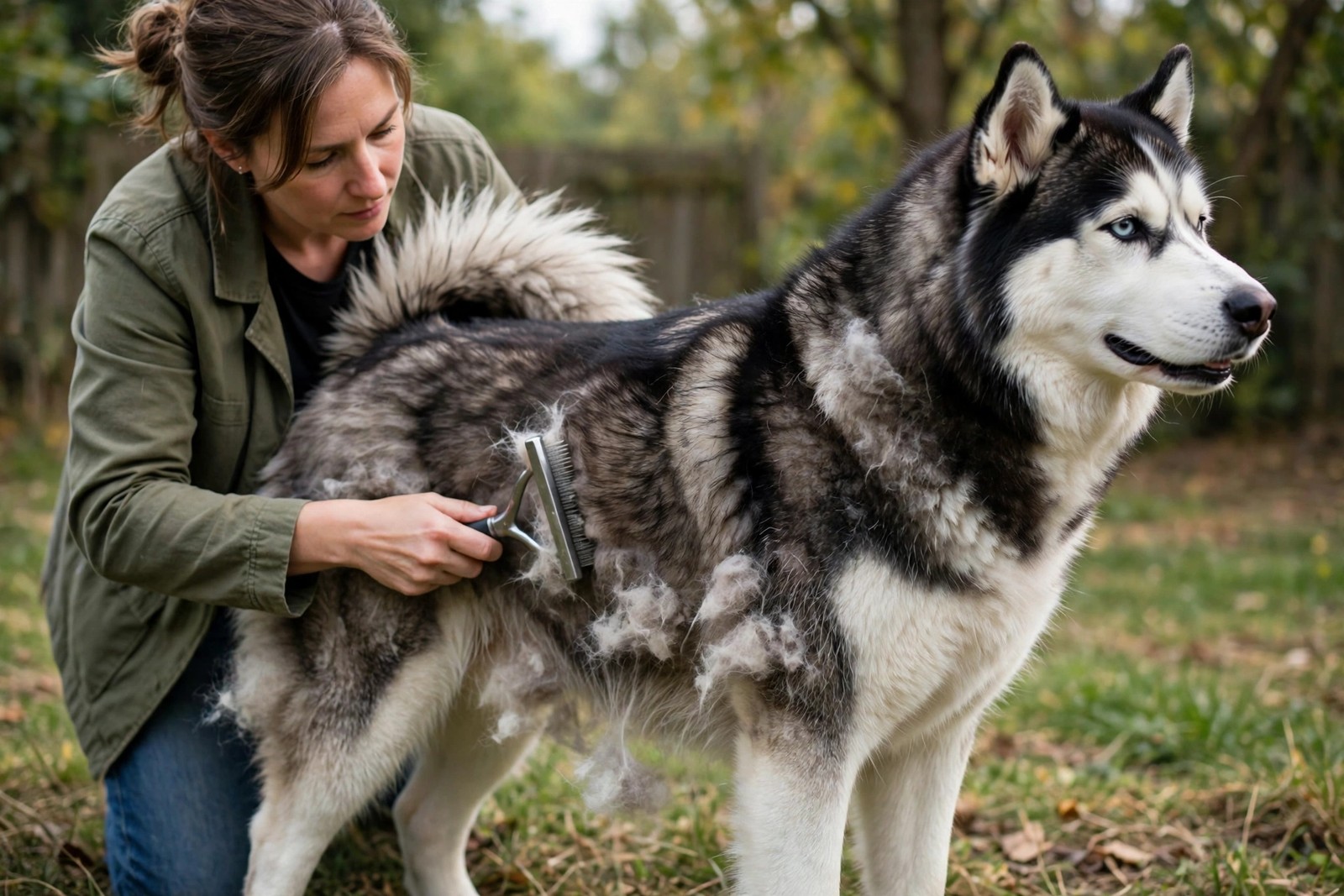
A double coat has two jobs layered together. The soft undercoat provides insulation and is shed in quantity, while the longer guard hairs form a protective outer layer that helps shed water and dirt and shields the skin. Brushing should remove loose undercoat and keep both layers lying freely. It should not shorten, thin by cutting or otherwise redesign the coat.
Work in layers with rake, slicker and comb
Start by parting the coat into sections and working one area at a time. Use an undercoat rake to draw out loose undercoat from within the layer, then a slicker to lift and separate the hair and clear what the rake has loosened. Brush in the direction that lets you reach through the coat for that section, and keep strokes controlled rather than dragging tools across the surface.
Finish each section with a comb. The comb reaching the skin is the test. If it glides through, loose undercoat in that section has been removed. If it catches and cannot pass, there is still packed or tangled undercoat to work apart, even if the top looks smooth. Move on only after the test passes, and pay particular attention to the neck, chest, trousers and areas under a harness, where density and friction combine.
During a heavy shed, shorter sessions repeated more often usually achieve more than one exhausting groom. Loose hair removed promptly cannot be compressed into a felted layer by the coat growing around it. A bath and thorough drying, when the dog needs one, can help loosen undercoat before brushing, but the comb test still decides whether the work is finished.
Avoid tools that solve the problem by cutting it
Some blade-style deshedding tools cut guard hair as they are drawn through the coat. The pile of hair they produce can look impressive while part of it is healthy outer coat that should have stayed. Repeated use can leave the coat uneven, damage the texture of the guard layer and still fail to clear packed undercoat near the skin.
Judge a tool by what it removes and what it leaves. A rake and slicker, used patiently in layers, target loose hair. A comb then verifies the result at skin level. If a section resists because it has become a mat rather than loose undercoat, slow down and work that area apart gently instead of reaching for a cutting tool to make the resistance disappear.
Why shaving a double coat causes harm
The double coat insulates against heat as well as cold. Air held within the coat helps buffer the skin from temperature changes, and the guard layer provides shade and sun protection. Shaving removes that system. A shaved dog can be more exposed to sunburn and heat, not more comfortable in summer, particularly if the skin has never been exposed before.
Regrowth is the other problem. Undercoat and guard hair grow at different rates, so a shaved double coat can return patchy, with the soft layer dominating and the guard hairs slow, sparse or changed in texture. In some dogs that altered coat then packs more readily, creating more grooming difficulty than the coat that was removed. Age, health and breed can affect regrowth, and owners should not assume the original coat will simply reappear on schedule.
The exception is medical need on vet advice, such as access to skin for treatment or surgery, or a coat so damaged that a vet or groomer judges removal of an affected area to be kinder than prolonged work. That decision is about a particular dog and a particular problem, not a summer routine.
Care Teams via KinsLe keeps heavy shedding weeks covered by naming who brushes next, rather than leaving the coat until it packs down.