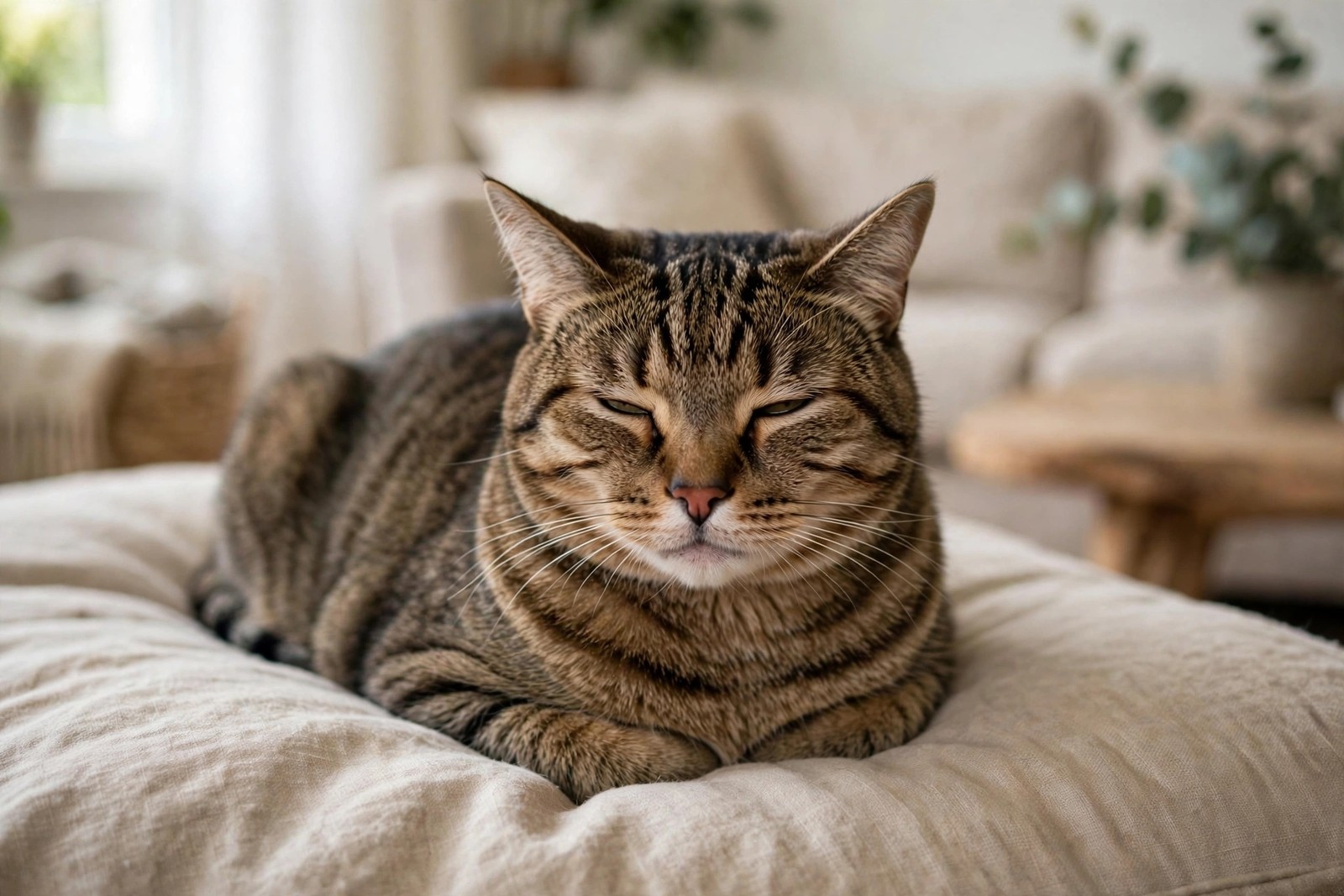
You are sitting quietly, your cat is across the room, and she looks at you and closes her eyes in a long, deliberate blink, as if she is drifting off for a second. She is not sleepy. She is talking to you, and what she is saying is good.
What the Slow Blink Means
Cats guard themselves with their eyes. A fixed, unblinking stare between cats is tense, even threatening, because it is what a cat does when assessing a possible fight. Closing the eyes in company is the reverse: it means voluntarily switching off that vigilance. A cat who slow blinks at you is relaxed, unworried, and feeling friendly, which is why owners call it a cat kiss. It often appears when a cat is already settled and content, loafed or stretched out, ears in a neutral position, tail still. It is not a request for anything. It is closer to a smile offered across the room.
Should You Blink Back? Yes, Like This
Blinking back speaks the same language, and many cats respond visibly, returning the blink, looking away calmly, or getting up to come and greet you. Technique matters more than enthusiasm. First soften your whole face and let your gaze rest on your cat rather than staring wide-eyed at her, because a wide stare contradicts the message. Then close your eyes slowly, over about a second, keep them closed for a beat, and open them just as slowly. Angle your head very slightly to one side rather than leaning toward her. Repeat once or twice, then look away and let her decide what happens next. Forcing more rounds after she has turned away is nagging, not conversation.
Reading the Moment Before You Try
Context decides whether a slow blink will land well. Try it when your cat is resting, has chosen to be in the room with you, and shows loose body language. Do not expect it to defuse a cat who is already aroused: dilated pupils, ears flattened or swiveling, tail lashing, body crouched or tense. To that cat, your face at close range is pressure, and the kind move is distance, not eye contact. With a shy or newly adopted cat, slow blinking from across the room, paired with letting her approach in her own time, is one of the gentlest trust builders there is, and it works precisely because it asks nothing of her.
What Happens Over Time
Owners who blink back regularly often find their cat initiates more often, blinking first when entering a room or settling nearby. It becomes a small greeting ritual between the two of you. Pay attention to when your cat offers it most, after play, at certain times of day, in a favorite spot, because that pattern is a map of when she feels entirely at ease. If a moment in that pattern puzzles you, put a follow-up question to KinsLe's Kinny; he answers using the KinsLe Answers library.