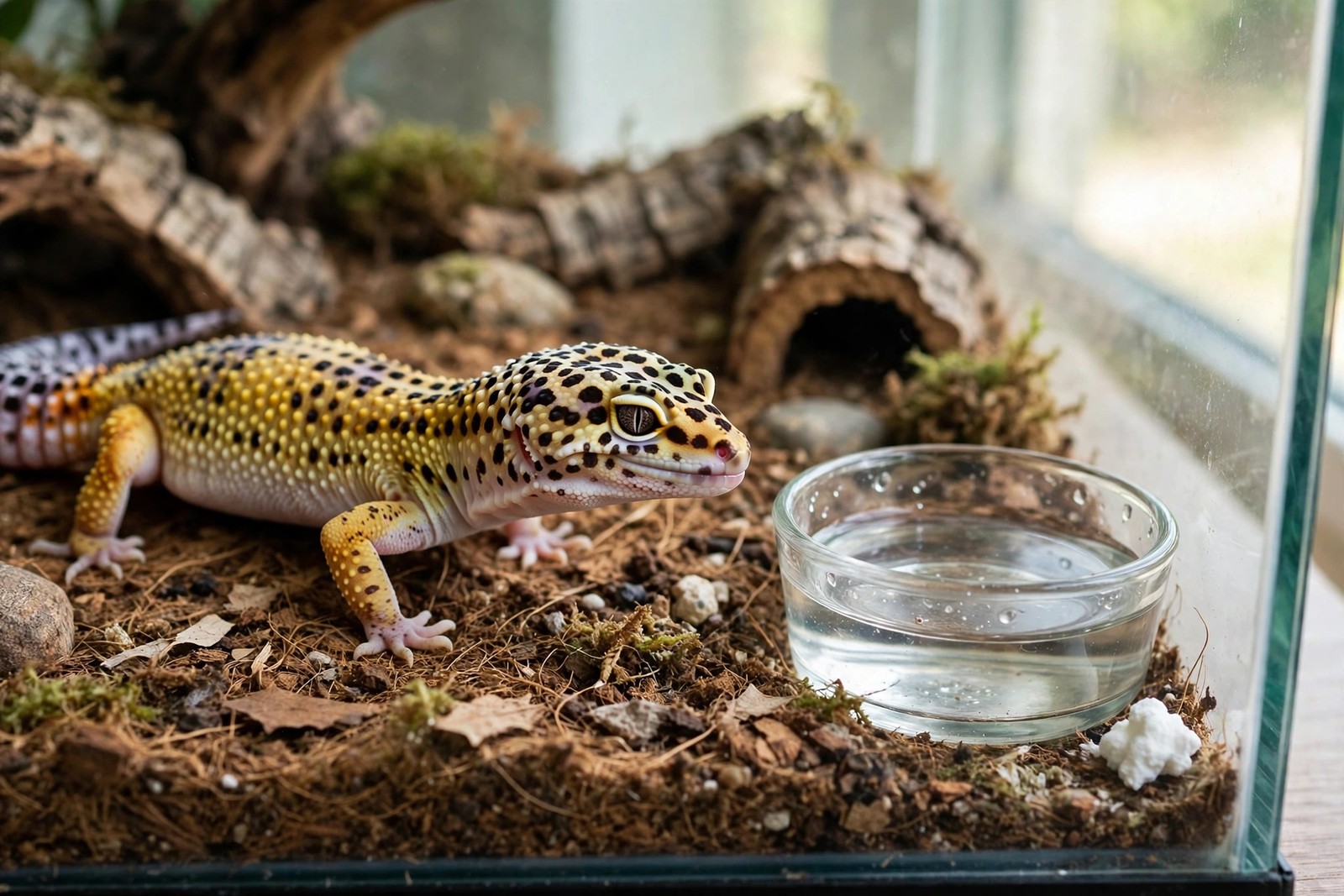
White stuff in a gecko's tank looks alarming, yet several ordinary possibilities can explain it, and the honest answer is that you identify it by clues rather than by color alone. Where the white material appears, what texture it has, and what it is sitting on usually separate a normal dropping from shed skin, from mold, and from mineral deposits. Treat each explanation below as a possibility to test with those checks, not as a verdict, and let changes in your gecko's appetite and behavior decide how urgently any of it needs a veterinarian.
White Urate: The Normal Possibility
Geckos pass solid waste in two parts, and the white portion is called urate. It is the solid form in which reptiles clear much of their waste, so a small white or off-white chalky lump beside a darker dropping is an expected, healthy sight. Urate usually appears in the corner or spot your gecko has chosen for droppings, often near a hide, and it feels firm and dry or slightly chalky once it has sat for a while. Finding neat white urate in that usual place, alongside normal dark droppings, points toward ordinary digestion rather than a tank problem. A fresh dropping can look softer and brighter, then dry paler, which is why judging by texture after an hour or two is fairer than judging the moment you spot it.
Shed Skin, Mold, and Mineral Deposits
Pieces of shed skin form the second possibility. Geckos shed in pale, thin flakes, and small scraps can catch on rough decor, drag into corners, or float in a water dish after a shed. Shed pieces are papery and flexible, shaped like torn tissue rather than lumps, and they often appear in the day or two after you noticed your gecko looking dull and pale overall. Mold is the third possibility, and it behaves differently again: look for fuzzy, spreading growth with a soft or hairy surface, usually growing on something organic, such as uneaten food left in the tank, damp substrate, or wooden decor that stays wet. The fourth possibility is mineral or calcium deposit, seen as hard, crusty white rings or tide marks around the water dish and on glass where hard water dries, or as dusting powder spilled near the feeding spot.
The Checks That Distinguish Them
Work through three questions in order. First, where is it? Droppings gather in a chosen corner, deposits ring the water dish, mold grows on a damp object, and shed scraps scatter near hides and rough surfaces. Second, what is the texture? Chalky and firm suggests urate, papery suggests shed, fuzzy and spreading suggests mold, and hard and crusty suggests mineral buildup. Third, what does it sit on? Mold needs a damp, organic base, while deposits cling to glass and dish edges where water evaporates. Remove moldy items, clean the spot, and improve airflow and cleanup of uneaten food; wipe deposits away during normal dish washing. Photograph anything you cannot place, because a clear photo preserves the location and texture far better than memory does.
When Changes Mean a Vet Visit
The white material alone rarely settles urgency; the company it keeps does. Book a veterinarian who works with reptiles if white patches appear alongside appetite loss, a gecko that stops eating, unusual hiding or lethargy, weight loss visible in a thinning tail, or droppings that stop altogether. Bring your notes: when each appearance showed up, where it sat, what it felt like, and what else changed in feeding and behavior over the same stretch. Those dated observations let a veterinarian judge whether the pattern fits a normal explanation or deserves testing, instead of working from a single worried snapshot taken on one evening.
Kept over weeks in KinsLe, Pet Passport turns scattered sightings of white patches into a dated health-note record a veterinarian can read quickly.