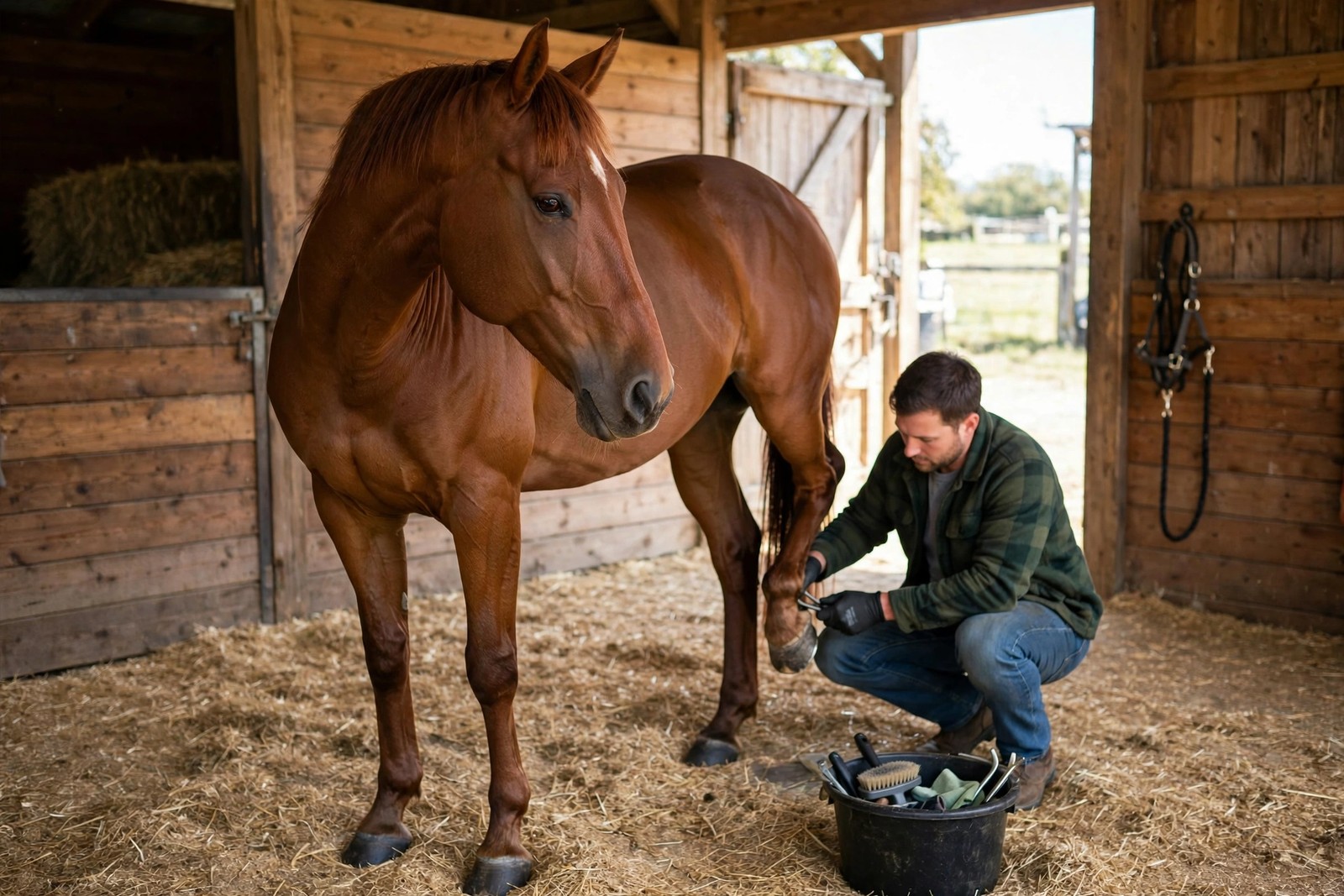
Thrush is an infection of the frog — the V-shaped, rubbery tissue set into the underside of the hoof — caused by bacteria that flourish where air cannot reach and manure and wet bedding pack in. It settles first in the central sulcus, the deep groove running down the middle of the frog, and in the grooves either side of it. Left alone it eats into sensitive tissue, and a problem that starts as a smell can end as soreness and lameness.
How to Recognise Thrush
The classic sign announces itself while you pick the hoof out: a black, tar-like discharge in the frog's grooves and an unmistakable foul, rotten smell that a clean hoof never has. The frog itself may look ragged, soft, or crumbly instead of firm, and shreds may lift away with the pick. Pressing gently in the groove can make the horse flinch once the infection runs deep. Any horse who is lame, reluctant to bear weight on a heel, has blood or a very deep, narrow sulcus, or whose thrush keeps returning despite clean management needs the vet or farrier promptly rather than more home cleaning — deep thrush is a professional job, and no home remedy should be packed into a painful hoof on guesswork.
Prevention Is a Daily Habit, Not a Product
Pick every hoof out at least once a day, and ideally before and after turnout, working the pick from heel to toe so material lifts away from the frog rather than being driven into its grooves. That single habit removes the packed manure and mud the bacteria live in, lets air reach the frog, and puts your hands and nose on each hoof daily, so the first whiff of thrush is caught within a day of it starting.
Standing conditions decide the rest. Wet, soiled bedding is the thrush incubator: skip out droppings and soaked patches daily, bed deeply enough that the horse never stands in urine-damp material, and keep gateways, water trough surrounds, and shelter floors from turning into permanent mud soup where the horse must stand for hours. Horses kept out need a genuinely dry area to stand and feed, not just a field that drains eventually. Regular farrier visits matter too, because an overgrown, unbalanced hoof with a contracted heel holds muck against the frog and hides the sulcus from the pick.
Building the Routine Into Yard Life
Tie hoof picking to a moment that already happens — before the morning feed, or as each horse comes in — rather than treating it as a separate round that a busy evening will swallow. Keep a pick at the stable door and another in the field kit, note any smelly hoof in the yard log with the foot involved, and recheck that foot the next day so improvement or worsening is seen, not assumed. On a shared yard, missed days are exactly how thrush gets its start, so KinsLe's Care Teams lets you assign the daily pick-out and the bedding skip-out to specific people for each horse, with completions timestamped for everyone to see.